Glampsites in Croatia - Safari Tents in Camp Cikat, Losinj

The top glamping sites in Croatia in 2026

Camping has come a long way, hasn’t it? Where decades-old tents and scruffy roll mats once prevailed, alongside communal bathroom blocks and brick BBQs, you can now enjoy luxurious accommodation – without four walls – by glamping. Thanks to the plethora of campsites all along Croatia’s coastline, it’s no surprise that glamping is also on the rise in the country. Here, I bring you the best glamping sites in Croatia for you to enjoy!

The benefit of any kind of camping is that you can really get at one with your gorgeous surroundings. Why be in a high-up hotel room when you can take a few steps and immediately be in stunning nature?

Glamping Sites in Croatia – Istria

Mobile Homes Azzuro, Rovinj

Some thoughtful interior design has gone into these luxury mobile homes, with much of the external and interior decor blending into the surroundings. The homes are fully set amongst a pine forest – not just alongside one – and if you relax on your external decked terrace, you’ll experience the full effect of your holiday destination. Each home has two bedrooms and can sleep a maximum of four + one; four-legged friends can also be hosted. A proper kitchen (even with a dishwasher), air conditioning, satellite TV and wifi are just some of the amenities; the campsite is also located right on a beach.
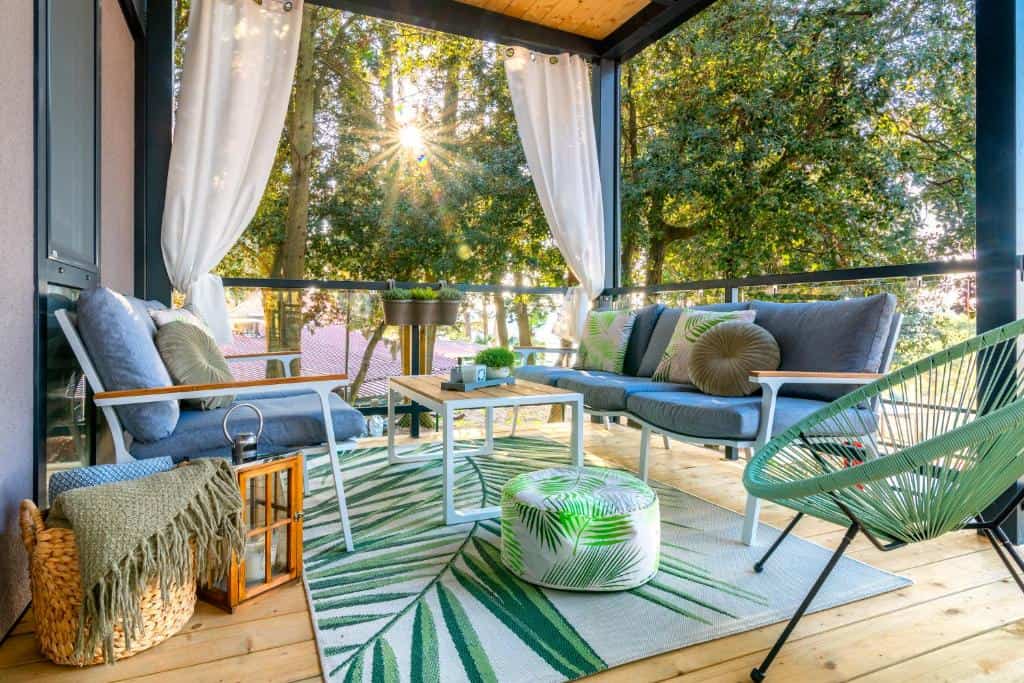
Glamping sites in Croatia - Mobile Homes Azzuro in Rovinj
The outdoor deck at one of the Mobile Homes Azzuro
(Credit: Mobile Homes Azzuro)

By its very nature, a campsite can’t be in the centre of a town, but the heart of Rovinj is only a 15-minute walk away on a pretty seaside promenade, so you can enjoy everything this truly gorgeous Istrian destination has to offer.

Floria Glamping Garden, Labin

These spacious, luxury bell tents – all named after plants that are native to Istria – are gorgeously designed and come fully equipped with everything you could possibly need. Air conditioning, TVs, private bathrooms and beautiful wooden terraces to relax on when winding down in the evenings. Some of the bell tents feature a private hot tub, whilst others have their own private pool. Most of the tents sleep 2 people, whilst a handful sleep 4. There is also an on-site restaurant and bar, a spa zone and a central pool for all guests.
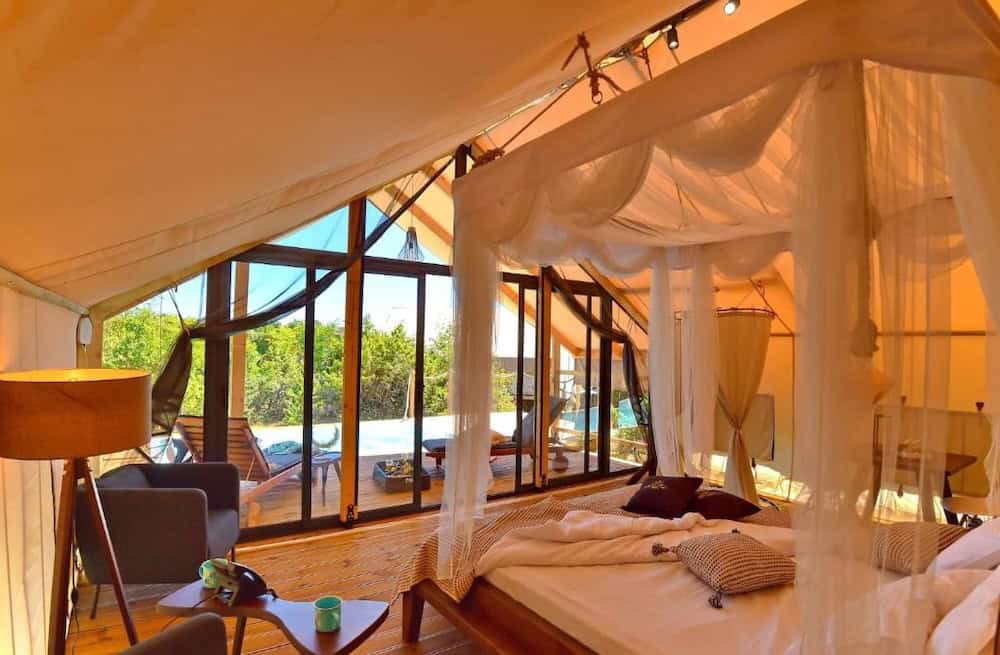
Glamping sites in Croatia - The interior of one of the tents at Floria Glamping Garden
The interior of one of the tents at Floria Glamping Garden
(Credit: Floria Glamping Garden)

Should you wish to stay at this campsite with your own camper van, there are seven pitches available for use. For these guests, there is a small bathroom block and a laundry room.

Glamping Sites in Croatia – North Dalmatia

Camping Park Soline

One of the most popular campsites in Croatia, this location in Biograd na moru offers several different camping options. Glampers will love the family-sized safari tents set right in the fragrant pine trees of Camping Park Soline. The tents offer all mod cons, from air conditioning to TVs, a private bathroom and a kitchenette. The large outdoor decking area is the perfect place for breakfasts and simple dinners, allowing you to enjoy the local nature. The tents are rather large, sleeping a maximum of four adults and two kids – younger holidaymakers will love the bunk beds.

The whole campsite covers an area of 20 hectares and has both a pebble beach and a sandy beach. There are many sports facilities here, including tennis courts, water sports possibilities, bike rental and more, so you have much to keep yourselves occupied right on your doorstep.

Glamping Sites in Croatia – Split Region

Medora Orbis Mobile Homes, Podgora

If you’re thinking a private pool can only come with a super expensive villa, think again! The Deluxe and Premium versions of the mobile homes at this site come with their own small pool that’s – get this – heated, so you can even enjoy it in spring and autumn too. (Pools also get their own loungers so you can enjoy some private sunbathing time.) Beyond that, the fully-equipped and tranquil mobile homes are attractively laid out on a wooded hillside so most get a lovely sea view; that also means you’re just steps away from the beach here. And when you’re on the beach, you can enjoy free sun loungers so no shelling out extra cash or making do with a sodden towel.
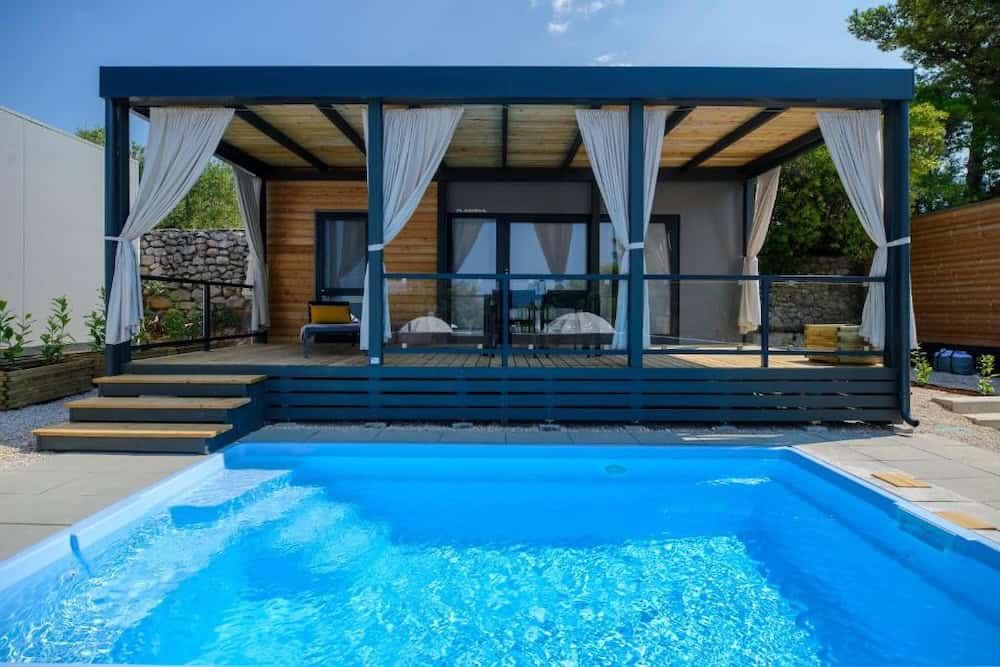
Medora Orbis Mobile Homes, Podgora
A deluxe, two-bedroom mobile home with private pool
(Credit: Medora Orbis)

Mobile home guests can also make use of kids’ activities at the adjacent Medora Auri Hotel, where adults can also enjoy the sauna.

Glamping Sites in Croatia – Dubrovnik Region

Adriatic Beach Glamping, Orebic

Located at the top of the Peljesac Peninsula in Orebic, these highly rated safari tents come with modern indoor furnishings, proper beds, kitchenettes, air conditioning, private bathrooms and TVs. But best of all, when you’re sat on one of the tents’ outdoor terraces, you’ll notice that you’re literally a stone’s throw from the Adriatic Sea! There’s also a shared pool, and the campsite also has its own restaurant and bar. But more, much more! The campsite belongs to the same owners as the next-door Mikulic Winery, where you can sample their Plavac Mali (red) and Posip (white) wines, or even their Adriatic Brut and/or olive oil. A campsite next to a winery? Sounds like heaven!

This campsite is well placed to explore the Peljesac Peninsula – particularly its wineries – but you also easily hop on the passenger boat to make the short journey over to the island of Korcula.

Glamping Sites in Croatia – Croatian Islands

Vela Glamping, Camp Cikat, Losinj

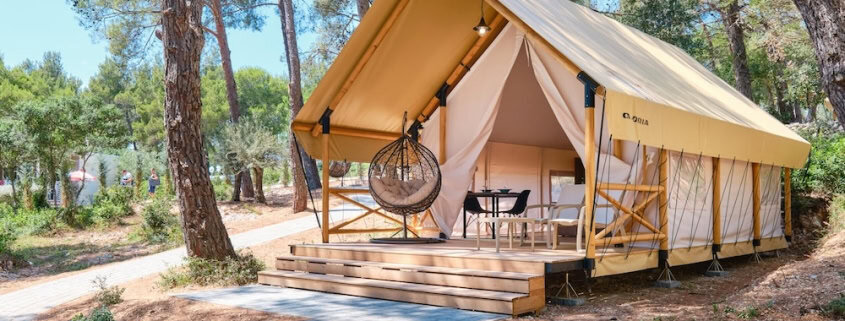
Camp Cikat on the island of Losinj is one of the top choices in Croatia for a campsite, glamping or not, and for that reason you should definitely say yes to the safari tents here. Although the campsite is large with a multitude of amazing facilities – from its own beach, outdoor pools, a huge range of sports facilities, two restaurants and several bars/cafes, and a grocery shop – there are only 10 safari tents here. These sleep from two to six people, the latter option being the family tents which, unbelievably (or I think unbelievably), are two-floor. A two-floor tent, whatever next?! The safari tents also claim to occupy one of the best areas of the whole campsite, very close to the beach.
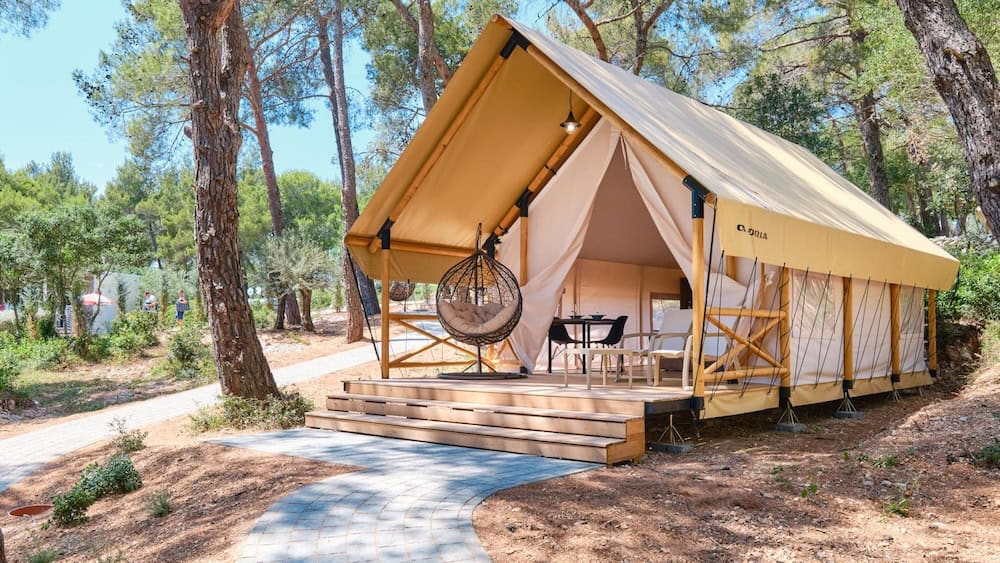
Glamping sites in Croatia - Safari Tents in Camp Cikat, Losinj
A Safari tent in Camp Cikat, Losinj
(Credit: Camp Cikat)

This is definitely a camp that’s a hit with families, not least because the adjacent waterpark is free for guests of Camp Cikat. You can also enjoy a kids’ club and children’s entertainment here.

More details: Vela Glamping – Camp Cikat

Port 9 Holiday Homes, Korcula

These smart and modern holiday homes are part of the Port 9 Holiday resort, which really can’t be beaten on what it offers its guests. If you’re not making your own meals “at home”, you can dine in one of the seven restaurants; work off the delicious food in one of the two outdoor pools. Spend your days relaxing on one of the beaches – there are pebble, rocky and even sandy options here – and be sure to visit the wonderful Korcula Town and its fantastic sights.

The Mobile Homes themselves are kitted out with what you expect – air conditioning, private bathrooms, decent-sized kitchens and the like. The homes’ covered outdoor seating terraces will certainly be a hit with guests.

More details: Port 9 Holiday Homes

Glamping Sites in Croatia – Inland Croatia

Mobile Homes Camping Plitvice, Smoljanac

Around 4 kilometres away from Plitvice Lakes National Park is this small selection of deluxe mobile homes with full amenities – yes, air conditioning is one of them! Smartly designed with all mod cons (and private bathrooms), some of the homes also have their own hot tubs; perfect for a soak after a hard day’s hiking in the National Park. The mobile homes also have pretty sun terraces where you can relax and take in the beautiful views of the nature of the Lika region. General facilities at this camping location include an outdoor pool and a restaurant serving Croatian cuisine.

Glamping Celig, Donja Visnjica (near border with Slovenia)

The location of these adorable huts may be well off the beaten track – as far as travels to Croatia go – but you may like to enjoy some proper rest and relaxation in gorgeous nature, accompanied by a marvellous view. Perhaps not the most luxurious of glamping options, there’s something about staying in a wooden hut on a hillside that would charm even the most dedicated non-camper. And the huts have their own outdoor hot tub, so that’s always a plus! They also feature a small but fully fitted-out bathroom, air conditioning and a TV, plus a small kitchen area.
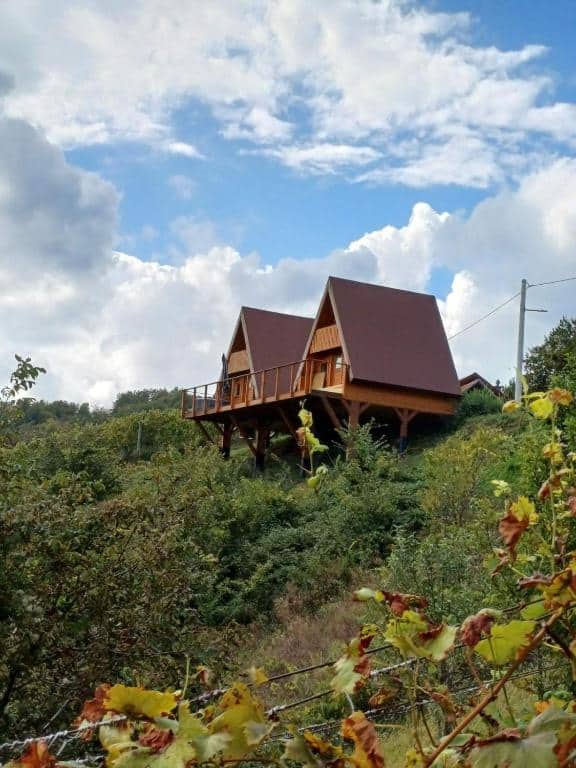
Glamping Celig
The wooden huts at Glamping Celig
(Credit: Glamping Celig)

Glamping Celig would be a possible accommodation option if visiting nearby Trakoscan Castle (which is about a 20-minute drive away) or Varazdin, 30 kilometres away.
Temper-free holidays - Beautiful Pokrivenik Bay on the island of Hvar

Croatia is the top destination for a temper-free holiday!

The summer holidays are almost upon us, which means that the big family holiday is but a few weeks away. Holidaying with little ones (and not so little ones) in tow can present challenges to parents, and all parents (myself included) want to ensure time away is enjoyed by everyone – and as fuss-free as possible. So, parents, listen to this! Villa holiday specialists CV Villas have conducted a study to discover Europe’s best family destination for a temper-free holiday, based on all-important factors outlined by a children’s psychotherapist. Guess where number one is? The island of Hvar! Find out how Hvar came to claim the top spot, and where else in Croatia features in the top ten. (Spoiler alert: several destinations!)
Temper-free holidays - Beautiful Pokrivenik Bay on the island of Hvar
Pokrivenik Bay on the island of Hvar

Hvar is the best destination for a temper-free holiday

The gorgeous island of Hvar has grabbed the top spot in the CV Villas’ study, scoring a pretty impressive 89.1/100. Whilst it’s no surprise to see Hvar topping any kind of holiday destination list, some may be surprised that this stylish island – not so long ago associated with nightlife and partying – comes top of this study. But so it is!

A friendly, beautiful island, it is home to lavender-covered fields and limestone lanes, with konobas that have been feeding locals for generations – but not forgetting its rather epic weather. Well known for its sunshine, with the island receiving over 2,715 hours of sunlight each year, this is a destination that will surely delight and put a smile on everyone’s faces.

Temper-free holidays - Hvar Town
The glorious Hvat Town

Many more Croatian destinations in the top ten

But it’s not just Hvar that rates highly in this study, no! Take a look at the full top twenty list below to see where else in Croatia rates very highly for temper-free travel:

RankDestinationsCountryTemper-Free Score (/100)
1HvarCroatia89.1
2KorčulaCroatia82.8
3FaroPortugal82.7
4LagosPortugal81.2
5SplitCroatia80.5
6DubrovnikCroatia80.2
7PerugiaItaly80.0
8SienaItaly79.3
9SkiathosGreece78.9
10MalagaSpain76.5
11MarbellaSpain76.3
12LefkadaGreece76.1
13SevilleSpain75.3
14Chania (Crete)Greece75.2
15MadridSpain75.0
16Heraklion (Crete)Greece74.2
17MykonosGreece73.6
18ZakynthosGreece73.6
19CagliariItaly72.8
20CorfuGreece72.3

As you can see, Korcula ends up second on the list with an equally impressive score of 82.8/100. Another gorgeous island, further south in Dalmatia, Korcula is home to great beaches, gorgeous nature, a beautiful main town (Korcula Town) with a number of fascinating sights. Not to mention good choices for family accommodation, and some excellent eateries.

But what’s this? Split and Dubrovnik are also in the top ten! Scoring 80.5 and 80.2 respectively – putting them fifth and sixth – it’s perhaps no surprise that these two famous cities make the list. The range of family accommodation in both is second to none, and the range of activities, sights, experiences and amenities that both offer should make family travel fuss free.

Croatia for first time visitors - Dubrovnik
Dubrovnik

If not Croatia, try Greece

Whilst four Croatian destinations feature in the top ten, it’s clear to see that Greece offers the most ranking destinations in the top twenty – accounting for seven temper-free holiday places.

Skiathos is the highest-ranking Greek destination with a score of 78.9/100. This vibrant, lush Greek island in the Northern Sporades is famous for its pine forests that reach right down to the coast. 

While it does have some nightlife, it’s an ideal choice for families thanks to its laid-back atmosphere and abundance of calm beaches. Kids will be entertained for hours with more than 60 beaches perfect for snorkelling, and boat trips to secluded coves that feel like an adventure.

Another standout Greek ranking is the island of Lefkada, which scored 76.1/100. While Lefkada is an island, it’s connected to the mainland by a bridge, so families don’t need to worry about relying on ferries to get to and from the airport.

Tips for aiming for temper-free family travel

With a change to normal routines, potential tantrums by young ones, and the difficulties of parenting away from home, it’s a wonder that anyone with young kids goes away at all! In fact, 61% of parents find going away with children difficult, with 28% saying this difficulty comes from managing their children’s unpredictable behaviour. (Source: Netmums) So why go away when your kids are young? Well, childhood travel has been psychologically shown to build confidence, foster resilience, boost empathy, and so much more.

This is why villa holiday specialists CV Villas have partnered with Becky Goddard-Hill, a children’s psychotherapist and emotional wellbeing author, to help parents navigate family travel difficulties and give families their best shot at temper-free holidays this year,

Together, they have identified the key factors that are most likely to affect children’s mood on holiday. These all important factors are: tourist density, flight time, nighttime humidity, day and nighttime temperature and food familiarity. Each of these factors contributed to the overall score – for example, day and nighttime temperature account for 30%, whilst flight time (and jet-lag risk) make up 20% of the overall score.

The researchers at CV Villas pulled data on these factors for almost 100 popular family travel destinations, creating an index that allowed them to score destinations in a ‘Temper-Free Score’ out of 100. That’s how Hvar has ended up topping the list with a score of 89.1.

Becky comments: 

At this time of year, everyone has started talking, thinking about, and planning their holidays, and what I want to urge them to do is put their children’s needs at the heart of this.

Holidays are meant to be fun and relaxing times with the family, a break from life’s worries and stresses, and a chance to rest. But get the fundamentals wrong for your kids, and you are likely to have meltdowns to deal with…and that’s not fun or relaxing for anyone.”

Top tips for parents dealing with holiday tantrums, according to a children’s psychotherapist

Becky provides plenty of excellent tips for family travel and how to reduce the potential for tantrums, or minimise them should they occur.

  • Reduce stimulation: “Reducing stimulation can really benefit a child having a tantrum when on holiday. Stepping away from crowds, reducing noise levels (you could try noise-cancelling headphones), and finding shade or a quiet corner can all be helpful.”
  • Take familiar objects from home away with you: “Introducing them when they are struggling can be reassuring and comforting – a beloved book, blanket, or toy from home can help them feel secure.”
  • Remember, emotions are contagious: “Understanding that emotions are contagious is key to handling a tantrum. If you are calm and reassuring, and if you are supportive and keep a level tone to your voice, they will likely recover from their meltdown much more quickly.”

Becky adds: 

All behaviour is communication, and when children have a tantrum, they are often showing you how they feel rather than saying. 

They may be tired, thirsty, hungry, too hot, or overwhelmed. But they may not be able to tell you because their feelings are big in that moment, and they aren’t thinking logically. 

Help them calm down first, then try to discover what they need rather than getting annoyed. You will soon have a happier child on your hands.

Ben Briggs, Head of Marketing and travel expert at CV Villas, comments

Finding places to go on holiday as a parent can be tricky, especially when children’s needs and interests change so rapidly.

But as tricky as family travel can be at times, the good far outweighs the bad, and it is full of some incredibly exciting moments. To make the most of those moments, it helps to set your family up for success before you even pack a bag, and that often starts with choosing the right destination.  

As a parent myself, over the years, I have always looked to keep travel-induced temper tantrums to a minimum. I’ve learned that a little planning goes a long way, and I hope the research takes some of the guesswork out for other parents choosing a destination this summer.

CV Villas has been creating bespoke villa holidays for over 50 years, offering a curated portfolio of 800 villas across top global destinations like Croatia, Greece, Italy, France, Spain, the Caribbean, and now, Sri Lanka. Originating in Corfu, it offers many exclusive properties with expert local support, plus optional travel arrangements.  Properties range from smaller villas for couples in romantic locations to large villas with extensive grounds for big family gatherings and special celebrations.

To all parents – may your family travel be temper-free this summer!

Discover Šimuni: A Local’s Guide to a Croatian Hidden Gem

By Aleksandra B. Fabijanić

Aleksandra is a social scientist and an academic in entrepreneurship at the University of Glasgow, where she teaches and mentors students and startups on a daily basis. Alongside academia, her entrepreneurship work focuses on the intersection of the space sector, big data, and environmental intelligence, particularly across fisheries, ports, and coastal ecosystems connected to marine systems around the world. Through her husband and her many years spent on Pag, Šimuni has become a place she feels very connected to personally.

Šimuni, on the western side of Pag, is the kind of place visitors return to year after year.

For more than 100 years, this small fishing village has been shaped by the sea and by generations of local families living from fishing, farming and hospitality. Today, Šimuni is known for its calm beaches, fresh local food and relaxed pace of life.

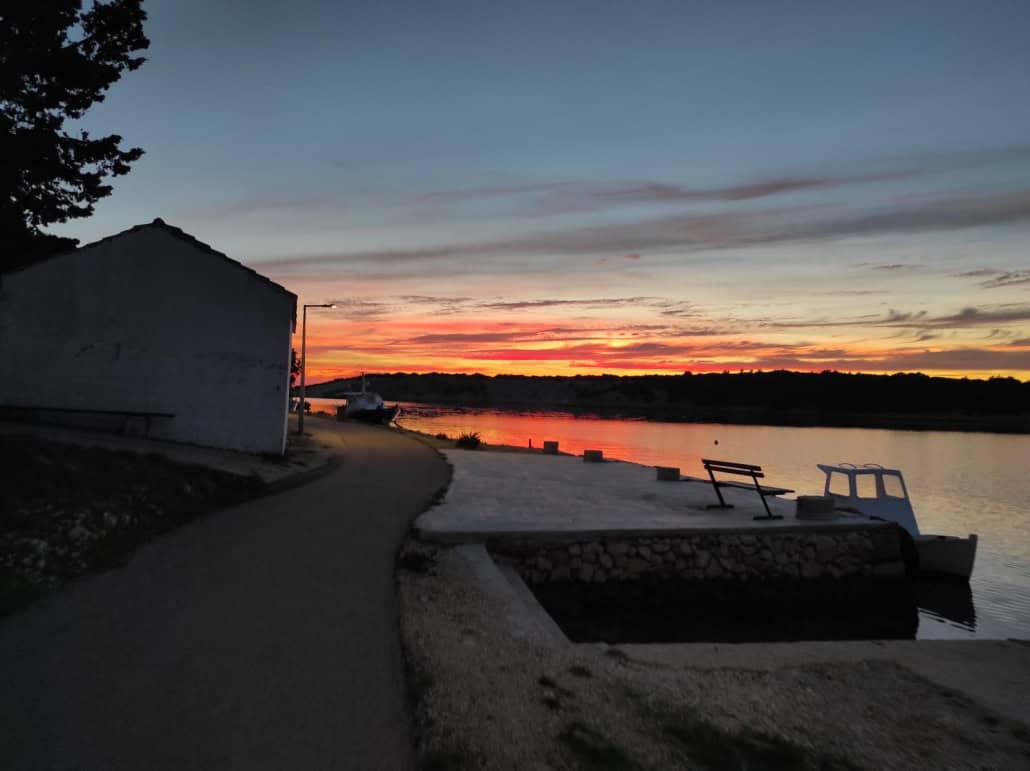
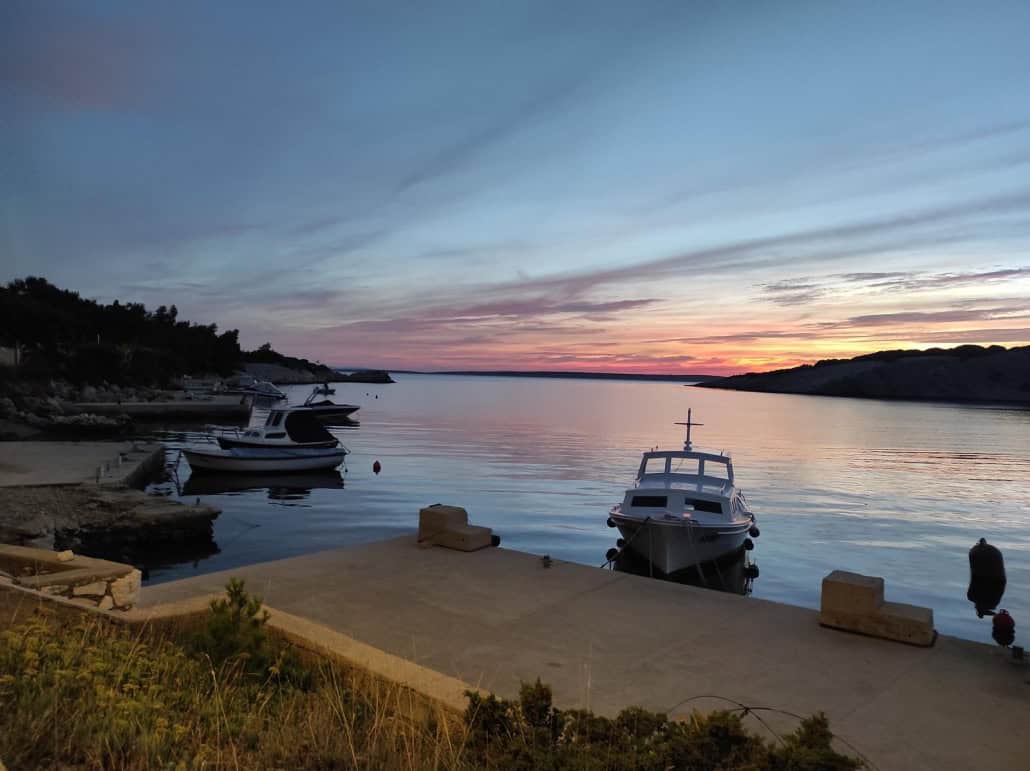
Šimuni Harbour and the relaxed seaside spirit of Pag

If you are planning a visit, here are a few local tips on where to eat, stay and make the most of your time in Šimuni.

Where to Eat

Food is central to life here, shaped by the rich produce of the island. Fresh seafood, island lamb, fragrant olive oil, local wine and the famous Pag cheese (Paška sirana), one of the island’s proudest culinary traditions and an internationally award-winning Croatian cheese, all reflect the distinctive flavours of this part of Croatia.

One place to enjoy that local flavour is Leut Beach Restaurant Šimuni, a relaxed waterfront restaurant known for fresh seafood, simple Mediterranean dishes and beautiful sea views.

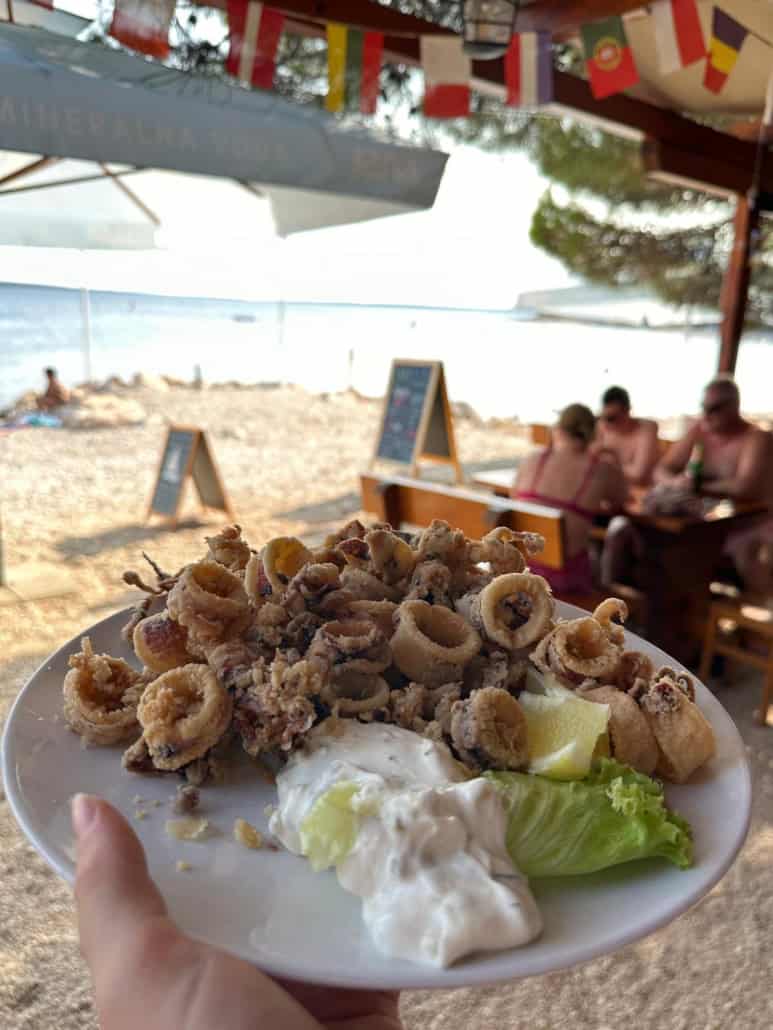
Seaside dining at Leut Beach Restaurant Šimuni
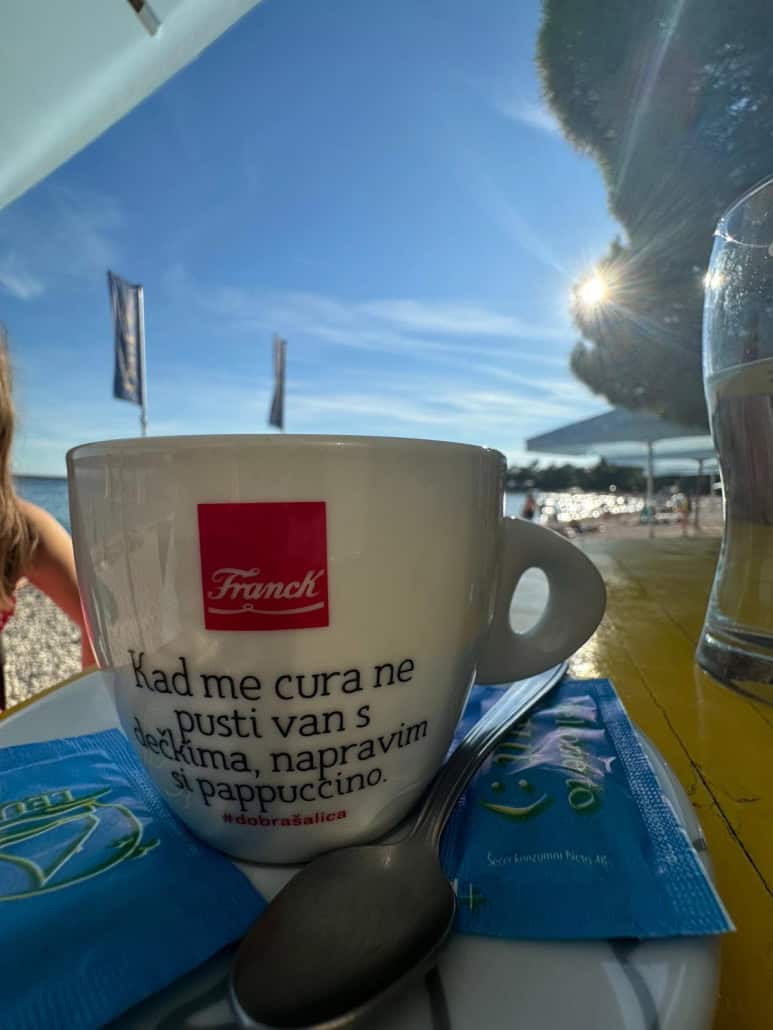
Coffee by the sea - Leut Beach Restaurant Šimuni
Coffee by the sea – Leut Beach Restaurant Šimuni

Where to Swim and Sunbathe

With crystal-clear waters and a beautiful coastline, the village’s beaches are ideal for families, offering calm sea, plenty of space and welcome shade from pine trees during the warmer months. Whether you are planning a full beach day or a quick morning swim, it offers a relaxed seaside experience away from Croatia’s busier summer crowds.

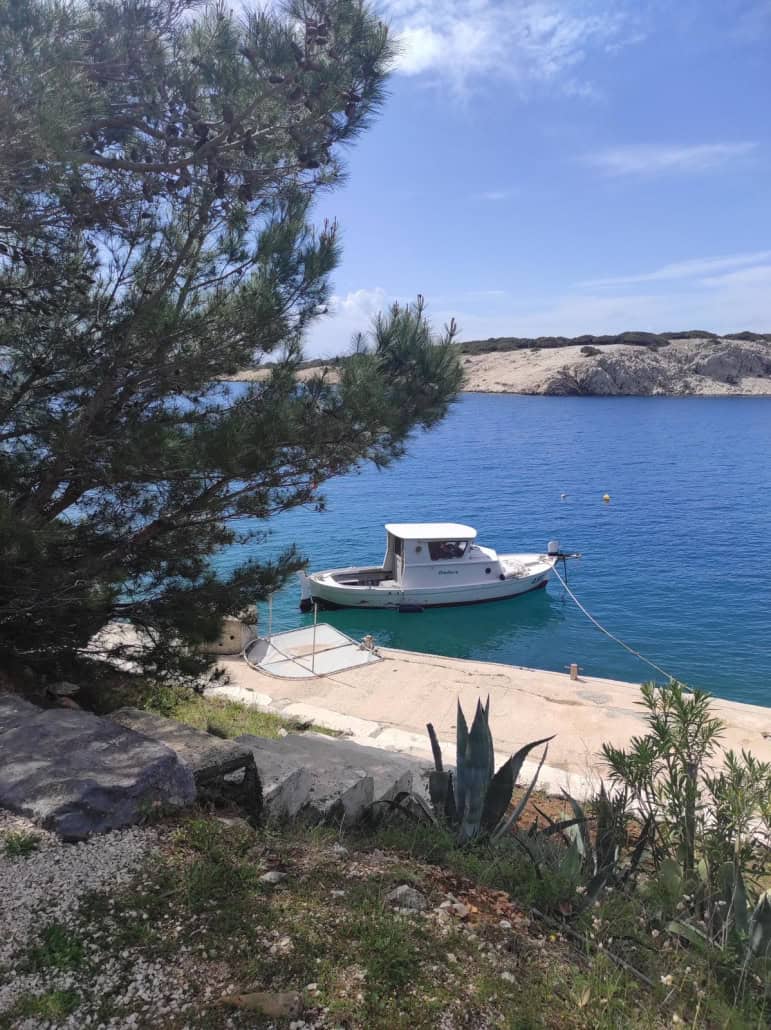
Crystal-clear waters and family-friendly beaches

Where to Walk

The village is also easy to explore on foot. A walk along the harbour, an evening stroll by the water or a wander through quiet village paths are all part of daily life here. Coastal paths lead through rocky landscapes and pine-covered trails, with beautiful views out to sea.

Evening walks along the coast

Where to Stay

Šimuni is known for its warm, family-run accommodation, from small apartments overlooking the sea to welcoming guesthouses that offer a much more personal feel than larger resort destinations. Places such as Apartmani Brankica reflect that spirit well – simple, comfortable and closely connected to the relaxed local way of life.

Staying here means enjoying sea views, shaded terraces and the kind of local hospitality that makes visitors feel at home.

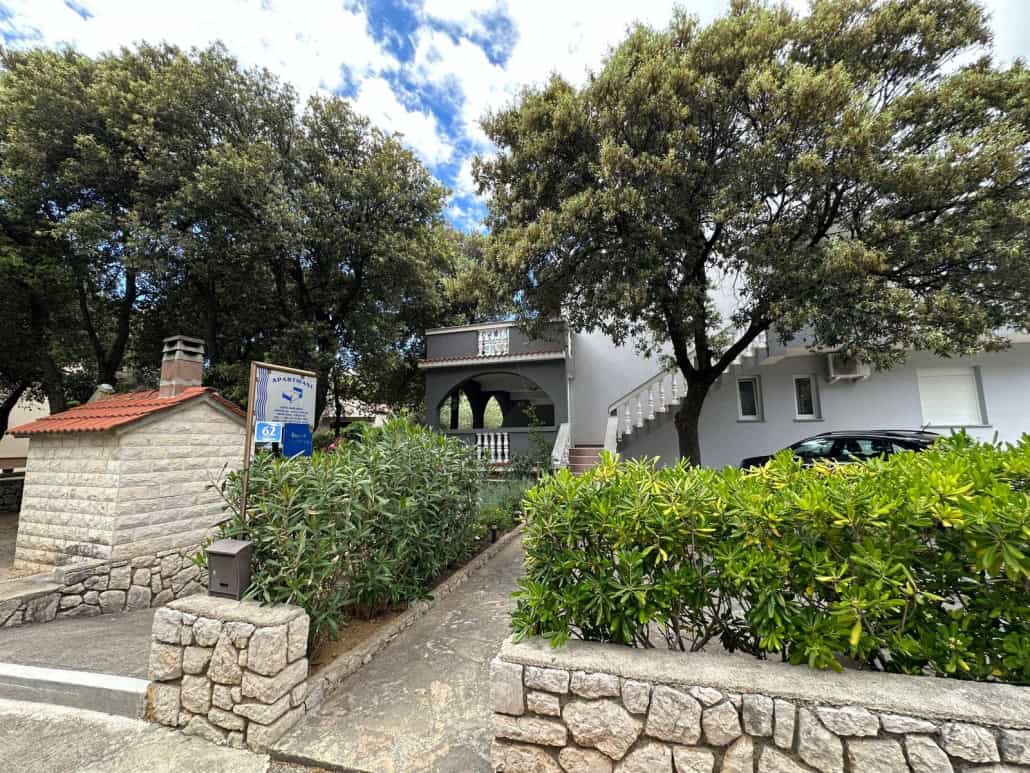
Family-run accommodation in Šimuni at Apartmani Brankica Šimuni

Taste Local Life

The sea remains at the heart of Šimuni. Small family fishing boats head out each day, returning with fresh catch that soon reaches local kitchens and local fishmongers (Ribara dva), centrally located in the village and, like most places here, only a short five-minute walk from wherever you stay. Fresh seafood remains an important part of everyday life here, reflecting the area’s long connection to the sea.

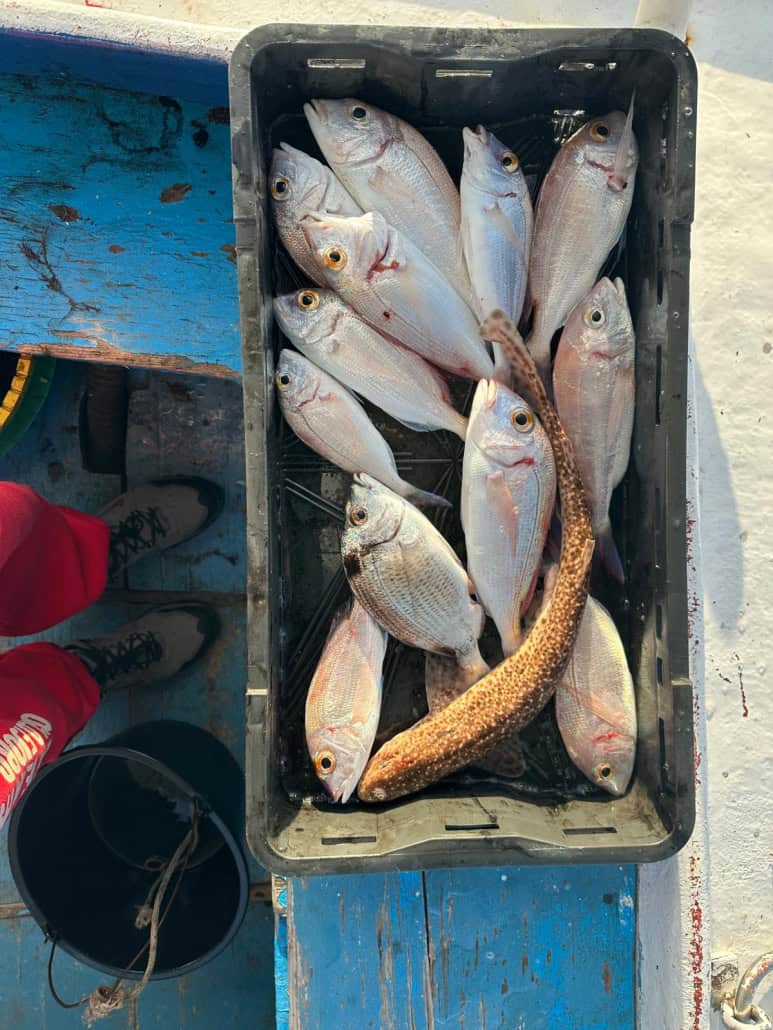
Fresh catch from local waters
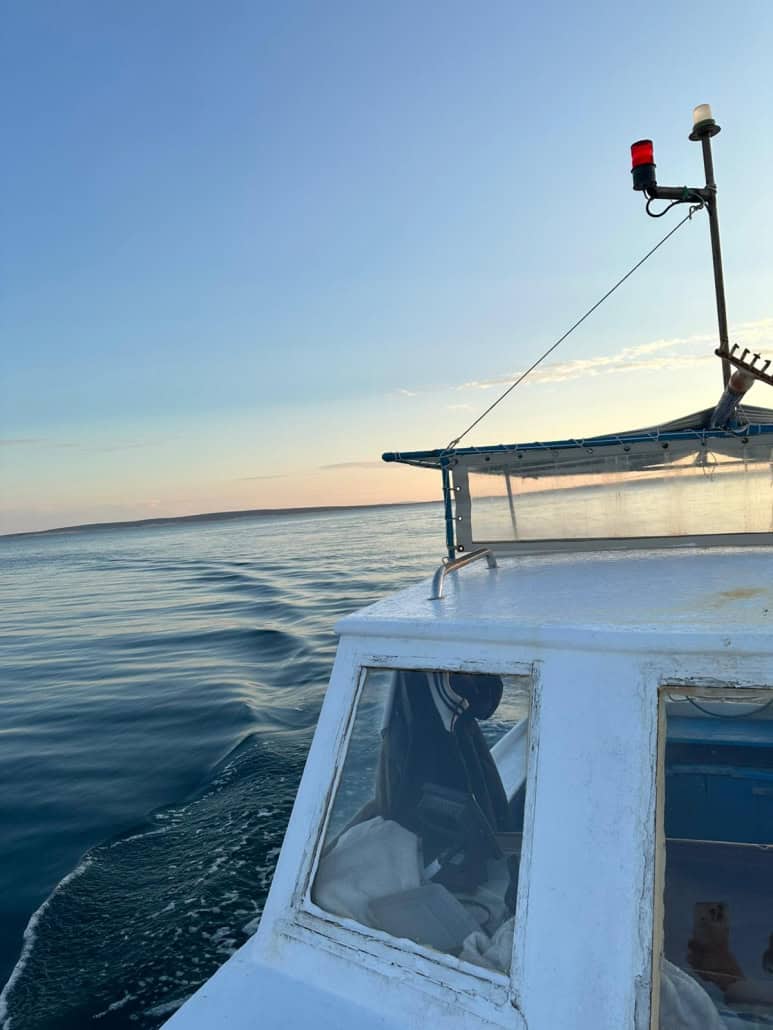
Fishing trips in the local waters of Šimuni
Fishing trips in the local waters

Why Visit Šimuni

Šimuni offers a quieter side of Pag, with calm beaches, fresh local food and a warm village atmosphere. While summer is a wonderful time to visit, April, May, September and October are equally enjoyable, with pleasant weather, quieter beaches and a more relaxed pace. It is a place that has welcomed visitors for many years while keeping its strong family character.

Summer moments by the sea in Šimuni

Thank you for your wonderful write-up on this magical place!

The best ways of travelling to Croatia without flying

With the current political events causing something of a shadow on travel plans and summer holidays this year – mainly down to fuel shortages affecting flights – many travellers are considering altering their travel plans to avoid flights. If you’re travelling from the UK, countries such as France or Spain may seem ideal to visit without taking to the air. But is it possible to reach Croatia through other means? Yes! Although you’ll need to accept a leisurely pace of travel to reach this southern European country. Here, I’ll take you through the different ways of travelling to Croatia without flying.

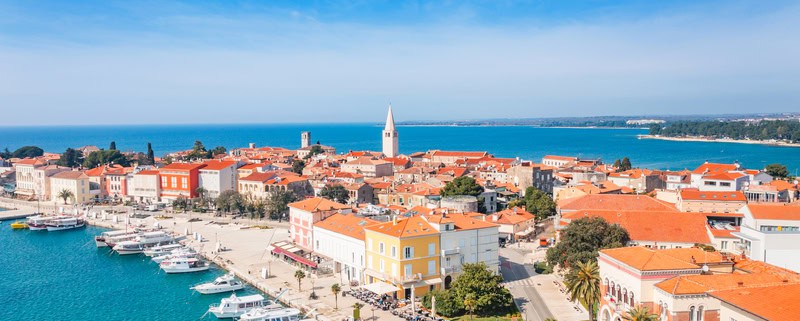
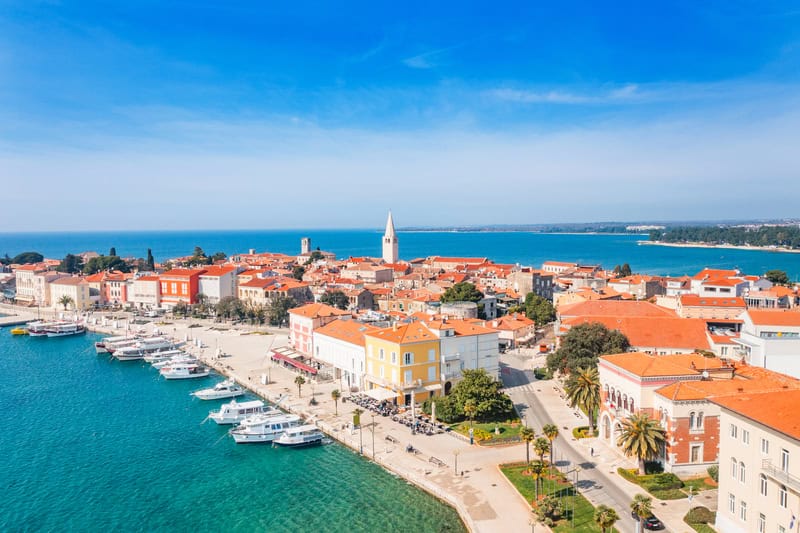
The Istrian town of Porec – you could be here (without boarding a plane)

Travelling to Croatia without flying – By Train

Travelling through Europe by train always has such wonderful connotations, whether it’s young backpackers setting off on an interrailing adventure, or something far more refined and romantic, such as the Orient Express. (Funnily enough, Zagreb was a stop on the original Orient Express route. The super swish and stylish luxury Hotel Esplanade was built in 1925 to accommodate passengers.) If you’ve decided against flying, you may immediately jump to the idea of taking a train instead. And I don’t blame you!

However, if you are travelling to Croatia by train, you will almost certainly need to travel to Zagreb. This city may not be top of your list for a summer holiday destination (although it is a wonderful city to visit), but you will need to make your way to Croatia’s capital city first before travelling on to the coast.

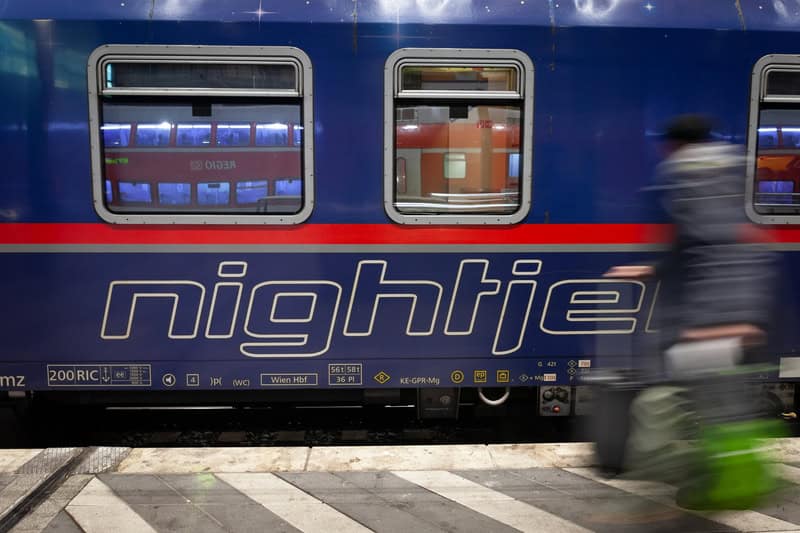
The best idea for travelling to Croatia by train is to make use of the Nightjet services that operate from Stuttgart, Munich and Zurich. These overnight train services depart these cities in the evening (obviously!), which should allow you enough time to get there from the UK, and will also avoid requiring you to spend money on an overnight accommodation stop on your way to Croatia. The Nightjet trains depart Stuttgart 8.30pm, Munich at 11.53pm (this is part of the same route) and at and Zurich at 8.40pm with both trains arriving in Zagreb at 10.30am the next day.

Getting to Croatia without Flying - A Nightjet overnight sleeper train
A Nightjet overnight sleeper train

From Stuttgart it’s 14 hours to Zagreb, from Munich it’s 10 hours 37 minutes, and from Zurich it’s 11 hours and 50 minutes. All trains run daily. As these are night train services, beds are available. You can opt for a more budget couchette bed in a compartment that’s shared with others (or a totally private mini-cabin is available) or a bed in a private sleeping car compartment that comes with a private shower and toilet. The most budget option of all is to not opt for any kind of bed, and go for a seat instead! Tickets for these options start from from €59.90 for a seat, from €84.90 for a couchette or from €144.90 for a sleeper cabin.

So, the Nighjet service sounds great (it really does!), but what about getting from the UK to Stuttgart, Zurich or Munich? The small matter of the Channel being in the means you will have to use the Eurostar to get to the continent, there’s no getting around that. Once you’re in Paris, you will definitely need to change trains – possibly even stations – to make the onward journey.

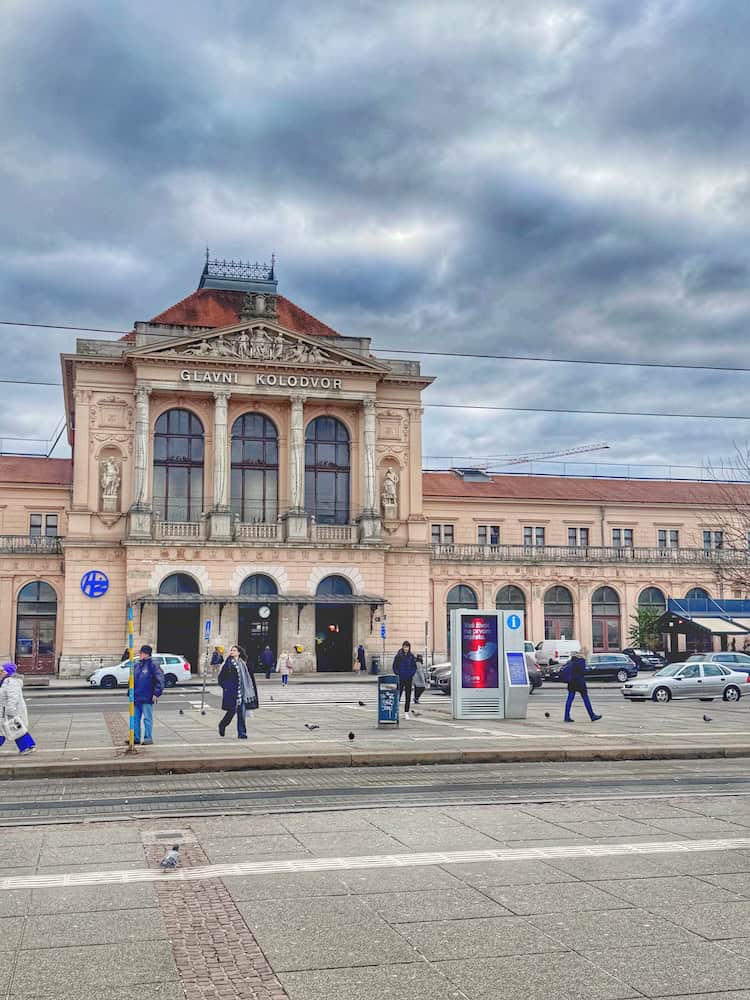
Getting to Croatia Without Flying - Zagreb Glavni Kolodvor, the main train station in the city
Arrive at Zagreb Glavni Kolodvor, the main train station in the city, with an overnight train

Here’s where booking gets a bit tricky. You could book the whole journey from the UK to Zurich/Stuttgart/Munich on a website such as Trainline, but I don’t believe it offers all the best train options. I would suggest looking up train times on the websites of Eurostar, Die Bahn, TGV Lyria or ÖBB to piece together a journey plan.

Additional useful tips:

Travelling to Croatia without flying – By Bus/Coach

Geography dictates that if you’re travelling to Croatia by bus from the UK, you will (once again) see a route that goes through Germany. The large-scale international bus operator Flixbus is your best option for planning this type of journey – you can even use their website to put in your UK starting point and your end Croatian destination. No faffing about on multiple websites.

Travelling by bus all the way to Croatia is a loooonnng journey, there’s no two ways about it. However, bus travel is considerably cheaper than travelling by train. As with travelling by train, you can utilise overnight buses to avoid having to pay for accommodation along the way.

Additional useful tips:

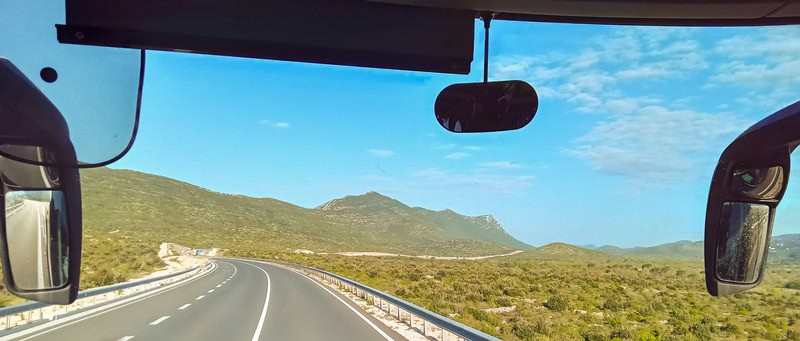
Getting to Croatia without flying - view from a bus

Travelling to Croatia without flying – By Car

1980s me would absolutely applaud your decision to travel to Croatia by car, although seeing as I was only a child then and not doing any of the driving, I had it easy! But what could be better than a road trip to Europe to a beautiful destination on the Croatian Adriatic?

I hate to sound like a stuck record, but once again, Germany will be your friend, at least when travelling through Europe. Yes, that big country is “in the way” when it comes to making the journey southeastwards from the UK to Croatia, but the massive plus is the excellent autobahns.

Use a website such as Via Michelin to plan your route and to estimate the costs of driving to Croatia. This non-flying method of travel WILL require a stopover (at least one, two is better) on your way, so do factor this in to your plans and your costs. Plan a stop in Germany and enjoy some bratwurst and bier for your supper.

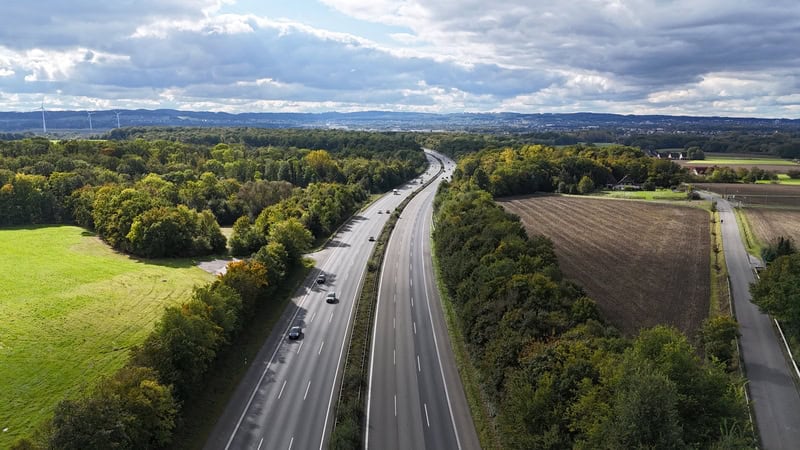
Getting to Croatia without Flying - An aerial view of an autobahn in Germany
An aerial view of an autobahn in Germany

A long-established driving route from the UK to Croatia:

  • take a ferry from England’s south coast to France
  • make the crossing over into Belgium almost immediately and drive in the direction of Brussels and then Germany
  • into Germany towards Cologne
  • head in a southeast direction towards Kolblenz – Mainz – Frankfurt – Nuremberg
  • into Austria near-ish Linz to then head south towards Slovenia and then Croatia

Your route will ultimately be decided by where in Croatia you are trying to reach. A more southerly route in Germany (via Stuttgart and Munich) will lead you towards Salzburg in Austria, allowing you to head south towards Ljubljana in Slovenia and then further south in the direction of the Croatian coast close to Rijeka.

As well as planning your route, the most involved part of this way of travelling is to make sure your car is ready for the cross-Europe journey. Consult a website such as the RAC or the advice from GOV.UK to make sure you have all the necessary paperwork and that your car meets the requirements for driving on the continent.

A massive plus of driving to Croatia is that you can pile your car high with your belongings – seven pairs of shoes per person, it is! – and you can of course make use of your own car when exploring Croatia. Gosh, I’m excited for you just with the idea of driving to Croatia by car!

Additional useful tips:

Other options for travelling to Croatia without flying

Other options than flying? If I don’t mean train, bus or driving, what’s left – hot air balloon? (Although, really, that would also be flying.) Walking? Teleportation?!

No, silly. What I mean is combining a few methods of transport. Mixing together journeys by train and bus would be very doable, but you could also make your way over to the Italian Adriatic coastline and then take a ferry over to Croatia. That would enable you to travel directly to the Croatian coastline, avoiding the need to travel via Zagreb.

Top tips for travelling to Croatia without flying

Let’s face it, not travelling by plane involves a relatively lengthy journey from the UK to Croatia – there’s no getting around that. With the existence of low-cost airlines offering very budget flights, travelling by train, bus, or car can suddenly seem rather costly indeed.

It’s up to you to decide whether you’d like to take on a non-flying European adventure in travelling to Croatia. Realistically, you may wish to expand your holidays and do a multi-site European trip, and take even longer to reach Croatia by making multiple stops along the way.

Imagine a thoroughly enjoyable stay in Paris, Munich, Zurich, Milan, Berlin, Vienna or elsewhere as well as a holiday in Croatia. Wonderful!

Croatia's Ferry and Catamaran Lines - A TP Line catamaran sails past Zadar

Croatia’s ferry and catamaran lines ready for the season

Now that we’re in May, a number of exceedingly popular ferry and catamaran routes in Croatia have started up for the season, or are about to increase the frequency of operation. It’s an exciting time to be alive! Sorry, no wait – it’s an exciting time to go to Croatia and set sail on the Adriatic using Croatian ferries. So let’s take a look at where Croatia’s ferry and catamaran lines are sailing to at the moment.

TP Line lives in the 21st century

It wasn’t that long ago that pre-booking tickets on Croatia’s ferry and catamaran lines was a pretty archaic system, with online bookings practically non-existent. Thankfully, those days are well in the past, with online bookings readily available. TP Line are taking things even further with all sorts of excellent tech advances that are sure to help all travellers this year.

Not only can you now use Apple Pay or Google Pay to buy your tickets right from your smartphone, you can now also ask the company any questions using their helpful online chatbot. All of this is available on the easy-to-use TP Line Web Shop.

If this wasn’t helpful enough, they offer clear instructions for Boarding Locations on the islands and the mainland – for I know this sometimes confuses travellers – and you can even find out where their catamarans are right now.

This summer, TP Line are the only operator to be running two long-distance Split to Dubrovnik (and return) catamarans.

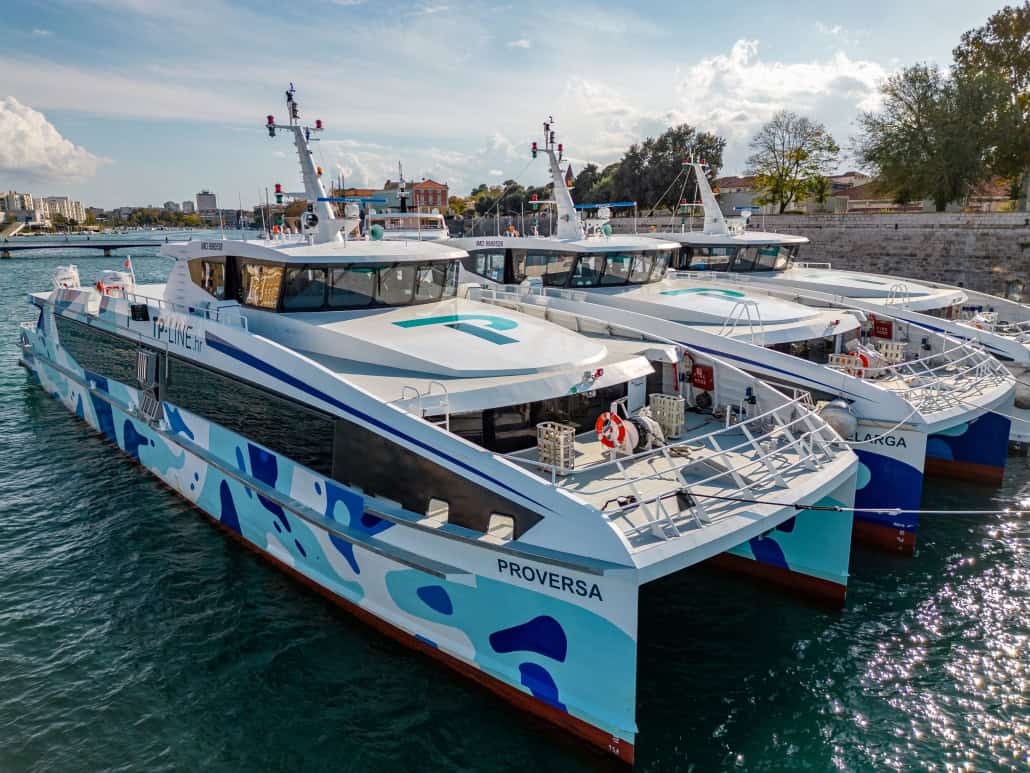
Croatia's Ferry and Catamaran Lines - TP Line Boats

Their Dubrovnik – Korcula – Hvar – Milna (Brac) – Split catamaran started operating daily from 1st April, and will do so until 31st October. This one sails from Dubrovnik at 8am, arriving in Split at 1.25pm. The return journey departs Split at 3.10pm, arriving back into Dubrovnik at 8.20pm.

On 8th May (next week), their second catamaran operating the same route cranks up its engines to set sail. This second sailing will also operate daily (until 18th October), departing Split in the morning at 9am and arriving in Dubrovnik at 2.15pm. The return journey departs Dubrovnik at 2.55pm and arrive in Split at 8pm.

Yesterday, 30th April, saw the launch of their Split – Hvar sailings which will run three times a day until 31st October. From 15th June to 20th September, one sailing a day will run from Split to Hvar and then on to Korcula as well.

The above summer-only routes join TP Line’s other year-round ones which include Dubrovnik – Korcula – Lastovo, Split – Hvar – Lastovo, Zadar – Olib, and Dubrovnik – Sipan – Sobra (- Polace – Korcula, Lastovo).

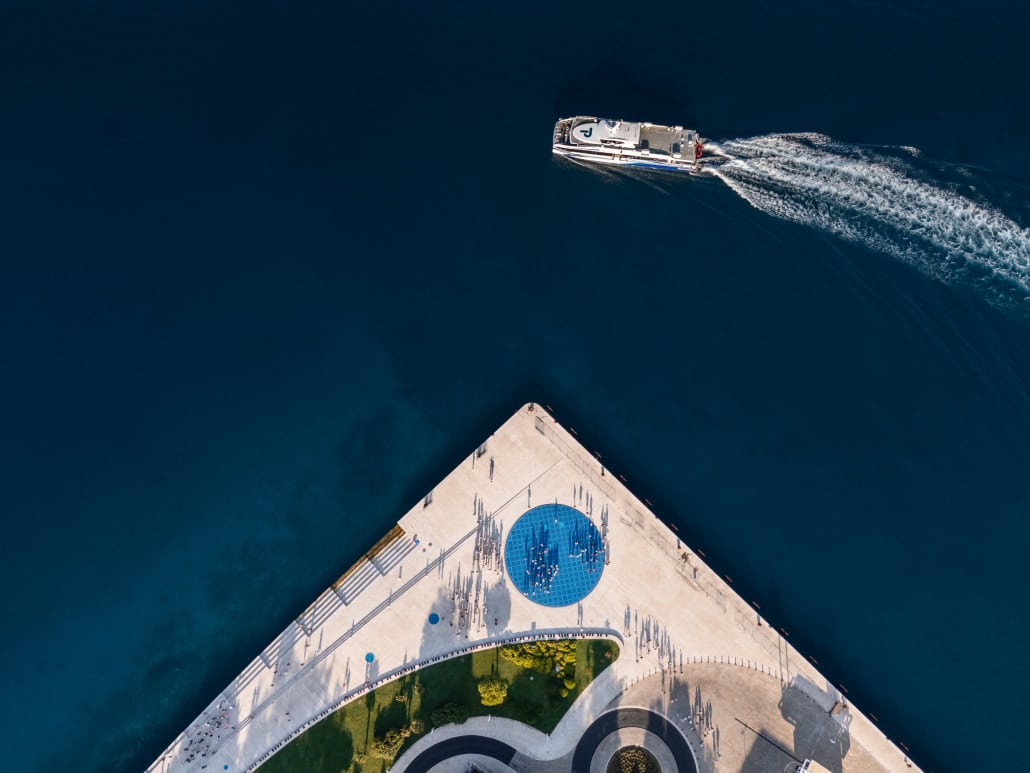
Croatia's Ferry and Catamaran Lines - A TP Line catamaran sails past Zadar
A TP Line catamaran sails past Zadar

Do you know about Krilo Shipping Company?

No? Well, you should. Krilo Shipping Company have been (excuse the pun) ferrying passengers to some of Croatia’s islands since 2016, mainly from Split to peaceful Solta. This year, they will be operating a route that’s new to them – from Dubrovnik to Pomena on Mljet to Korcula. This route cranks into action on 15th May, running until 15th October. You could technically use this catamaran for a (short) day trip for either Mljet or Korcula, given the timings.

I also commend Krilo Shipping Company on their updated website this year!

Krilo Shipping Company
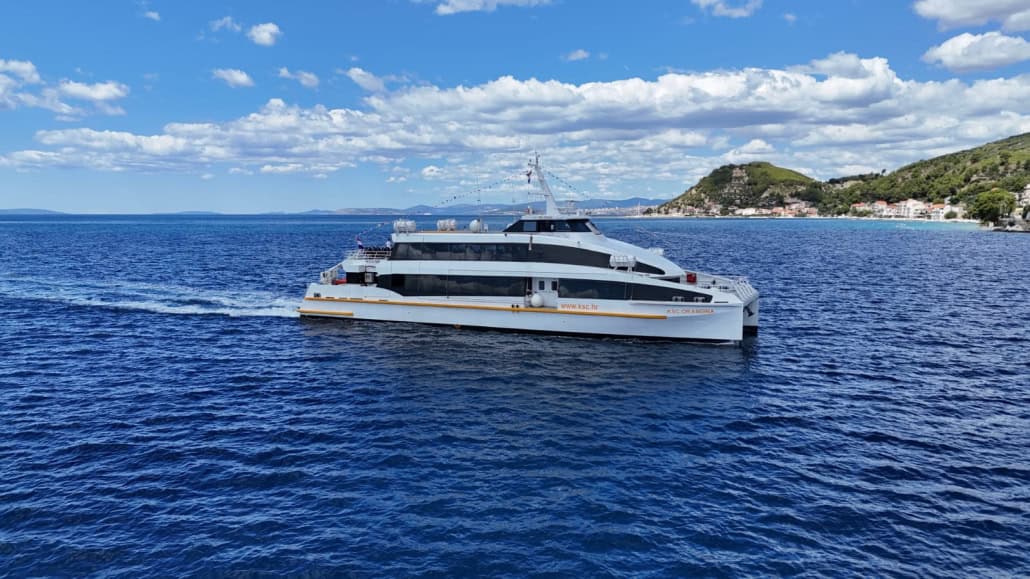
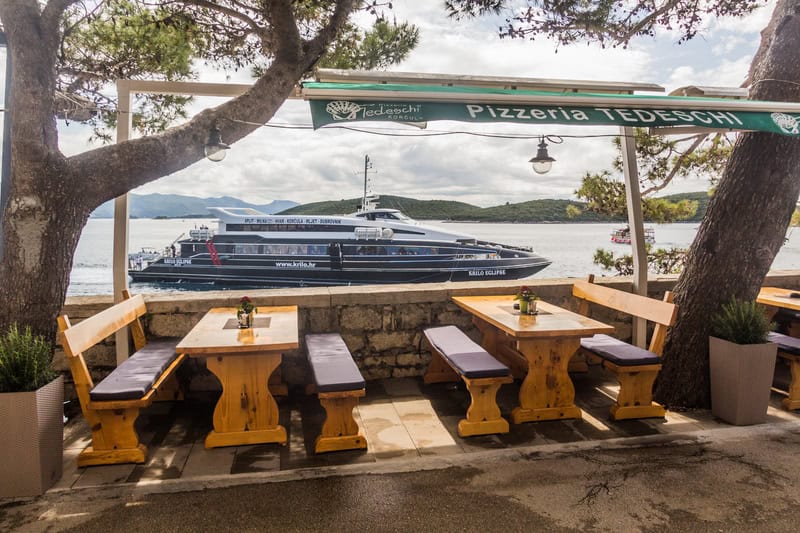
Krilo Shipping Company’s Orangina vessel (what a great name!)

Kapetan Luka brings out all the hits

(By hits, I mean popular routes.)

Kapetan Luka continues to operate one of its long-distance Dalmatian catamarans this summer, running from Split to Milna (Brac), Hvar, Korcula, Pomena (Mljet) to Dubrovnik. This route already started operations on 1st April, and will continue to serve travellers until 31st October 2026. This catamaran sails from Split in the morning, reaching Dubrovnik at 12.30pm. The return journey is made at 5.30pm, arriving in Split at 8pm.

I’ve already written about Kapetan Luka’s new Split to Supetar catamaran that sails several times a day, year-round. As of today, 1st May, it will take to the Adriatic no less than seven times from Split to Supetar, and six times from Supetar to Split.

Kapetan Luka’s other routes include Split to Hvar (sails six times a day from 1st May), Split – Hvar – Korcula (starts operating today, 1st May), a twice daily Split to Bol boat (starts 15th May), the year-round Split – Milna – Hvar – Vis route and the long-distance, year-round Pula – Unije – Susak – Mali Lošinj – Ilovik – Silba – Zadar sailing.

Kapetan Luka catamaran
A Kapetan Luka catamaran sails past Korcula

Edit: Since writing this post, Kapetan Luka has also launched a smart new website. Well done to them!

Jadrolinija moves into high season schedules

But not quite yet. Jadrolinija traditionally operates on low-season and high-season schedules for many of its year-round routes, and the high-season versions kick into action later this month on 29th May. Generally, that’s when frequencies on certain routes increase…and when high season prices come into effect!

I can tell you that as of today, 1st May, Jadrolinija are increasing the frequency on their Bari to Dubrovnik sailing which will now cross the Adriatic twice a week.

International Routes

Further north in the Adriatic, Adriatic Lines‘ sailings from both Porec and Rovinj in Istria to Venice have set sail today! This month, you will be able to make the journey three times a week from Rovinj and four time a week from Porec. These frequencies will increase the further we get into summer, and from 1st June you will also be able to sail from Pula, and from Umag on 1st July.

Adriatic Lines' Prince of Venice vessel
Adriatic Lines’ Prince of Venice vessel

The same company also operates a fast catamaran from Dubrovnik to Kotor and Budva in Montenegro (either can be used for a day trip), but these start operating in June.

More info on Croatia’s ferry and catamaran lines

Take a look at our Ferries in Croatia guide to all the operators and lines that exist in the country. You may be surprised at how many there are! (Or not, given the number of Croatian islands!)

Our Croatia Ferries Map will also help you plan your sea travels by showing you the longer distance routes that exist up and down the Croatian coastline.

Happy sailing on Croatia’s ferry and catamaran lines!

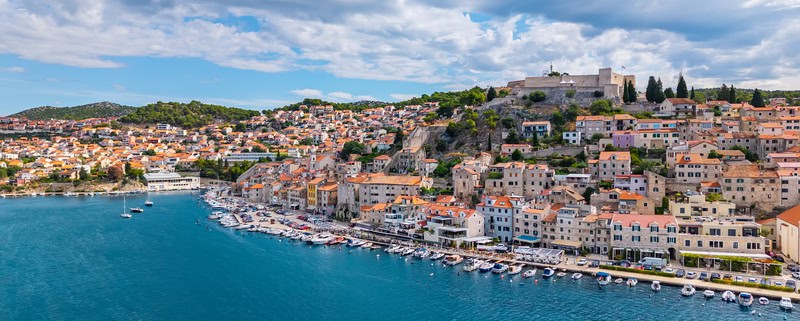
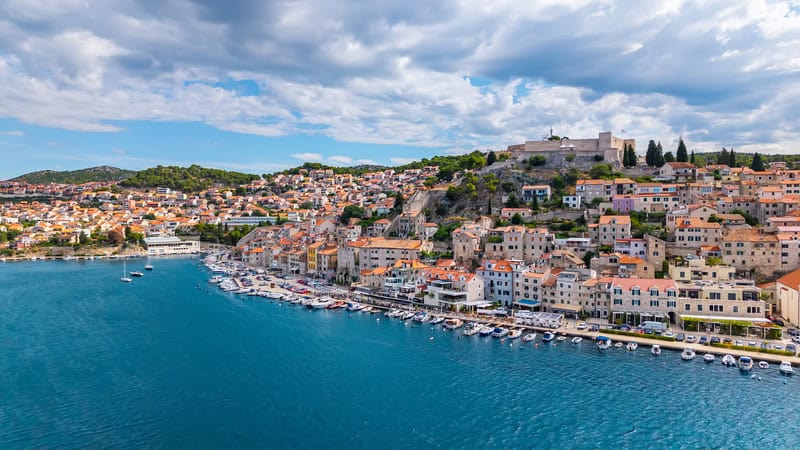
Sibenik

Plan Croatia for May Half Term 2026

We’re almost at the end of April, which can only mean one thing – it’s May in a few days’ time, which in turn means two bank holidays for all of those in the UK (yay) and which also means there’s another half term coming along (gulp). But, good news! The end of May is perhaps one of the best times of the year to visit Croatia, so May half term is so well placed for you to enjoy a holiday with your family in the country. But let me help you plan your trip to Croatia for May half term with this post!

Plan Croatia for May Half Term - an aerial view of Sibenik in North Dalmatia
Sibenik

Why go to Croatia for May half term?

I mean, why not, but if you really need me to twist your arm:

  • Flight time from the UK is roughly two or two and a bit hours, which is very doable with little ones, as that’s about 17 episodes of Bluey (remember, screen time isn’t a concern when you’re on holiday)
  • The weather will be great
  • The Adriatic will just about be warm enough for swimming in
  • But should you find it too cold, practically every family resort will have its own pool – maybe even an indoor one too
  • As it’s early season, holidays will be cheaper than during the summer holiday months of July and August
  • The crowds will not have descended yet, so you will have more pool-space, beach-space, sightseeing-space, national park-space and all other kinds of space to yourselves
  • The ice cream
Croatian ice cream (on the island of Ugljan)
Delicious ice cream

I’m not constrained by school holidays, should I go to Croatia for May half term

I mean, no. Why would you do that to yourself? Go the week before or the week after.

If you’re already booked your holiday for that last week in May, then – oh yay, well done, never mind.

Seriously, don’t worry, Croatia isn’t exactly a peak half term holiday destination.

Are you sure the weather will be good enough?

Yes. All along the coastline, the weather will be very fine indeed. Temperatures are likely to be in the mid-20s Celsius (at least), and days will be very sunny. Rain isn’t likely, but if you do encounter any rainfall, it won’t be for long.

On that note, do bring your summer clothes to enjoy the most of the weather, but pack some cover-ups (cardigans, light jackets) for evening time. Late May doesn’t bring the same kind of sweltering heat as summer does, so evenings will be a little fresher but not cold.

Fine, I’m sold. Where should I go in Croatia for May half term?

There are plenty of family resorts up and down the Croatian coastline, which of course means plenty of choice for you!

I have two hotels in particular to recommend to you in Croatia for May half term, both in the gorgeous region of north Dalmatia. First off, the Falkensteiner Funimation Hotel Borik in Zadar has multiple outdoor pools and is right on the beach, but also has a decent-sized indoor pool should the weather not play ball. If swimming gets boring, there’s a great indoor soft play (yes, really!), kids’ clubs with activities for different ages, indoor games and best of all, it’s all-inclusive! Zadar Old Town is a short journey away (book an Uber or Bolt, it will be less than €10) to enjoy everything that lovely town has to offer.

Falkensteiner Funimation Hotel Borik
The exterior of the Falkensteiner Funimation Hotel Borik, as seen from the garden/pool area – at sunset!

My other personal favourite is the Amadria Park Hotel Jakov, which offers smart, trendy yet fun accommodation (bunk beds for the kids!) with very relaxing vibes throughout. Again, there are several pools here, including a nicely sized baby pool, a kids’ club, and a bear mascot that likes to turn up at random times. The whole Amadria Park resort is interconnected, so you can stroll along the seaside promenade to enjoy the multiple restaurants and areas. There’s even a mini golf here. Hotel Jakov’s neighbour, the Hotel Andrija, is also suitable for a holiday with kids, who may shriek with delight when they see the giant octopus on the outside. (Don’t worry, he’s not real.) And if all of this isn’t enough, the Aquapark Dalmatia is just steps away. The outdoor portion of this opens in June, but there’s an indoor section that is open year-round!

Review Jet2 Holidays - View from Amadria Park Beach
A beach at the Amadria Park resort in Sibenik

Otherwise, take a look at Visit Croatia’s guides to Family Hotels in Croatia and Family Holidays in Croatia for more ideas.

Families with older kids

Those of you who are travelling with teens may want something more than just a family hotel with a pool to jump into about 97 times a day. If so, consider renting an apartment that has access to a pool and is a short walk to a beach, but also is well placed for trips to a larger town or city for sightseeing and excursion opportunities. Here are some ideas:

  • Trogir is a short distance from Split and very easy to reach from Split Airport. This small island town itself is exceptionally charming, but for more traditional holiday vibes, stay on the connected island of Ciovo, which offers plenty of apartments (and some hotels) and beaches. You can reach Split very easily by bus or boat (or car, of course).
  • A small resort in southern Dalmatia, such as Cavtat, Slano, Zaton or Mlini, so you can have a relaxing day-to-day existence, but make the journey into Dubrovnik by bus or boat
  • Enjoy a city and nature break combo by flying into Zagreb and spending half your holiday there (so many sightseeing and cultural opportunities!), and then taking a bus down to the Plitvice region and taking several walks/hikes in the Park on subsequent days
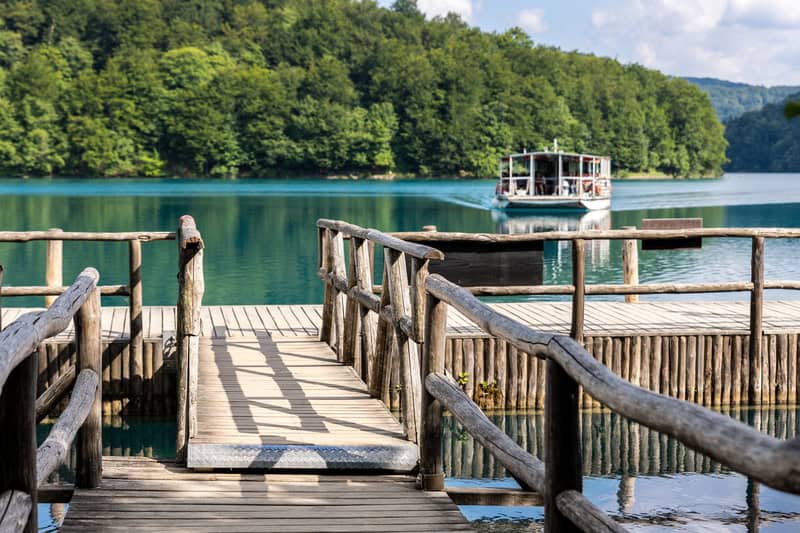
A boat crossing a lake in the Plitvice Lakes National Park

Activities in Croatia for May half term

A holiday in Croatia isn’t a holiday in Croatia without an excursion of some sort. And if you only do one trip, make sure it’s getting out onto the Adriatic on a boat. Everyone will love it, trust me! Boat trips can be booked almost all along the coast – mainland or on the islands. When you’re in Croatia, enquire at your hotel or at any of the little stands you’ll see dotted around the town you’re staying in.

For a preview, take a look at some of the options below:

Powered by GetYourGuide

Late May would be an ideal time to see the magical Blue Cave before the peak summer crowds, and combining it with a trip to where Mamma Mia 2 was filmed (yes, really) – what could be better? Or dolphin watching in Istria, how amazing is that?

Day trips can absolutely include a little bit of adventure, from quad biking to fun and games on the Cetina River (which is practically adventure central in Croatia):

Powered by GetYourGuide

Or, seeing as you’re in Croatia, why not experience a bonus destination by hopping over a border and ticking another country off your list?

Powered by GetYourGuide

Book me in!

Take a look at what holiday packages operators such as Jet2 Holidays (one of my favourites), TUI, Easyjet Holidays or British Airways Holidays have to offer. You may well be able to snap up a half term deal, and tweak your holiday depending on your requirements.

Or put your holiday together yourself! (Go on, be brave!) Take a look at what flights can be booked for the end of May (the answer is plenty, but use our Flights to Croatia from the UK & Ireland page as your guide) and then snap up the accommodation in Croatia of your dreams.

And…relax…

Lucky you! You’re going on holiday to Croatia very soon!

How to spend the Easter Holidays in Croatia - an aerial view of Dubrovnik Old Town

How to spend the Easter Holidays in Croatia

The Easter break is fast approaching, with less than a couple of weeks left of the school Spring term! (Sorry to surprise you if you weren’t already aware.) Whilst I’m sure many of you will have already booked your holidays, some travellers may be seeking alternative arrangements to planned breaks or perhaps booking last-minute deals. And be thinking…is Croatia suitable for an Easter holiday? Well, you’re on the right page to find out! Here’s how you can spend the Easter Holidays in Croatia.

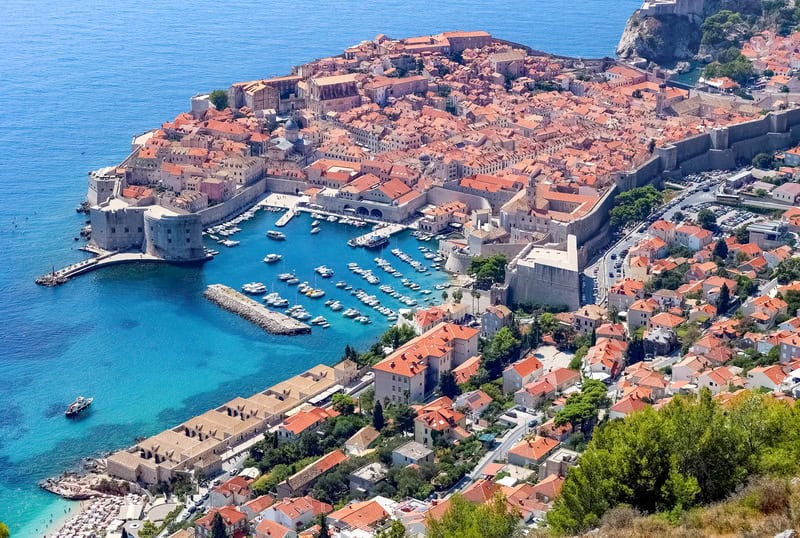
How to spend the Easter Holidays in Croatia - an aerial view of Dubrovnik Old Town
Dubrovnik would be an ideal location for an Easter Holidy break!

Wait a minute, when’s Easter again?

Easter Sunday is fairly early this year, on 5th April. Do be aware that Easter Monday is also a public holiday in Croatia, but the Friday before is not – but will still be commemorated as part of the Easter weekend. As a Catholic country, Easter is understandably a rather religious affair for many here. In fact, Easter is probably the most religious of all the holidays during the year. Mass on Easter Sunday is a very well-attended affair at churches all over Croatia.

Because of its status as a religious holiday, most establishments will be shut on both the Sunday and Monday. That includes shops, cafes, restaurants, many attractions (but not all) and similar, so do be aware of this.

If you would like to witness a traditional religious Easter procession, you may like to head to the island of Hvar. The 500-year-old Easter tradition, Za Krizen, sees six parishes follow a cross on an overnight journey all around the island. This journey begins on the Thursday before Easter (Maundy Thursday) into Good Friday.

Of course, the Easter Holidays – as far as schools and similar institutions go – are always a two-week-long holiday. If you are concerned that spending Easter in Croatia will disrupt your enjoyment (I mean, it shouldn’t, but for some it might), consider holidaying in the second week.

But what about the weather?

Okay, this is bound to be a big consideration for many travellers if you’re thinking about spending the Easter Holidays in Croatia. It’s too early in the year to have summer weather, that’s for sure – you definitely won’t get temperatures in the high 20s Celsius (high 70s/low 80s Fahrenheit) and endless stretches of very hot sun. Sunbathing on a beach is unlikely and swimming in the Adriatic is a no-go…unless you’re very brave.

Having said that, it is too early to be looking at weather forecasts to see what the weather will actually be like for the first two weeks of April. Generally, however, you can expect coastal areas to be sunny and hopefully reaching around 20ºC (or perhaps a few degrees higher). The further south along the coast you are, understandably, the better/warmer the weather should be. So opt for Dubrovnik and the surrounding area to try and get the best of the weather if you really, really need to have the best weather possible.

Once we get closer to April, take a look at the forecasts on the Croatian Meteorological Service, or a weather app of your choosing to find out what will actually be forecast.

Flights to Croatia for the Easter Holidays

The end of March is a time when many airlines start their “seasonal” services, and that’s certainly the case for flights to Croatia. Whilst not every single route starts operating at this time of year, you can certainly make use of an incredibly high number of flights from the UK and Ireland to Croatia during the Easter Holidays. Such as:

I’ll be honest with you, before I started writing out this list, I didn’t expect it to be quite so long! That’s 28 (28!) routes you can make use of if you’re heading to Croatia during the Easter Holidays.

As ever, head to Visit Croatia’s guide to Flights to Croatia from the UK & Ireland 2026 to see days of operation and actual start dates.

Getting to and from Split Airport
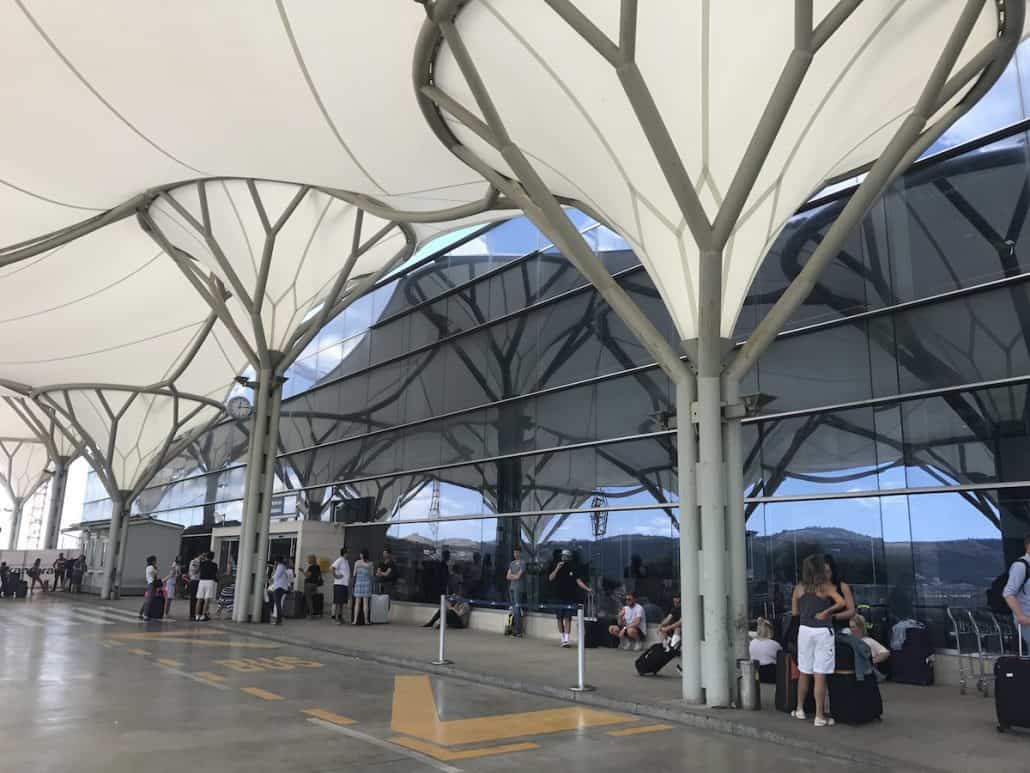
Split Airport

Get a deal on a package holiday to Croatia during Easter

If I’ve managed to persuade you to spend your Easter holidays in Croatia, why not consider a package break? At this time of year, you’ll very likely enjoy some very good deals indeed because it’s quite early in the season. Seeing as Jet2 have commenced their flights to Dubrovnik, let’s take a look at some of Jet2Holidays‘ packages to this city.

For example, you can take advantage of 7 nights (departing Sunday 5th April) at the very comfortable 4-star Grand Hotel Park for £1,380 for two people. Close to restaurants and a bus journey away from the Old Town, this hotel has an indoor pool, so you can enjoy some swim time whatever the weather.

For luxury at a relative steal, 7 nights at the 5-star Royal Blue Lapad for the same dates costs £1,744 for two people. Or you could opt for 7 nights at the 5-star Hotel Croatia in genteel Cavtat for £1,408 for two people.

For something super upscale, you could enjoy 7 nights at the 5-star Hotel Excelsior – one of Dubrovnik’s most famous hotels – departing London Stansted on Sunday 5th April for £2,660 for two people. Pricey, yes, but I found the same package offered for over £5,000 for two people for dates in June.

Other types of holidays in Croatia

City breaks galore

Okay, so given it’s not exactly beach weather in Croatia during early April, how about considering another type of holiday? A city break to Zagreb would really be ideal for this time of year. Springtime in Croatia’s capital city is wonderful, with the pleasant weather providing a cheerful air and the perfect setting for days spent in cafes (although, really, the Zagrepčani have no problem doing that all year round) with gentle strolls through the Upper and Lower Towns, taking in many of the museums and sights.

Easter Holidays in Croatia - Springtime in Zagreb
Springtime in Zagreb

Or, what about a coastal city for a city break? Glorious springtime offers much for visitors in cities such as Pula, Zadar or Split.

Who doesn’t love a road trip?

April may be the perfect month to undertake a road trip in Croatia. The roads won’t be busy with summer “commuters”, and you won’t have to suffer through sweltering temperatures as you slog down the coastal road. (Scratch that – the coastal road is anything but a slog, whatever the outside temperature.)

That very coastal road, with its spectacular views, would be the top choice for a road trip. Get the full experience of Dalmatia by starting in Zadar (to where you can fly) and then making the drive all the way down to Dubrovnik. Or, if you have more time, start in Pula in Istria! And of course, doing the reverse of either of these is possible.

For a mix of inland treasures and coastal delights, start in Zagreb and then head down to the Plitvice Lakes to enjoy a couple of days here in the spring sunshine. Then head down in the direction of Zadar and further down the coast, as above.

Island life

Croatia’s islands are waking up in springtime, but are still relatively quiet locations when it comes to holidaying at this time of year. But that’s what you might be looking for! Even the larger and most popular of Croatia’s islands – Hvar and Brac, for example – still have low numbers. Not all accommodation may be fully available to you, but for a peaceful and relaxing stay, consider some time on an island during the Easter Holidays.

How to spend the Easter Holidays in Croatia - A pretty view on the island of Hvar
A peaceful Spring moment on the island of Hvar

What’s on in Croatia during the Easter Holidays?

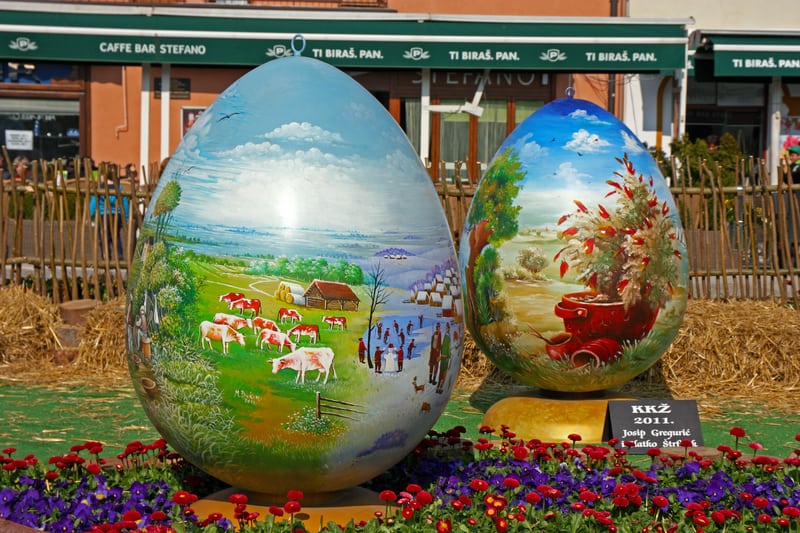
Look out for Easter-related events wherever you are, often involving child-focused happenings. (Such as Easter egg hunts, for example.) One of the best Easter-related events is the display of giant Easter eggs in the northern Croatian town of Koprivnica. These eggs – labelled Easter Eggs from the Heart – are hand-painted in naive art style, typical for the region.

Non-Easter events

Around 3,000 competitors are expected for the Istria 100 (9th – 12th April), which actually covers five different race distances, the longest being 100 miles in length…hence the name. The competition is sold out, but you can certainly watch the racers whizz by in Central Istria.

If you’re more into cars and less into…er, people…the Croatia Rally takes place on the exact same dates (9th – 12th April). This official FIA World Championship event is held on roads in Istria, Gorski Kotar, Lika and Karlovac counties this year.

The first concert of Dubrovnik Musical Spring, a wonderful classical music event featuring the Dubrovnik Symphony Orchestra, will take place at Revelin Fortress on 10th April.

April is asparagus month, and if you’re a fan of this woody vegetable, you must head to Lovran in Istria! The whole month celebrates the Asparagus Festival, with local restaurants offering special menus. The highlight of the festival takes place on 11th April when a giant fritaja (similar to an omelette) is made with 1,000 eggs and 30 kilograms of asparagus and bacon. That’ll be quite some party!

The UCI Gran Fondo cycling race will be taking to the roads in and around Umag on 11th April.

On the evening of 11th April, the Zadar Night Run will see competitors race on routes (5km, 10km or 21km) at night. Most of the routes run right by the sea. A super sweet kids’ night run takes place the day before at 6pm, with kids running down Siroka ulica in the centre of the Old Town.

On Fridays in April (10th, 17th and 24th), head to Kvaternik Square from 6pm to enjoy the street food event Place. With good vibes and great music too, you can enjoy a tasty dish from a street food stall.

All in all, there’s lots to enjoy if you’re spending the Easter Holidays in Croatia!

Visit Croatia Review: Plitvice Lakes in Winter

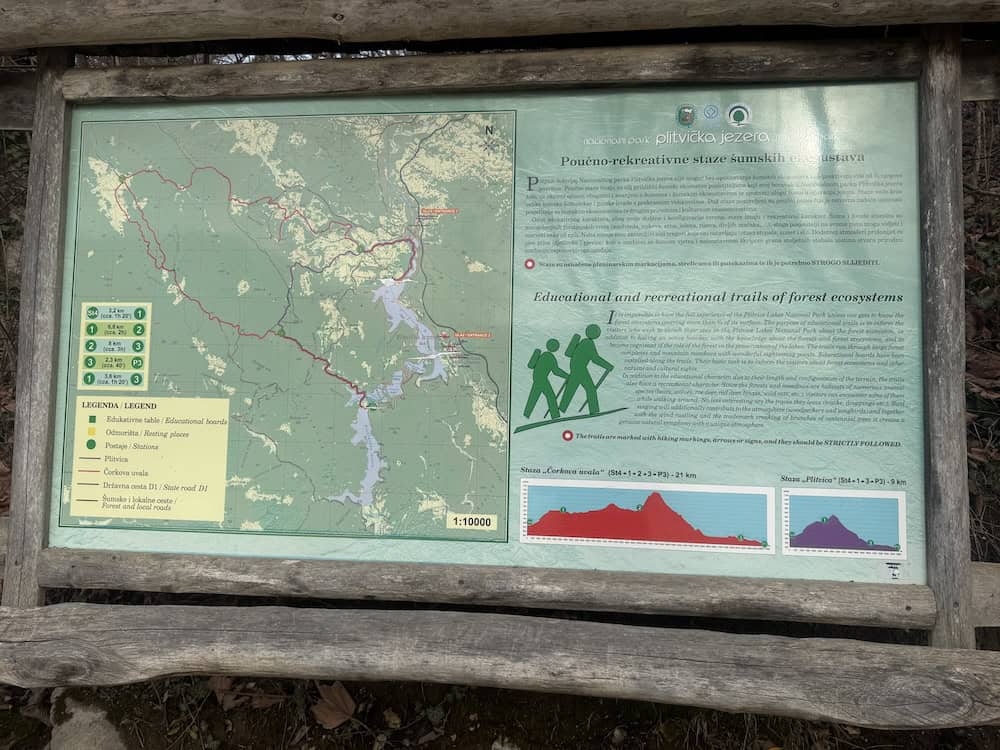
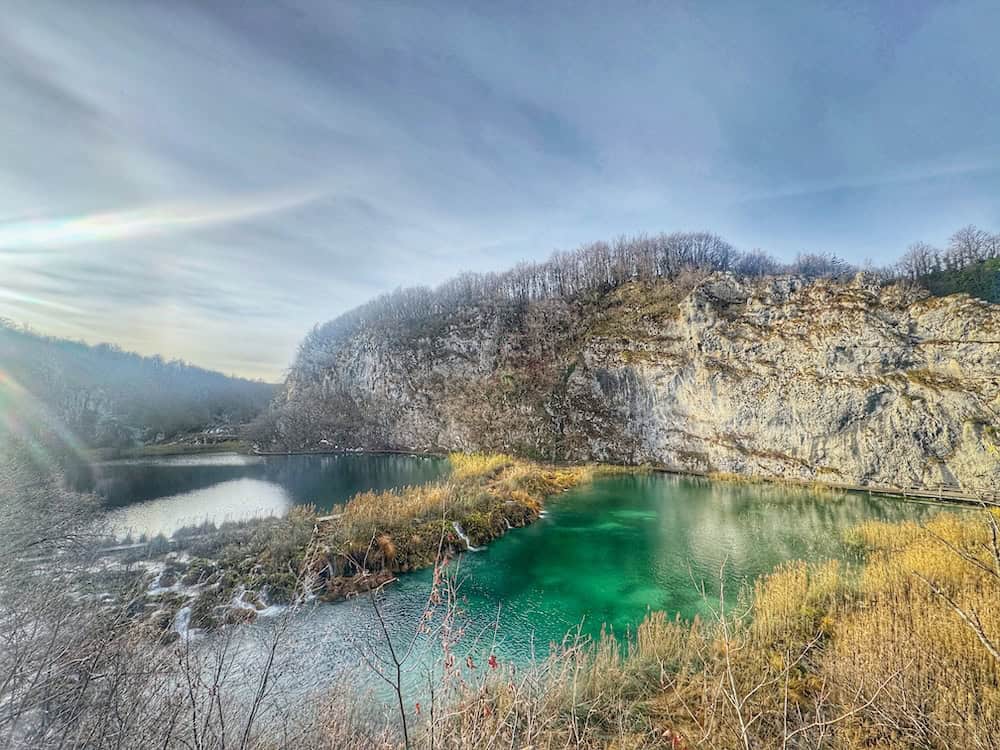
Plitvice Lakes National Park is one of the top sights to visit in Croatia. With its stunning interconnected lakes and waterfalls, gorgeous nature and animal inhabitants (although the larger ones are rarely seen by people), it’s a wonderful place to spend a day – or hopefully longer. The inland location, in the Lika region of Croatia, is also somewhere that many visitors wouldn’t otherwise experience, preferring the coast or Zagreb. Visiting the park provides a wonderful opportunity to experience another slice of Croatia. My latest visit to the National Park was last month, at the start of the coldest season of the year. So what was it like visiting the Plitvice Lakes in winter? Is it worth it? Find out what I thought!

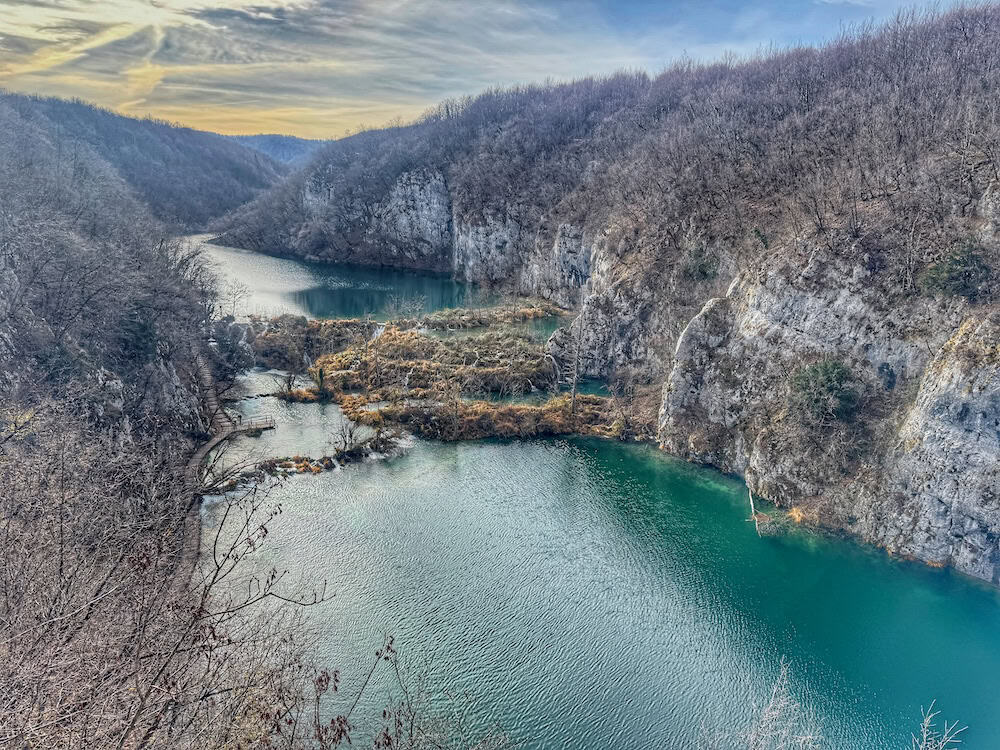
A view of the lakes in Plitvice - Plitvice Lakes in winter

Early arrival

To make the most of my day, I decided to take the first bus from Zagreb to the lakes. That meant getting up before 6am (normally, waaaay too early for me) to make the 6.45am bus. The bus, run by Prijevoz Knezevic, ended up being a little mini-bus to my surprise, but no matter. The comfy seats and decent leg room were just the thing for a snooze all the way to the lakes. (The mini-bus was half full, and one small group also disembarked at the lakes.)

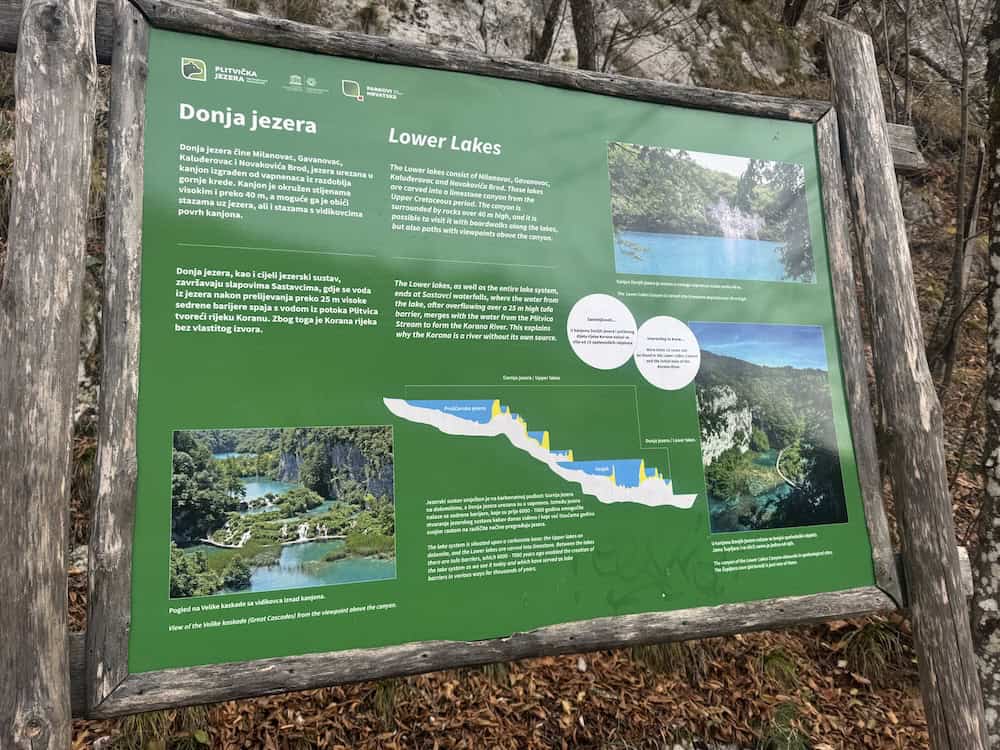
The bus stopped right by Entrance 1, from where it’s possible to visit the Lower Lakes – which are the ones that are accessible in winter. It is also this entrance you need to visit Veliki Slap (Big Waterfall – the clue’s in the name, as it’s the tallest waterfall around these parts). Funnily enough, although you’re visiting the Lower Lakes, you enter the Park from up on high and first experience one of the most beautiful and most famous views of the National Park.

Plitvice Lakes in winter - a first view of the lower lakes
A first view of the lower lakes
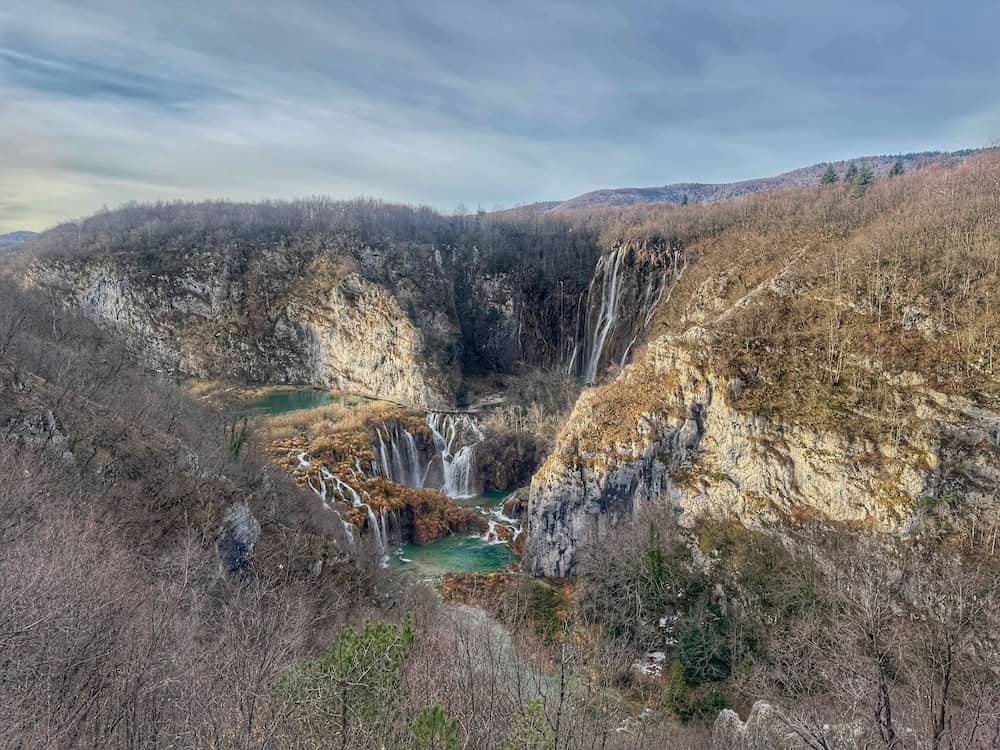
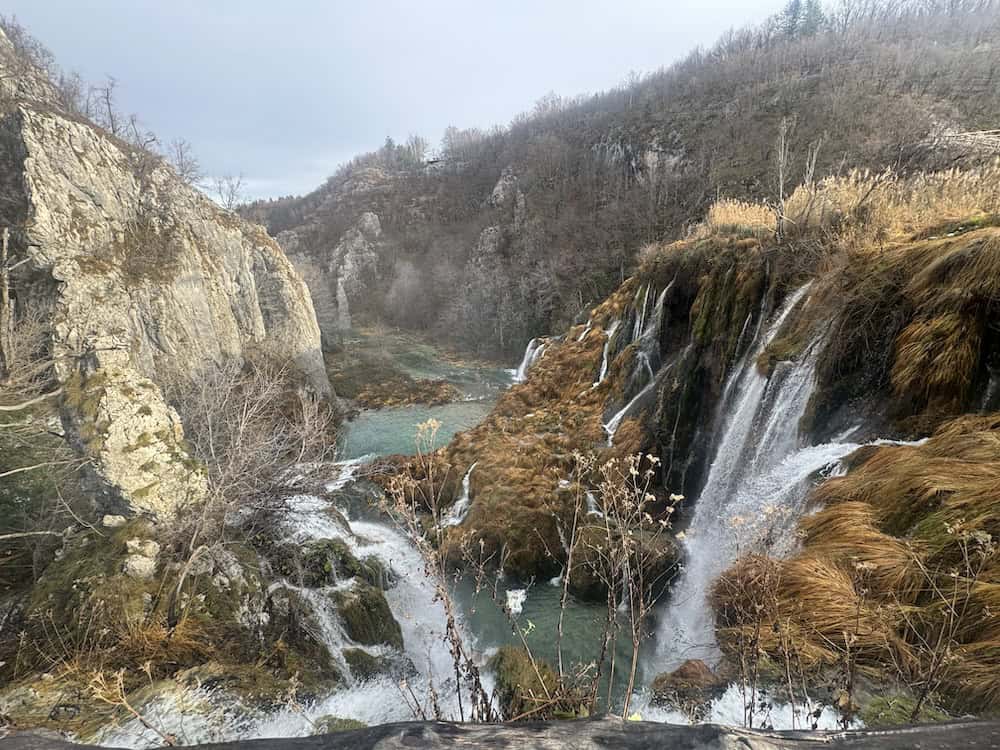
The Lower Lakes in Plitvice Lakes National Park
Looking down toward Veliki Slap

I headed to the ticket booth to snap up my €10 ticket (which would be €40 in the peak summer months!) and then talked to the helpful guy in the adjacent booth who explained what paths and trails were open and would be possible to visit. In this case, he told me Trails A and B would be able to be followed. I decided to opt for the longer Trail B (which they say takes 3 to 4 hours, and 4,000 metres in length).

And then, reader, my adventure began.

Oh, wow!

As I’ve already hinted, just a few steps beyond Entance 1 is one of the most the unbelieveable sights of the Plitvice Lakes, looking down onto three interconnected lakes (Milanovac, Gavanovac, and Kaludjerovac) and the waterfalls inbetween them. You might even stand yourself here, take in the amazing sight, snap a photo or three, and then head home. But you wouldn’t, because you’re not crazy, are you?

From here, I descended down the path in the direction of Veliki Slap. This waterfall is actually in the wrong direction from the trails, essentially down a dead end, but if he’s the biggest guy in town, you need to pay him a visit – right?

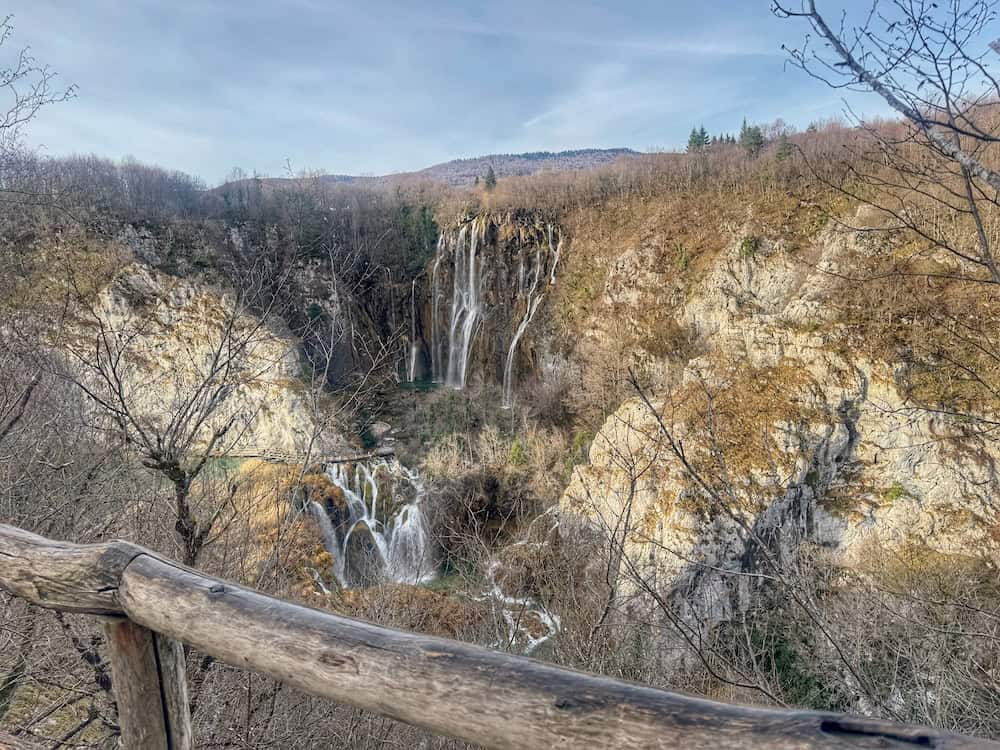
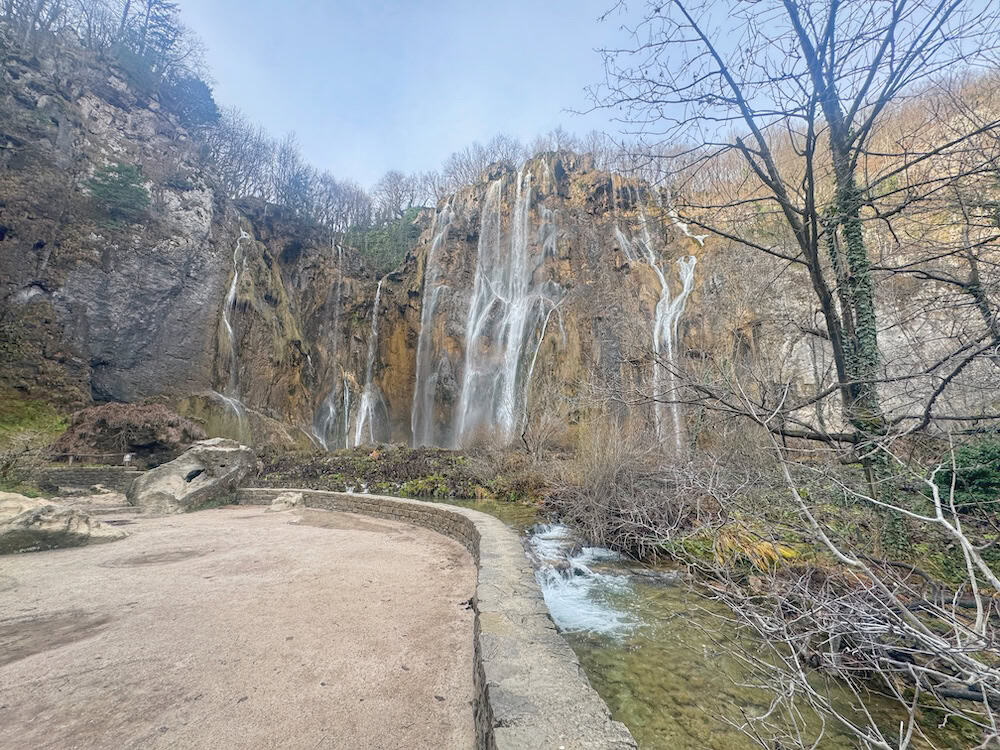
Veliki Slap in the Plitvice Lakes National Park
Veliki Slap
The Plitvice Lakes in Winter - an image of waterfalls

Two things quickly became apparent to me. The first was that it was literally freezing (I do mean literally), so I had to dress myself in all additional items of clothing I wasn’t yet wearing.

The second I realised was that by arriving at the Plitvice Lakes just before 9am in winter, I had totally won in life. As I descended down to the Lower Lakes, I didn’t pass a single other person. On my way to Veliki Slap and back, I passed two people – Plitvice Lakes maintenance workers. Heading further around the paths, heading in the direction of Lake Kozjak, I passed only a handful of people – maybe 10 at most? Having the Lakes essentially “to myself” was really such a magical experience that I can barely put into words. It was probably one of the best days of my life!

The Lower Lakes in Plitvice on a winter morning
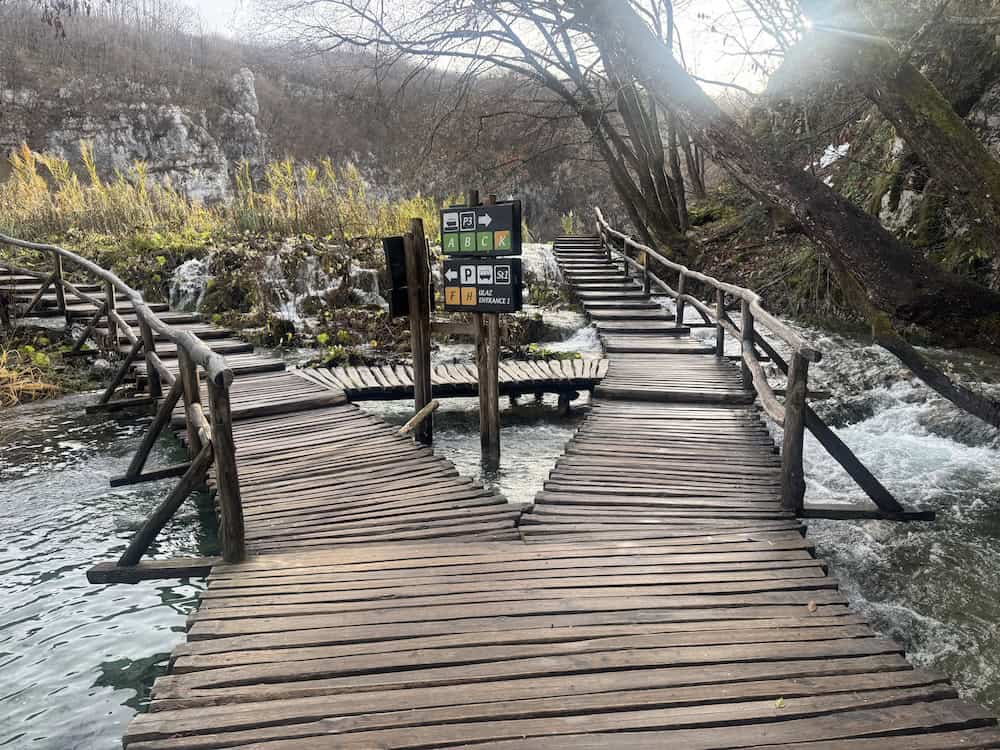
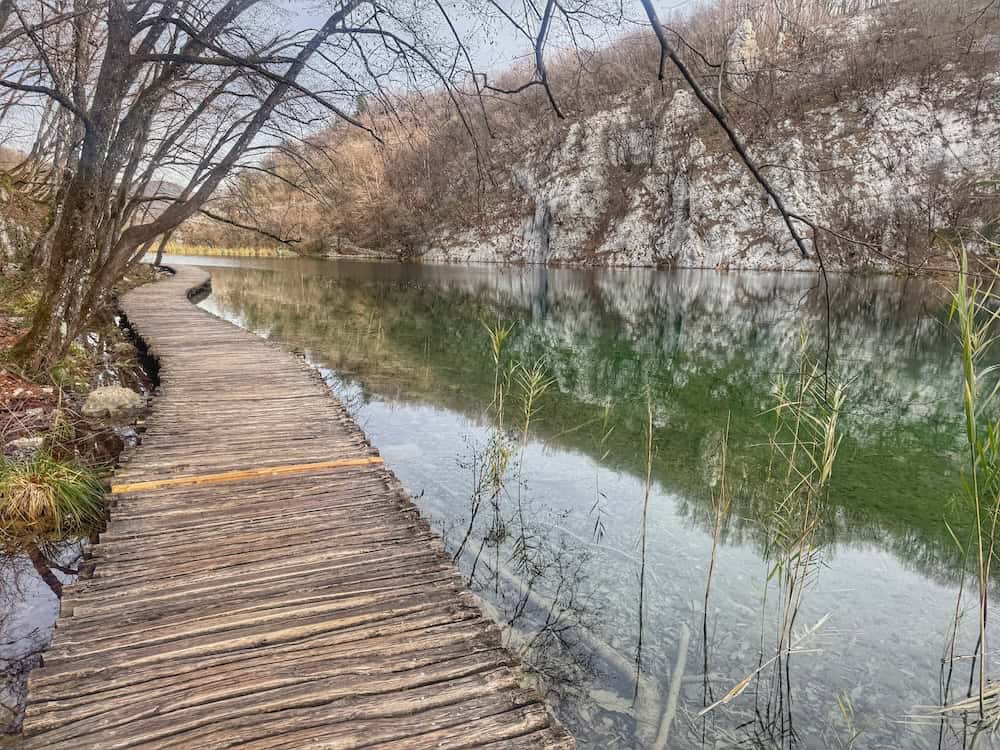
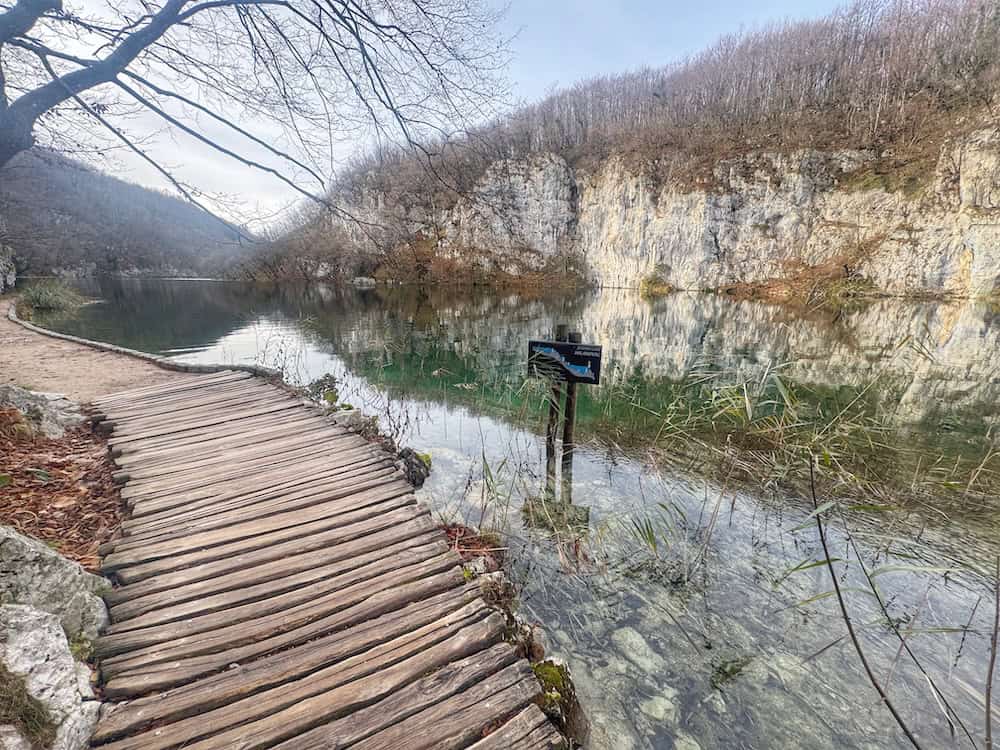
The lovely wooden paths in Plitvice

Heading round the wooden paths and admiring all the lakes and waterfalls, the lack of other visitors meant I could really go at my own pace. This also meant I could take in all the particular signs and points of interest I came across without being hurried along.

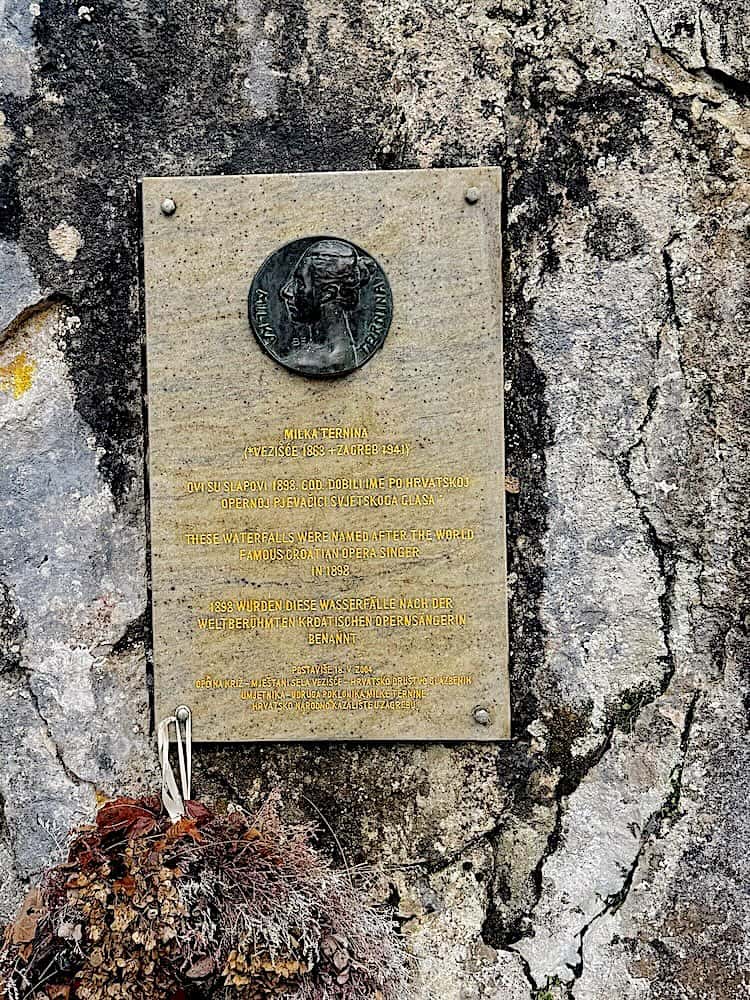
Milka Ternina plaque in the Plitvice Lakes National Park
A plaque explaining how a set of falls are named after opera singer Milka Ternina

Time for a pit stop

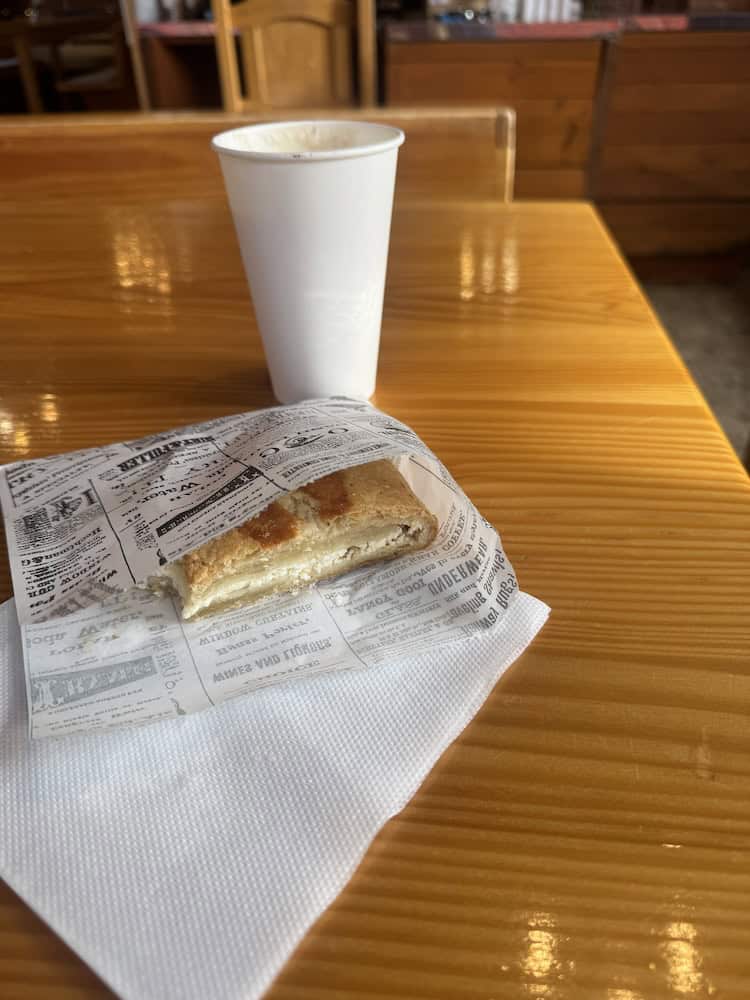
On reaching Lake Kozak, I discovered a small souvenir shop and a small cafe. Of course, I made good use of both – I couldn’t leave without getting something for my fridge’s magnet collection. The cafe was relatively basic, but very warm and just the thing for a recharge, for both myself and my phone. It had a reasonable selection of hot drinks and offered things like sandwiches, burgers and chips and a few sweet treats. (Also, a fairly impressive range of Croatian spirits…I’m sure a shot would have been warming, but I didn’t go for it!) I would highly recommend a warming coffee and a slice of cheese strudel (savijača). Delicious.

Cheese strudel and coffee in Plitvice
Just the thing for a cold December morning

On I go

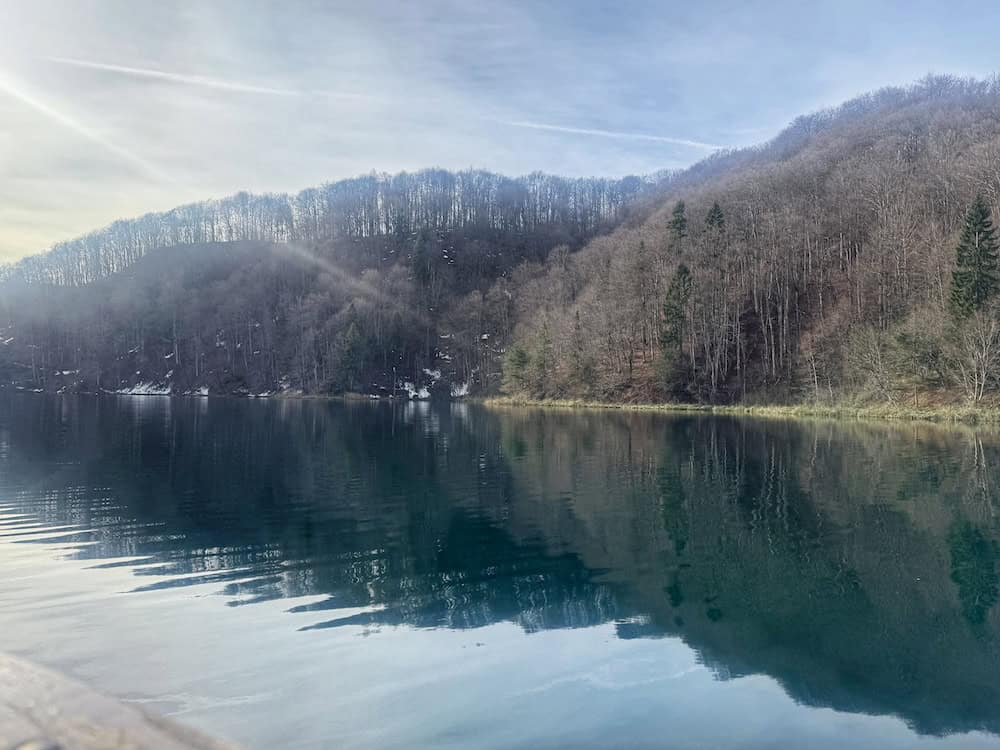
The cafe and shop are right by the shore of Lake Kozak, which has an electric boat running across it. This in itself is another awesome experience – the boat glides softly and quietly over the lake as you take in the nature on both sides.

The boat was actually the largest number of people I saw at any one time during my Plitvice winter adventure, with about 15-20 people on board. A few seemed to be part of small tour groups, who I assumed to be undertaking private tours of the Park. (I certainly saw one couple clearly being guided around the lakes.)

Lake Kozjak, Plitvice Lakes
Lake Kozjak

I disembarked on the other side of the lake – past a sad, understandably closed ice-cream stall – to continue my journey on Trail B. Most of my fellow boatgoers seemed to disappear at this point (don’t worry, I don’t mean in a sinister way), so I assume they were heading up to Entrance 2, to be taken elsewhere.

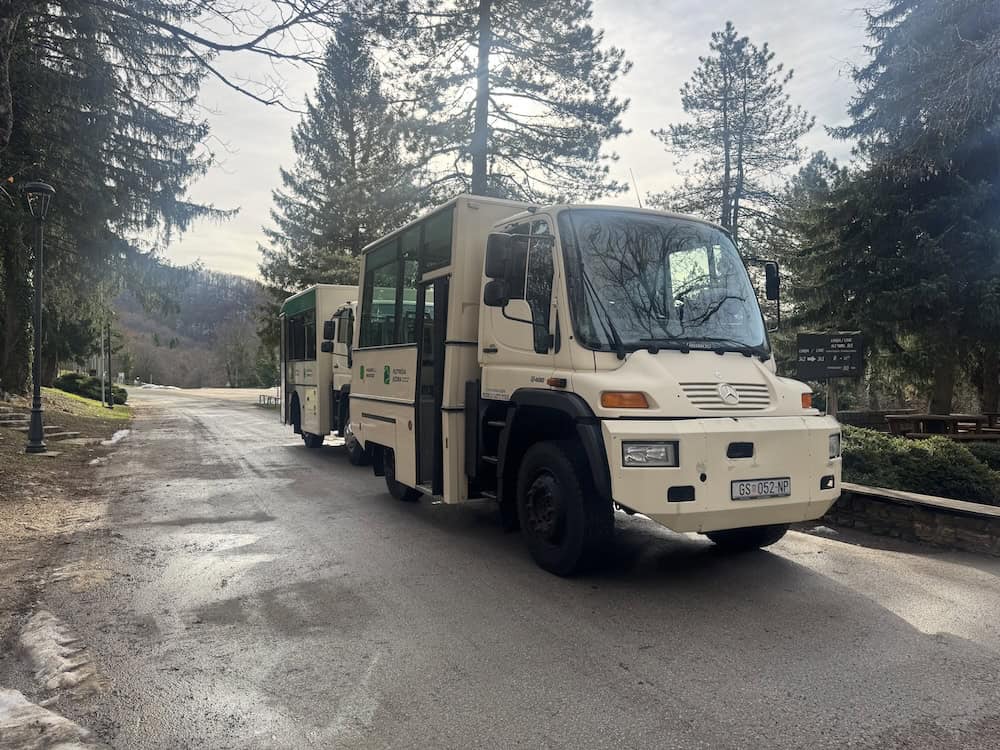
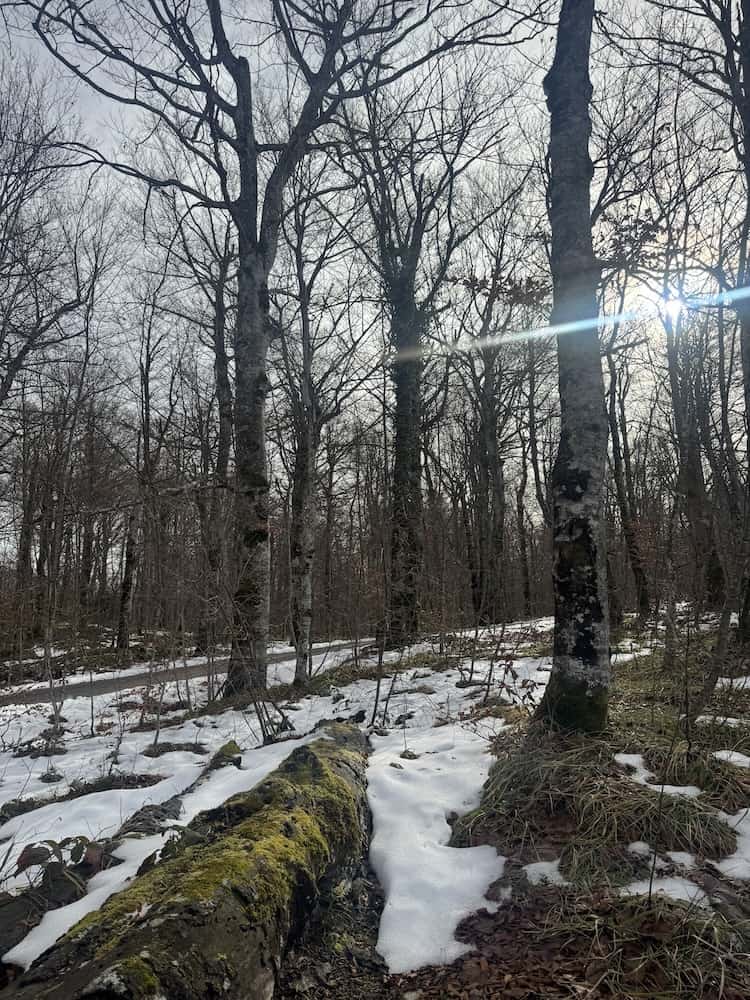
Heading up the hill here, I encountered what’s called the “panoramic vehicle”, essentially a small coach with comically sized windows. (Comically big not small, although the latter would be more comical.) By this time, I was alone again, and the bus took me on a short journey to continue Trail B. Excitingly, this part of the Park had snow! Real snow, on the ground! Okay, only on the parts where no one walked, but as I had hoped to encounter Plitvice in snow (but delayed my visit for a few days to get better weather), it was a teensy bit exciting.

Panoramic vehicles in the Plitvice Lakes
Snow in the Plitvice Lakes - Plitvice Lakes in Winter
Snow in the Plitvice Lakes

The bus dropped me off to continue my walk along the top of the canyon, towards Entrance 1, and I again encountered the lakes of Milanovac, Gavanovac, and Kaludjerovac from up high. By this time, the sun had properly emerged, and the temperature had gone up a few degrees, so the gorgeous lakes and waterfalls could be their best twinkly self.

And again on the paths back to Entrance 1, I only encountered one or two people at a time. Solo but not lonely at all. And no “fights” for the best photo viewpoint!

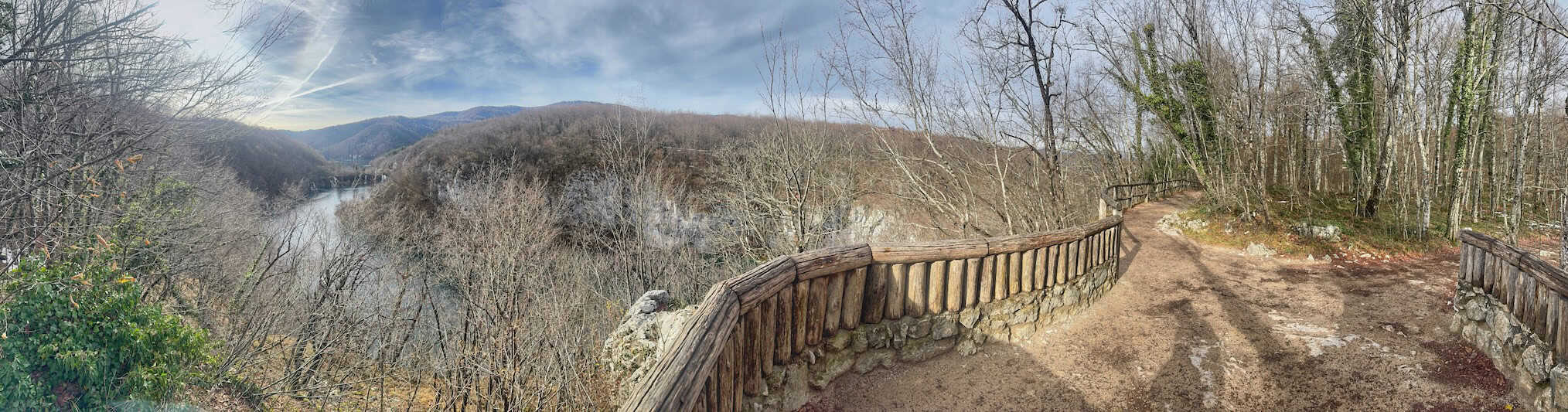
A panoramic view of the Plitvice Lakes
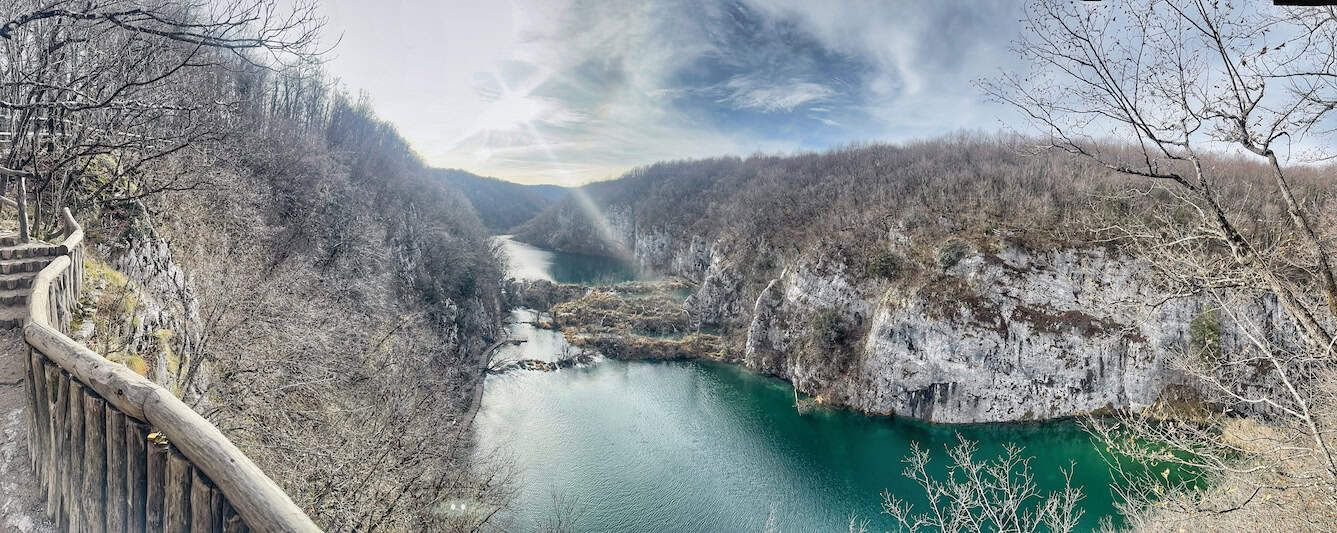
And a second panoramic view of the Plitvice Lakes!

Conclusion – was visiting Plitvice Lakes in winter worth it?

Oh my goodness, yes. A million times yes.

Visiting the Plitvice Lakes is worth it any time of year, but in peak season, you’ll encounter so many crowds of people that it will be practically like a traffic jam to get around. Nevertheless, Plitvice in peak summer is still a sight to behold.

The different seasons give visitors a different Plitvice experience. Sure, winter means hardly any fellow visitors, but also shorter opening times and quite strict logistics in terms of where you can travel from and at what times. You also have to pay closer attention to the weather. I would have loved to have visited in proper snowfall (tempted as I was by social media posts!), but I’m aware that that could have meant a more treacherous journey around the Park. I don’t regret waiting a few days for a cold but eventually beautifully sunny, dry day!

So yes, please do visit the Plitvice Lakes in winter. It is absolutely worth it.

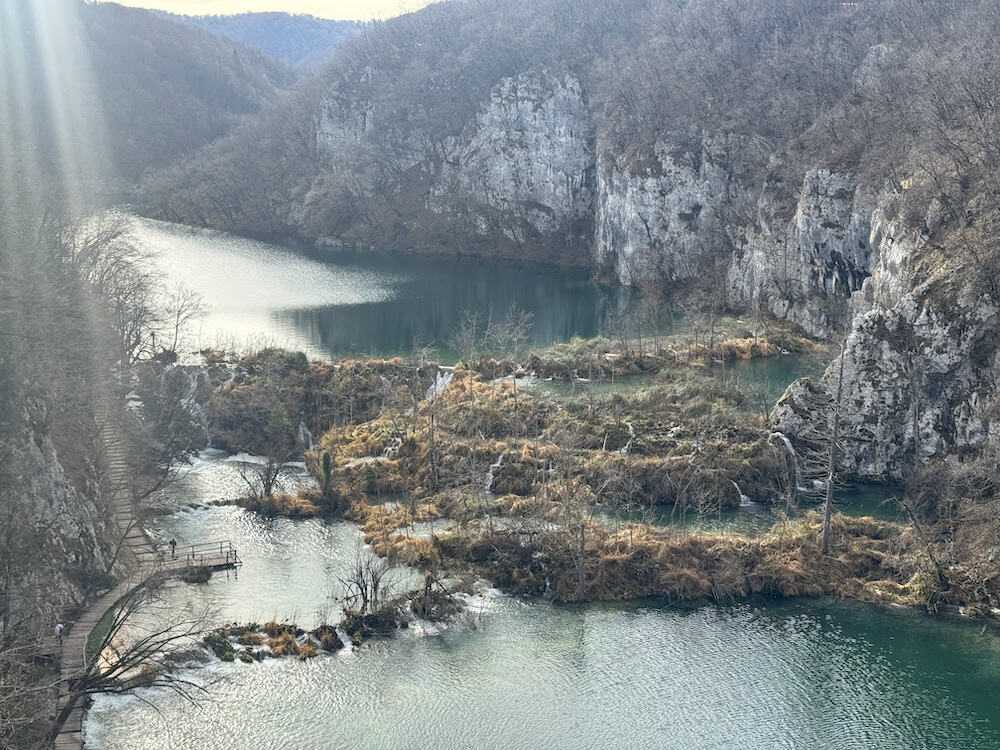
A close-up of the interconnected Lakes in Plitvice
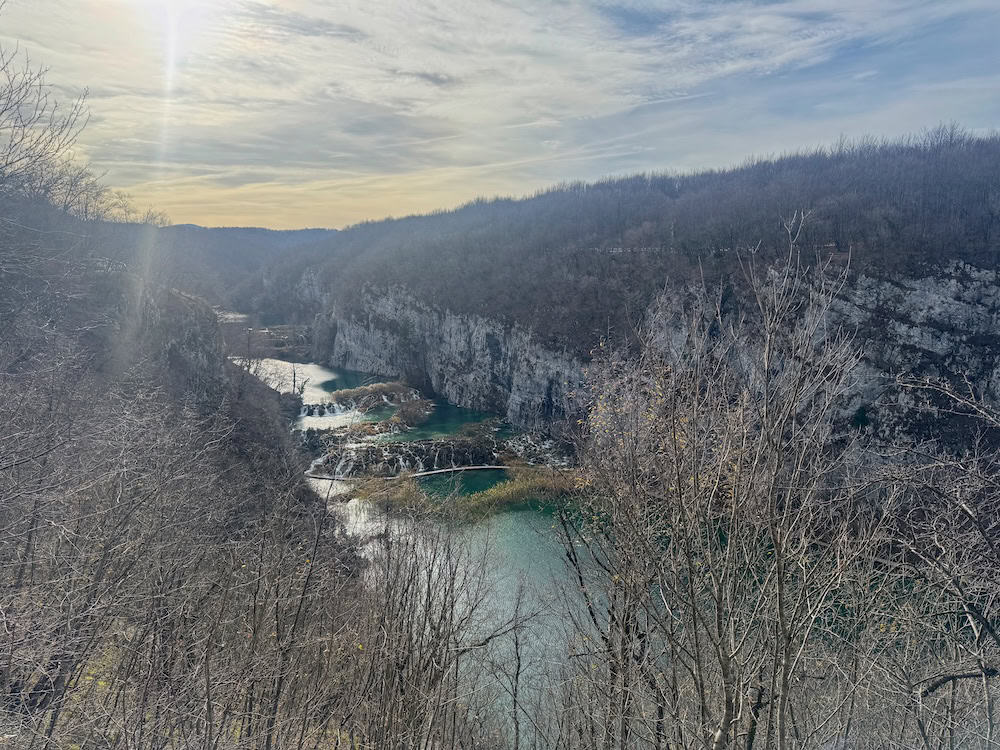
The view from Entrance 1 of the Plitvice Lakes, now almost four hours later
The view from Entrance 1, now almost four hours later

Getting to the Plitvice Lakes in winter

If travelling by public transport, it is easiest to reach the Plitvice Lakes in winter from Zagreb. With a journey time of around just two hours, and the fact that there are a number of buses per day, makes a day-trip very doable. Take a look at the Zagreb Bus Terminal website to look up bus schedules and to buy your tickets. Do also make your life easier and buy your return ticket before travel as well – you don’t have to use the same bus operator. Tickets are mostly electronic these days, and can be presented on your phone upon boarding.

You can also hire a car to make the relatively easy journey to the Lakes. Parking in the Lakes car park is free in winter (in December, January and February).

Alternatively, you may prefer an organised tour. Take a look at some of the possibilities below:

Powered by GetYourGuide

Opening Hours of the Plitvice Lakes in Winter

The park is open from 8am to 3pm, with both Entrance 1 and 2 generally open unless conditions prove otherwise. Ticket sales are only available until 1pm.

The electric boat over Lake Kozjak operates from 8am to 2.30pm/3pm (end time depends on the direction) in winter.

Good to Know

What to wear

Dress appropriately! And warmly! Winter at the park can be very cold indeed, so make sure you have appropriate winter clothing – which means many layers, and a proper winter jacket. A waterproof coat/jacket in addition wouldn’t be a bad idea, or at least take along a waterproof top layer that you can put on if you need.

Gloves are an absolute must, as are hiking shoes or boots or footwear that has a good grip when you’re walking. The paths can be wet and/or icy.

I personally didn’t have any hand warmers, but I saw a few other visitors with them. They seem like a good idea!

Eating, Drinking and Shopping

Right by entrance 1 is a small snack bar (think sandwiches, burgers, hot and cold drinks) for refreshment and a souvenir shop with Plitvice Lakes branding. Although the products comprised a mix of regular souvenir takeaways (t-shirts, baseball caps) and more pleasing items (carved wood ornaments, kids’ books on Plitvice), I found it to be rather expensive! I wanted to buy a book (in English) for my children, but baulked at the price of €15 for a very slim book!

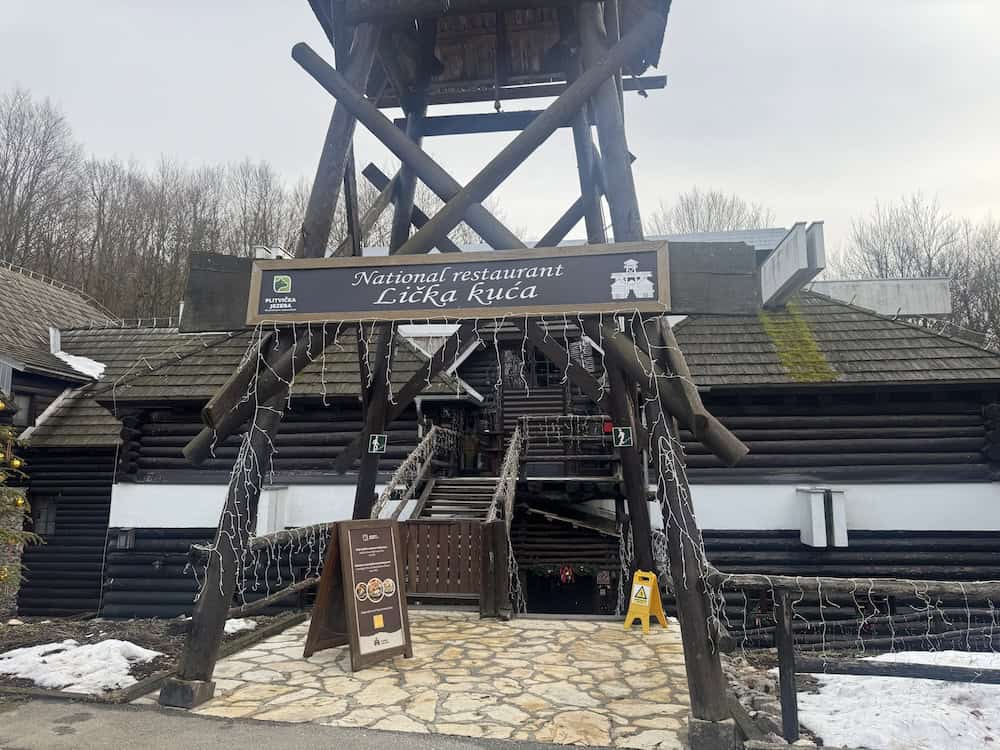
I’ve mentioned the shop and cafe by Lake Kozjak for another pit stop. However, for a proper, hearty and very filling lunch, I would return to Entrance 1 and head over the footbridge to Licka Kuca (Lika House in English) Restaurant. Absolutely delicious food, typical of the Lika region, with very friendly service and a warm ambience. Recommended!

Licka Kuca Restaurant, next to Plitvice Lakes National Park

Getting there

If you’re using public transport – i.e. bus – you really do want to get to the lakes as early as possible. Although you’ll curse an impossibly early start, you’ll thank yourself when you get to the lakes and experience them!

Return buses might run a little late – they don’t start from Plitvice, but are travelling from further afield. Wait by the little wooden huts (make sure you’re at the hut that’s going in the right direction) and be patient!

Tickets

You can buy tickets for the National Park in advance online on the Plitvice Lakes National Park – Tickets webpage. But I wouldn’t bother, they are very, very unlikely to sell out in wintertime!

One thing to note is that you can buy a 2-day ticket for €15 in winter. If you’re driving yourself to the Lakes and staying locally, a two-day visit would be lovely.

More info

You can find out all the latest information on visiting the Park, including current conditions of trails and what can be visited, on the Plitvice Lakes National Park website.

Take a look at the Visit Croatia guide to Plitvice Lakes National Park.

Krk Town on the island of Krk

Reader’s Trip Report: A Four Week Itinerary for Croatia

I’ve recently been in communication with a lovely lady – M – who needed a little bit of assistance with planning her trip around Croatia. M was lucky enough to be travelling around Croatia for four weeks (yes, four!) and visited an incredible nine towns/cities and nine islands! Read on below for some very helpful travel tips and M’s itinerary:

Travel Tips

Having just returned from backpacking around the beautiful country of Croatia for 4 and a half weeks – visiting 9 towns/cities and the main towns on 9 islands – we thought we would share some of the knowledge we gained about travel and our itinerary.

We found Rome2rio.com very helpful as it gave us the travel options available to get from one place to another and the names of the companies that we needed to use. Many of these companies have their own app.

The main ferry companies are TP Line, Krilo and Jadrolinija. We booked through directferries.com, which was easy as it gave us all the times and prices for all the ferries on our chosen dates.

The bus companies we used were mainly Arriva and FlixBus. For many of the buses, you have to pay for your luggage that goes into the hold. This costs about €1.30 per bag. 

Travelling from Split airport to Split can be done in a few ways. The airport shuttle (from right outside the airport) takes passengers down to the ferry port, whereas the local bus number 37 (from across the road) takes you to the bus station at the top of the town. This then goes to Trogir.

I hope the above information helps you with planning your itinerary.

Ferries and catamarans in the port of Split

The Four-Week Itinerary

Our itinerary was as follows:

  • Split – we did a day trip to Trogir, taking the 37 bus there and returning on the water taxi with Bura Line
  • Bus from Split to Zadar – used the local bus from the Autobusni Kolodvor to visit Plitvice Lakes
  • Ferry from Zadar to Mali Losinj
  • Bus from Mali Losinj to Cres
Cres Town
Cres Town
  • Ferry from Cres to Pula (we had to change ferries on Unije) – from here we took a local bus to Rovinj for a day trip
  • Bus from Pula to Porec
  • Bus from Porec to Rijeka
  • Day trip from Rijeka to the island of Krk using the local bus
Krk Town on the island of Krk
  • Ferry from Rijeka to Rab
  • Ferry from Rab to Pag – the ferry arrives in Novalja on the north of the island. The local bus station is a 25-minute walk away from the port if you want to get to Pag Town 
  • Bus from Pag to Split (we had to change buses at Zadar) and then a ferry to Vis 
  • Ferry from Vis to Split, then a ferry to Korcula
Korcula Town
  • Ferry from Korcula to Dubrovnik
  • Ferry from Dubrovnik to Hvar
  • Ferry from Hvar to Split, then by water taxi to Trogir
  • Bus 37 from Trogir to Split Airport

I contacted Visit Croatia a couple of times for additional information, and they were very helpful.

Thank you so much, M, for sharing your amazing itinerary with us, and also for your travel tips. Thank you also for your kind words about Visit Croatia!

The new Entry/Exit System and Croatia - EU border sign

The new Entry/Exit System (EES) and Croatia from October 2025

As of 12th October 2025, the EU’s new Entry/Exit System will start being rolled out in Croatia and other EU countries. This has been in the works for some time now (it was due to be implemented about a year ago – I wrote about it in The new Entry/Exit System and Croatia), but it is now finally going live. Find out what it means for you when travelling to Croatia and the rest of the EU, and what you actually have to do about it.

The new Entry/Exit System and Croatia - EU border sign

When will the new Entry/Exit System start?

The Entry/Exit System will finally start being rolled out at Croatian borders and other EU borders from 12th October 2025. This will be a gradual rollout, with full implementation across the Schengen Zone expected by 10th April 2026.

Who is the Entry/Exit System for?

The Entry/Exit System will only apply for visa-exempt travellers to Croatia and the EU – such as those of you travelling from the U.S., the UK, Australia, New Zealand and similar – OR for those of you who hold short-stay Schengen visas.

EU travellers will not need to take part in EES, and can continue to travel to Croatia as before. You can still travel using just your country’s ID card, if you wish!

What does the Entry/Exit System involve? Do I have to do something ahead of time when travelling?

You do not have to do anything ahead of time for the EES.

The above-mentioned travellers to Croatia and the rest of the EU will now need to have their fingerprints and their photo taken at the border when entering the Schengen Zone, as well as providing their passport details. Of course, you only need to provide this information the first time you enter the Schengen Zone after 12th October. On subsequent visits, your details will be checked against the information you first provided.

As you can imagine, this will likely cause longer queues at each border into the Schengen Zone. Be prepared for this – I expect uproar against this EU measure in certain British newspapers!

So what does this mean when I travel to Croatia?

The next time you visit Croatia – after 12th October 2025 – you will likely need to provide the above information when entering the country.

Is this the same thing as ETIAS?

No, the EES is NOT the same thing as ETIAS.

Once the EES is up and running in full across the Schengen Zone, ETIAS will be rolled out in the near future. ETIAS is something that you have to be aware of and obtain before travelling. This is essentially the EU’s visa waiver programme – much like the ESTA that exists for the United States. This pre-screening service will require you to submit your personal details and travel information online before travelling, as well as requiring you to pay a fee.

ETIAS is not yet being introduced, but is expected to come into effect at the end of 2026.

More info

You can find out more about the Entry/Exit System on the European Union website at travel-europe.europa.eu/en/ees. Travellers from the UK may also like to look at the advice on the Foreign Office website.

As I mentioned, I also wrote about the new system quite extensively about a year ago – do read The new Entry/Exit System and Croatia as there is a fair amount of useful information there, such as why EES is being introduced.

Happy travelling!