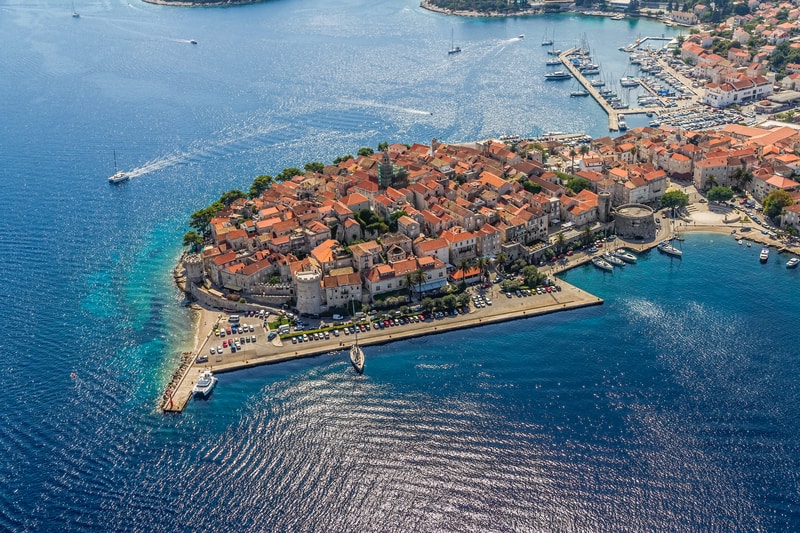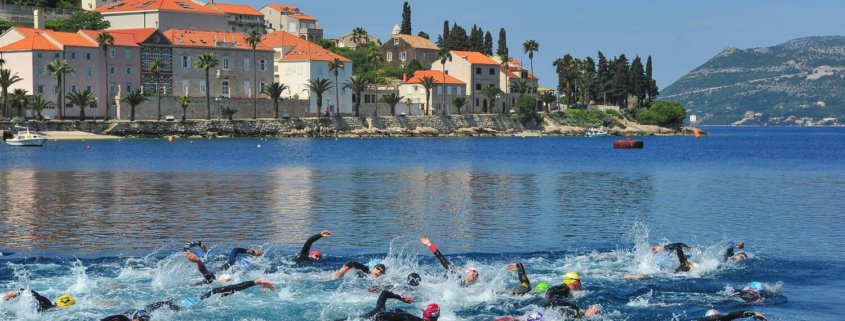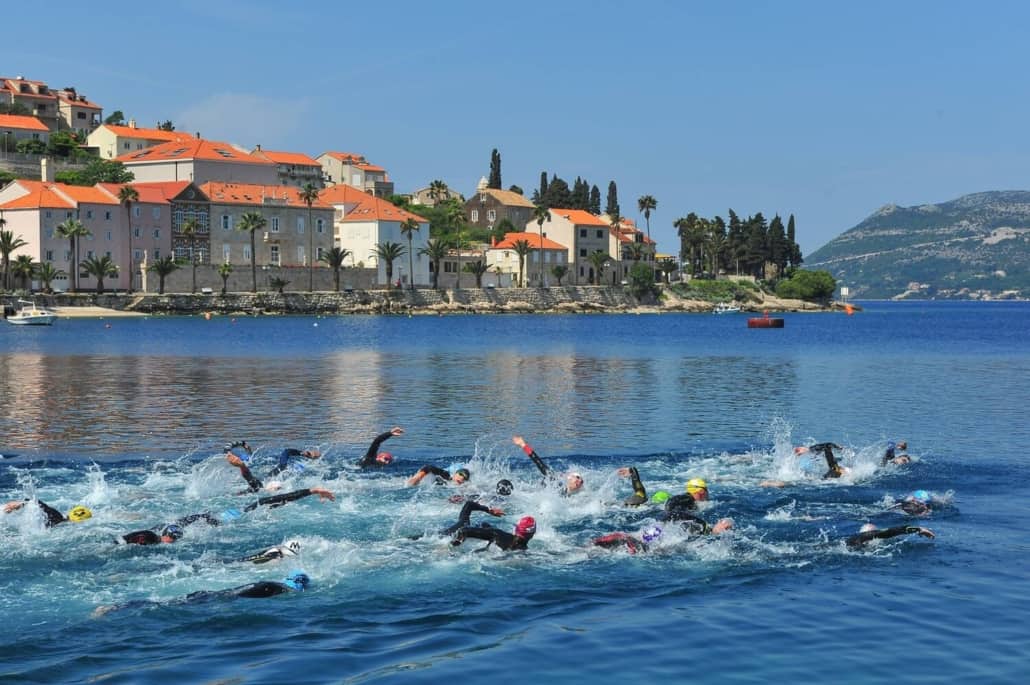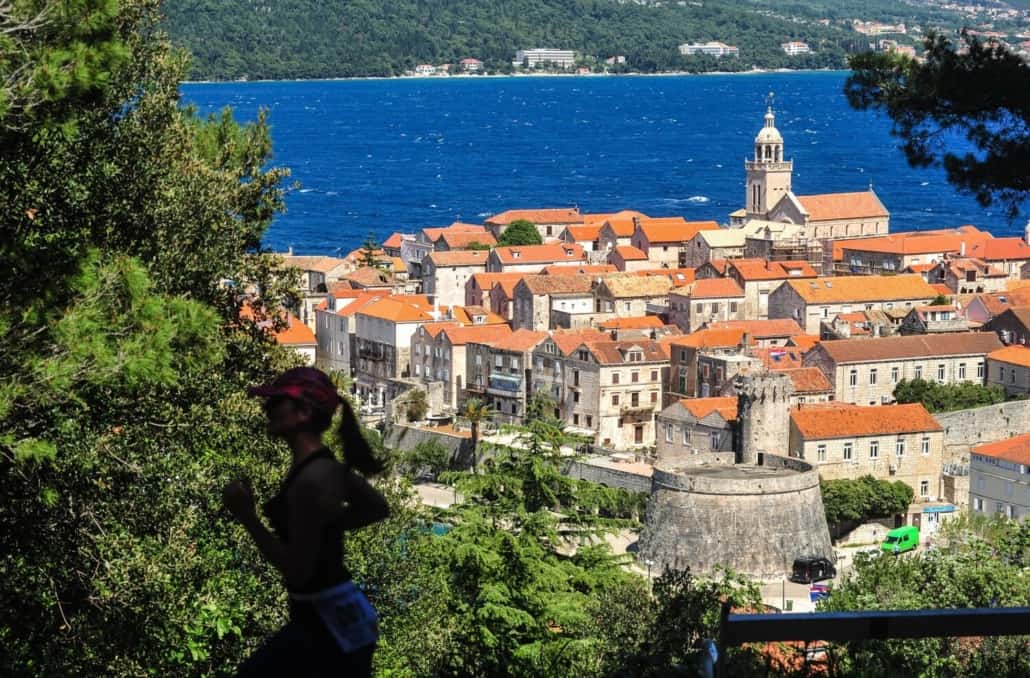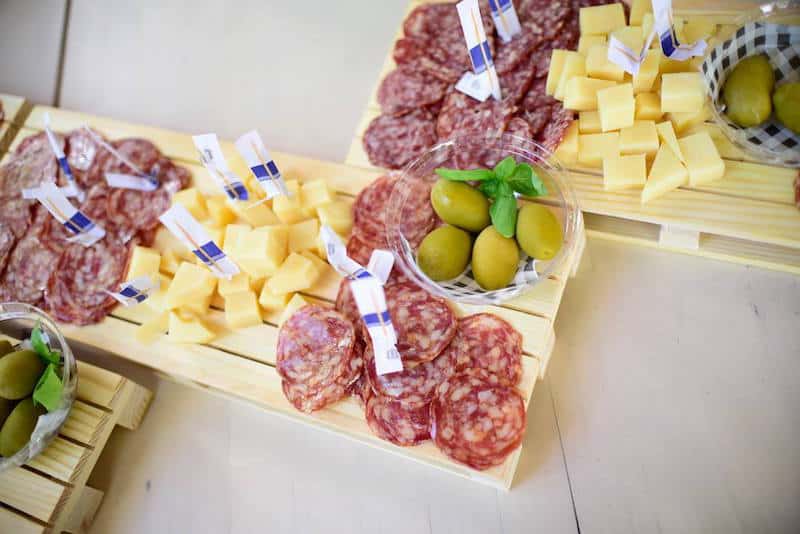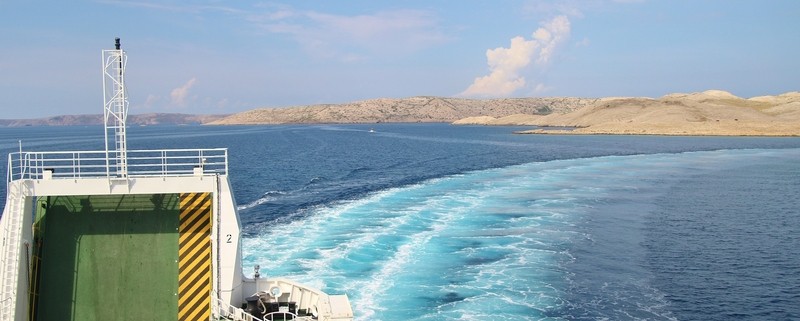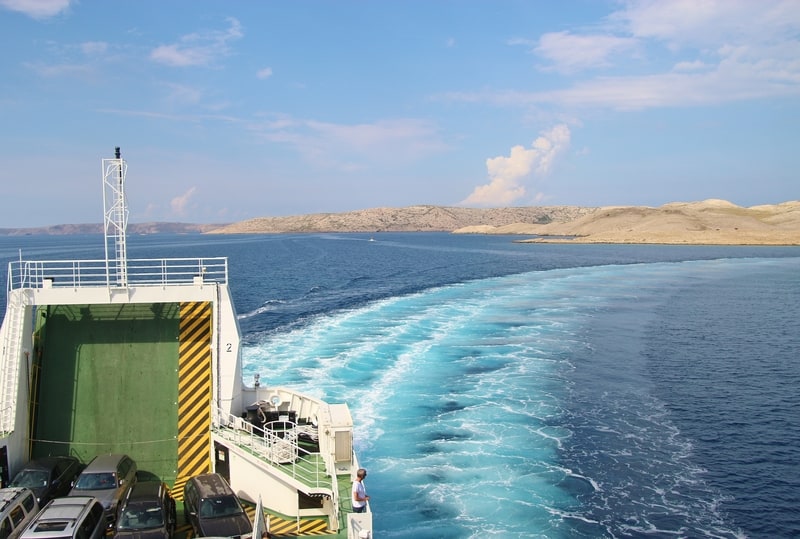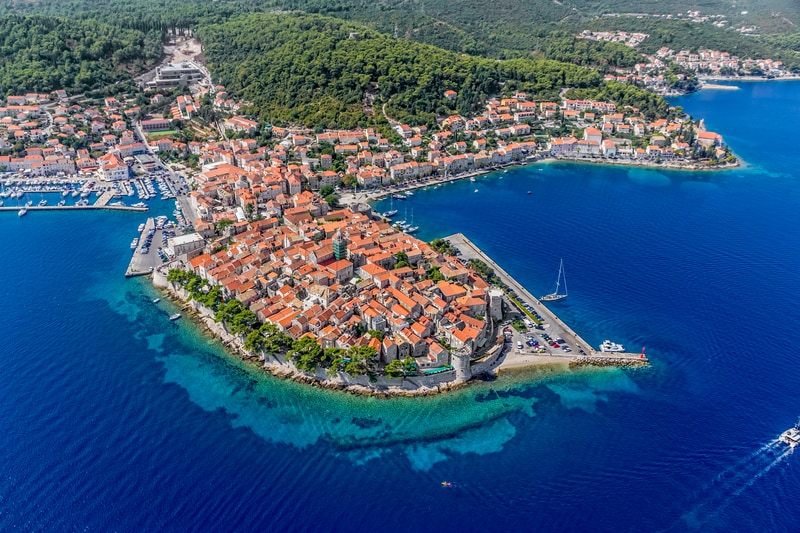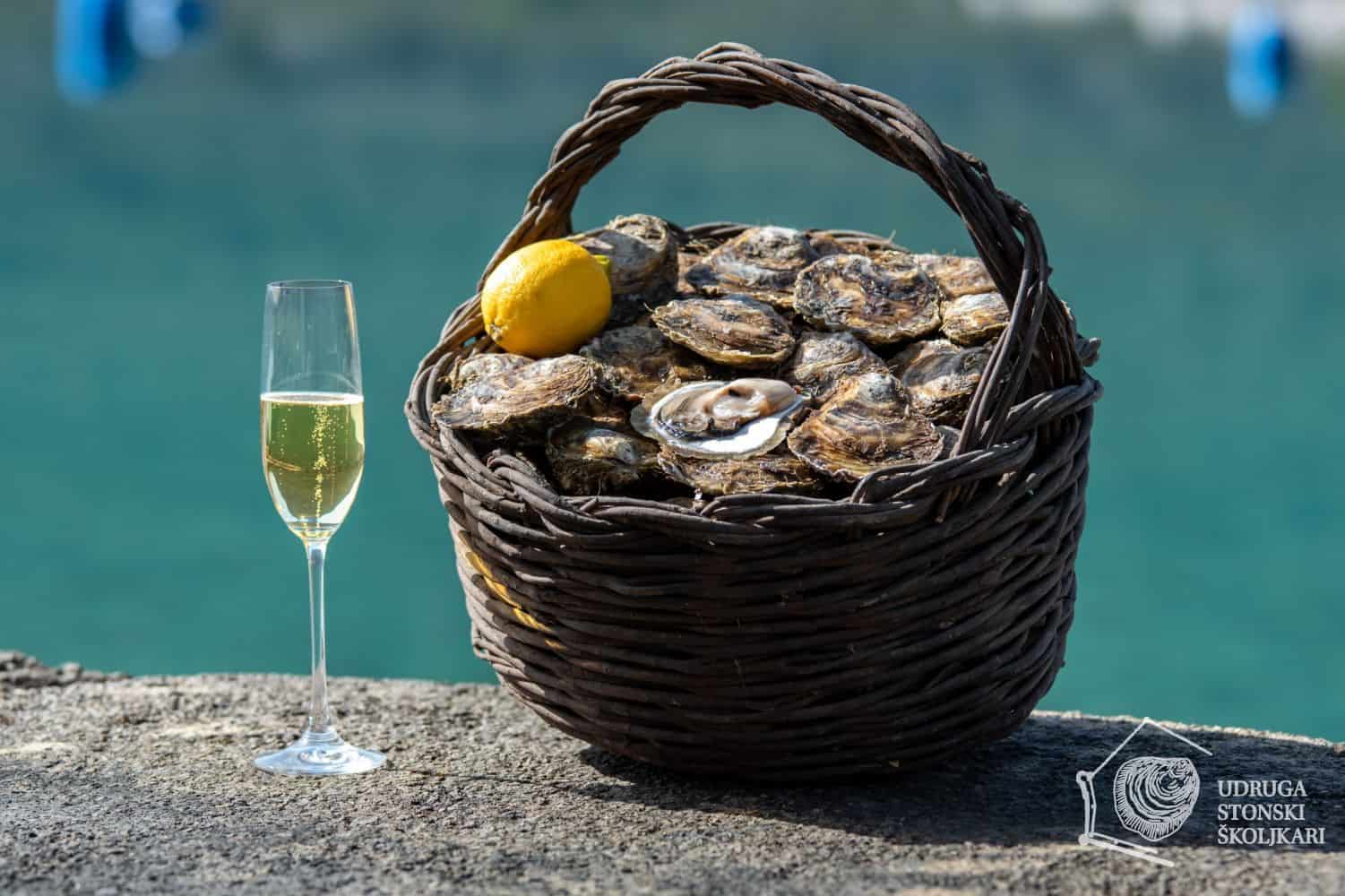
Oyster Festival in Mali Ston (Credit: Mali Ston Oyster Festival)

Spotlight on: The Oyster Festival in Mali Ston

March is still relatively early in the year, which means fewer visitors and fewer gastronomic events taking place in Croatia. But one of the most delightful foodie events of the year has its full focus this month. That’s the Oyster Festival in the small town of Mali Ston at the base of the Peljesac Peninsula, north of Dubrovnik. This year, the festival will take place from Thursday 19th to Sunday 22nd March 2026.

Oyster Festival in Mali Ston (Credit: Mali Ston Oyster Festival)
(Credit: Mali Ston Oyster Festival)

About Oysters from Ston and The Oyster Festival

Oysters have a long association with this part of Dalmatia, and oysters from here are considered the best quality in all of Croatia. There’s some evidence to suggest oyster farming took place here in Roman times, but it’s during the time of the Republic of Dubrovnik that oysters begain to be written about. In the late 19th century, oysters from Ston were even exported to Vienna, Prague and Paris! The variety grown here is the European flat oyster.

Oysters from the bay by Mali Ston were awarded a Protected Designation of Origin mark by the EU in 2020, which recognises their quality and production that is confined to this specific area using local expertise.

If you’re an oyster fiend then you simplymust visit Ston. And oyster fiends will know that although this delicacy can be used in a wide range of dishes, they really are best served with a squeeze of lemon and accompanied by a crisp glass of sparkling wine.

The festival always takes place on our near St Joseph’s Day – Joseph being the patron saint of Croatia – which is on 19th March. But the festival takes place in March, for it is when oysters are at their fullest and tastiest!

A number of oyster farmers will participate in this year’s festival (you can see the full list here), and a number of local winemakers will also be providing accompanying wines.

Getting There

Mali Ston is around 55 kilometres up the coastline from Dubrovnik, meaning it’s roughly a one-hour drive if you have your own set of wheels.

It is possible to reach the town using public transport. A couple of the suburban Libertas Dubrovnik buses run to Ston, with line number 15 the most useful, although – beware – not so much on Sundays when some of the departures don’t operate. You can see the timetable of line number 15 from Dubrovnik here.

Some of the long distance buses from Dubrovnik also make a stop at Ston. Take a look at the websites of Flixbus or Arriva for timetable details and to buy tickets.

Experiencing The Oyster Festival in Mali Ston

As mentioned, this year’s Oyster Festival will run from 19th to 22nd March. There will be a varied programme of events, with talks, workshops, concerts, events for children, and boat trips out to the oyster farms.

The main highlight of the whole festival is the seaside tasting, which will take place in Mali Ston on Sunday 22nd March between 11am and 3pm. Another highlight will surely be the boat trips out to the oyster farms, which will allow visitors to really understand the entire production process and how oysters are farmed.

You can see the whole programme of the festival below:

Credit: Mali Ston Oyster Festival

Pre-registration is required for some of the events, details of which will be revealed very soon. I would recommend that you follow the Mali Ston Oyster Festival on Instagram as they frequently post news about the festival there.

A pleasing bonus – entry to the Town Walls in Ston will be free from Friday 20th, Saturday 21st and Sunday 22nd March. These town walls are seriously impressive – some say even better than those in Dubrovnik – and are definitely worth experiencing.

The oyster farms in Mali Ston Bay - Oyster Festival in Mali Ston
The oyster farms in Mali Ston Bay

Other ways of seeing and enjoying oysters in Mali Ston

If you’re not able to get to the festival this month, don’t think that you can’t enjoy oysters here at other times – oh, no! You can indulge in some oysters at the eateries here for most of the year. It is also possible to visit the oyster farms – by organised boat for many months of the year too.

You may also like to be aware of the Salt Festival in Ston that takes place at the end of August and early September each year. Although yes, there is an emphasis on salt production – for Ston is almost famous for its saltworks – there is a general gastronomic offer throughout the run of this festival. And oysters are definitely part of the offering!

Even without a festival taking place in Ston, it won’t come as a surprise that you can simply enjoy a plate of Ston oysters at a local eatery. One of the most acclaimed restaurants is the long-standing, family-run Bota Sare, who now also have restaurants in Dubrovnik, Split and Zagreb.

You can also join organised tours to oyster tastings in Ston, with many tours setting off from Dubrovnik. Take a look at some options below:

Powered by GetYourGuide

More info

The Oyster Festival has its own official website at www.malistonoyster.com/en, or you can also take a look at the Mali Ston Tourist Office website for more details.
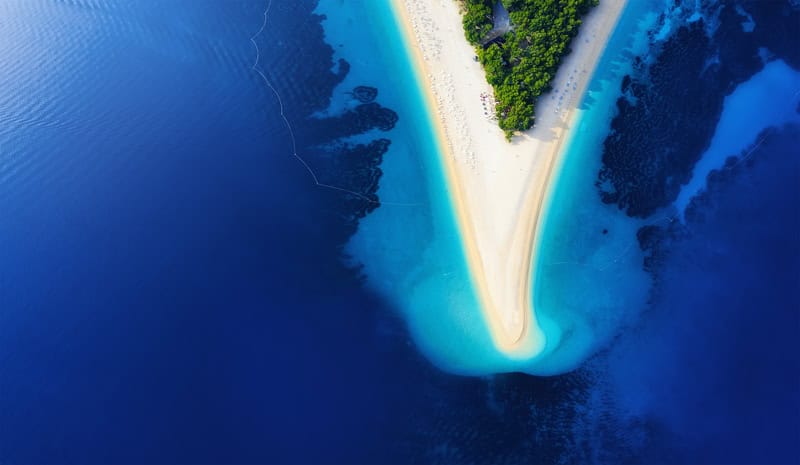
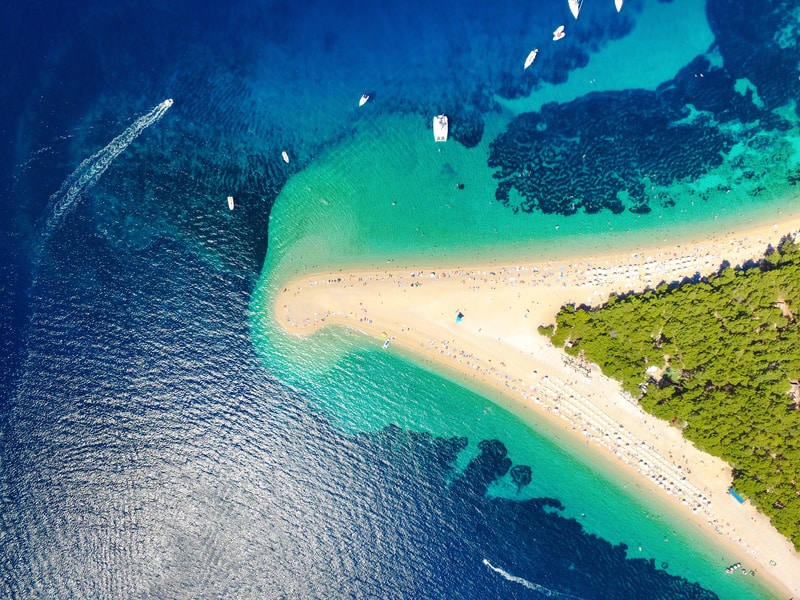
Zlatni Rat Beach, Brac, Croatia

Spotlight on: Zlatni Rat Beach, island of Brac

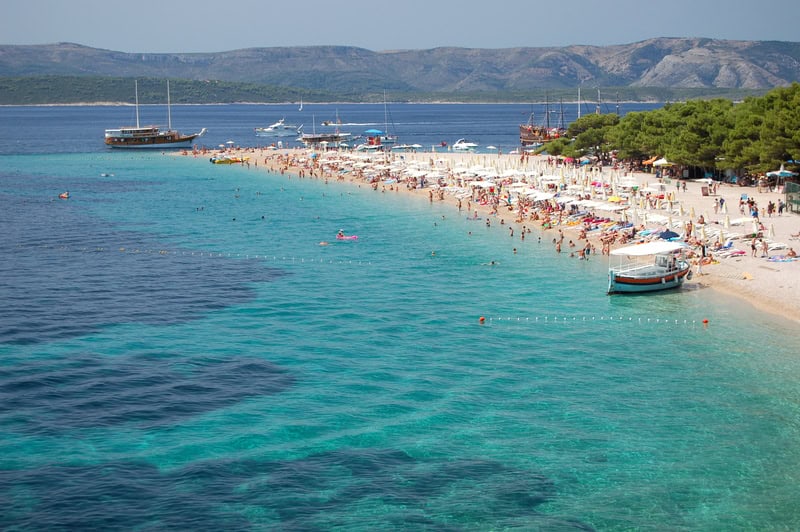
One of the most famous visuals of Croatia, one that you will have surely “seen” whether you’re paying close attention to Croatia or not, is Zlatni Rat beach on the island of Brac. Translating to Golden Horn in English, images of this beach appear practically everywhere there’s a feature or advertising on Croatia! But what and where actually is the beach? And is it actually made from sand?

Zlatni Rat Beach, Brac, Croatia

About Zlatni Rat Beach and its Features

Located around 2 kilometres west of the main part of the town of Bol, this famous beach is a spit (a long, thin strip of land) that juts 634 metres out into the Adriatic. Looking like a horn (hence its name), the beach changes shape depending on the winds and the sea current. The change of the beach’s shape occurs most commonly in Spring or Autumn.

As it’s a long, thin beach, the beach essentially has two sides. The water temperature on the western side is slightly warmer than on the eastern side. Another feature of Zlatni Rat Beach that makes it look oh-so-gorgeous in photos is the colour of the water – with a lightish turquoise shade immediately surrounding the beach, which blends into dark blue waters fairly dramatically and quickly.

There is also a reasonably large pine forest on Zlatni Rat Beach, which, as well as providing fragrance and picturesque contast to the pebbles, also provides all-important shade! It is delightful to base yourself for the day in amongst the pine trees, away from the strong sun.

Zlatni Rat has been a Blue Flag Beach since 2012, a designation that is awarded to beaches and sites that meet high environmental and safety standards.

Top Sights in Croatia - Zlatni Rat Beach
Aerial view of Zlatni rat beach in Bol, Island Brac, Croatia
Zlatni Rat Beach, near Bol on the island of Brac, Croatia - aerial view
A different shape of the beach from the image above!

Sand, yes or no?

No. Despite appearances to the contrary – i.e. photos taken from a drone that’s relatively far away – Zlatni Rat beach is NOT sandy. It is, in fact, a fine pebble beach, as many of the beaches in Croatia are. Yes, I know it does look like golden sand in the photos. It is not.

The pebbles of Zlatni Rat Beach
Pebbles! Pebbles galore!

Getting There

As I’ve mentioned, the beach is on the outskirts of the town of Bol on the island of Brac. If you’re already in Bol, it’s around a 20-25 minute walk from the centre of the town along the coastal path. You can enjoy a nice, leisurely walk to the beach and treat yourself to a refreshing drink once you’re there.

Alternatively, you can hop on the “street train” which takes you from the centre of Bol to Zlatni Rat in 15 minutes. These trains run from May to September, with a higher frequency in peak summer. There are also quick taxi boats that will ferry you from Bol to the beach.

And yes, there is parking near the beach, so you can also reach it using your own car.

To Zlatni Rat Beach from elsewhere in Croatia

If you’re travelling from further afield to see the famous Zlatni Rat Beach with your own eyes, it’s easiest to travel from Split on the mainland. There are several catamarans that operate from Split to Bol run by Jadrolinija and Kapetan Luka. There is also a summer, coastal catamaran that runs from Dubrovnik to Bol. Full details of all of these sailings can be found on our Getting to Brac page.

You can absolutely visit Zlatni Rat Beach on a day trip, for example, from Split to Makarska. Most day trips include a visit to Zlatni Rat as part of a tour of other nearby points of interest (such as the Blue Lagoon) or islands. Take a look at some of the options below:

Powered by GetYourGuide

Experiencing Zlatni Rat Beach

Well, as it’s a beach, your experience of it will be much like any other (popular) beach! You will very likely be coming here to have a proper seaside experience, so make sure you pack or wear your swimming costumes, bring your towels and goggles and maybe your beach games too. As with many Croatian beaches, it would be advisable to bring beach shoes to make sure your little (or large) feet are comfortable walking on the pebbles.

As with many of Croatia’s beaches, entrance into the water is shallow, making it very suitable for families and those with young swimmers (or splashers). It is best to stay in the waters on either side of the beach rather than immediately off its southern point, which has a stronger current.

There’s no denying that the beach does get busy – pretty busy indeed – during the summer months. Quiet time by the twinkling Adriatic, this is not. But if you’re holidaying in Bol, you must spend some time on Zlatni Rat – you may well have chosen Bol as a destination because of the beach!

Zlatni Rat Beach, Bol, island of Brac in Croatia
A side view of Zlatni Rat Beach – it’s certainly a popular place!

Facilities

There are excellent facilities at Zlatni Rat, as befitting such a popular beach. As well as toilets, showers and changing cubicles, several manned lifeguard towers can be found here to guard over swimmers.

If you tire of swimming and sun worshipping, you can make use of the sports courts and facilities located nearby. The younger generation can enjoy a playground, whilst older beachgoers can head off to play volleyball. There is also an inflatable “aquapark” on the sea, a common sight at beaches all along the Croatian coastline, for people of all ages to enjoy.

There are also a number of companies located here that can offer equipment or opportunities for parasailing, pedal boating, banana boating and similar.

Eating and Drinking

Once you’ve had your fill of sun, sea and…er…sports, you will have worked up an appetite! Luckily, there are a number of eateries located right by Zlati Rat beach for you to frequent for food and drink. These include several food stalls selling things such as sandwiches, salads, pancakes, poke bowls, fruit salads, burgers, cevapcici, pizza…and more.

For a proper sit-down affair, head to the nearby restaurants of Mali Raj or D’Oro Restaurant within Zlatni Rat Beach Resort. Both offer proper dining, however, so don’t turn up in your bikini!

To turn your visit to this beach into a bit of a party, 585 Club or its sister site Auro Beach Bar are the places to be.

Accommodation

There’s a good choice of accommodation in Bol for you to choose from. Search using the map below:

Zlatni Rat Beach Resort is within walking distance of the beach.

Opening Hours and Price

As it’s a public beach, Zlatni Rat is of course open 24 hours a day, all year round and is (unsurprisingly) completely free to visit!

More info

You can learn more about Zlatni Rat Beach on the website of Bol Tourist Office.

Spotlight on - Sea Organ in Zadar; a close-up of the openings from which the sounds are heard

Spotlight on: The Sea Organ, Zadar

If you’ve visited Zadar, you will have marvelled at the town’s many wonderful sights. It’s gorgeous, compact Old Town is home to a number of wonderful points of interest, old and new. Not least the area heading away from the Forum – which was built in the 3rd century by the Romans, but is now mostly ruins – leading to the sea. As well as the remains of what would have been a bustling marketplace in Roman times, you have a view of the iconic Church of St Donatus and the bell tower of the Cathedral of St Anastasia. But head down right to the seafront and there are two fascinating modern sights – the Greeting to the Sun and the magical Sea Organ. And today, we’ll take a look at the latter!

Spotlight on - Sea Organ in Zadar; a close-up of the openings from which the sounds are heard
A close-up of the openings from which the sounds are heard, with people sitting and enjoying what they hear

About The Sea Organ

Known as morske orgulje in Croatian, the Sea Organ was designed by Croatian architect Nikola Basic, who was also the genius behind the Greeting to the Sun. Taking up about 70 metres of Zadar’s sea front, under the marble stone floor, thirty-five pipes of different lengths, sizes and slopes have been laid. When the sea waves hit these pipes, beautiful notes are carried through the holes up to the ears of those sitting above. Although the notes produced are completely random, of course, they do sound rather harmonious. It really does sound as if the sea is playing an organ!

The Sea Organ was opened in April 2005.

Getting There

Simply head down to the main seafront promenade in Zadar’s Old Town, known as the Riva. Next to the Greeting to the Sun light installation, you will hear the gentle notes of the Sea Organ and see the holes and cutouts located in the stone floor from which the music escapes. And that’s it – you’ve made it there!

A large part of Zadar’s Old Town is pedestrianised so it’s easy to reach the Sea Organ by foot. But you could also drive (or be driven to) Ulica Zadarskog Mira.

Sea Organ in Zadar
The holes laid in the stone work on the seafront in Zadar

Experiencing The Sea Organ

There’s honestly something so special about Zadar’s seaside promenade; you really must experience it for yourself. (And many do!)

To get the most of your “money” – I’m simply borrowing an expression here, as all of this is free – head to the Riva just before sunset and sit yourself down on the marble steps. You may like to bring along a small drink of something refreshing or relaxing, or even a coffee, to fully elevate what you’re about to experience.

You’ll almost instantly be hearing the gentle sounds of the Sea Organ, as the waves lap against the underfloor pipes. Generally, this is a popular time of day to come and hear the Sea Organ, so the notes will be intermingled with the delicate chatter of other people all around you.

As it’s approaching sunset, the Sea Organ’s sounds will soon be joined by glorious shades of orange and pink and the sun sets in front of you. It’s not for nothing that Zadar is proclaimed to have one of the most beautiful sunsets in the world.

Once the sun has fully set – or almost has – pick yourself and walk the few steps towards the Greeting to the Sun installation to dance around the colourful, twinkling lights here. Read more about that sight in our guide to it: Spotlight On: The Greeting to the Sun, Zadar.

Experience a preview of the Sea Organ in the comfort of your own home with the video below:

Opening Hours and Price

The Sea Organ is “open” to be enjoyed any time of day or night – and it’s totally free! Better still, you can hear its gorgeous music whenever you want; there is no better time to visit it than any other. (Unlike the Greeting to the Sun, which obviously works best at dusk or nighttime.)

More info

You can learn more about the Sea Organ on the website of Zadar Tourist Board and on the Zadar Region website.

Spotlight on: Galesnjak, Croatia’s heart-shaped island

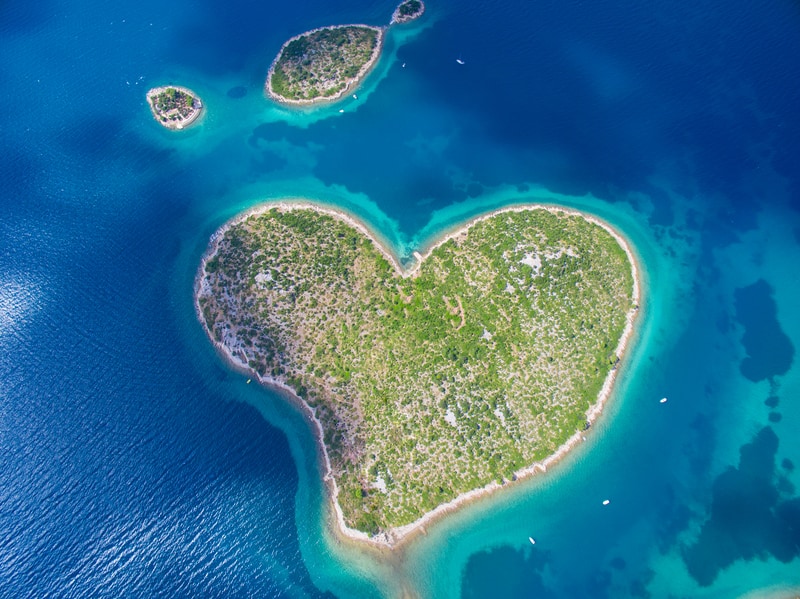
What could be better for Valentine’s Day than an actual island in the shape of a heart? I mean, imagine gifting that to someone! Technically you could, for a heart-shaped island exists in Croatia – the island of Galesnjak. And what’s even more impressive is that this island is naturally heart-shaped – no man-made interference here. Let’s learn more about Galesnjak, where it is and whether it’s possible to visit it.

The heart-shaped Galesnjak island in Croatia
Aerial view of the heart shaped Galesnjak island

The island has of course existed for a long, long time – but it was in 2008 when it became famous, “discovered” as it was by Google Earth and subsequently quite a bit of fanfare in the global press. And fair enough – it’s a good looking island, and what could be more charming than one in the shape of a heart?

About Galesnjak

Also referred to as the Island of Love or Lover’s Island, Galesnjak is actually located very close to the mainland in North Dalmatia. It lies in the Pasman channel, only 600 metres away from the mainland, in front of Pasman island and slightly north of the popular holiday town Biograd na moru. It has a total size of 132,000 square metres.

It is a privately-owned island and there is, essentially, nothing on the island by way of visitor facilities, amenities or similar. The island is largely covered by shrubs which gives it its appearance. A few years ago, part of the plant life was raised with the aim of beautiful olive trees being planted to improve the general romantic nature of Galesnjak.

The island has of course existed for a long, long time, and there is even evidence of life having existed on the island many centuries ago. It was first recorded on maps in the 19th century; however, it was in 2008 when it became famous, “discovered” as it was by Google Earth and subsequently quite a bit of fanfare in the global press. And fair enough – it’s a good looking island, and what could be more charming than one in the shape of a heart?

Here is what Galesnjak looks like on Google Earth now:

g

Visiting Galesnjak

As a privately-owned island, Galesnjak is closed to visitors generally…unless you are able to organise a private (in other words, rather expensive) trip of some sort. There have been rumours that celebrities such as Beyonce and Jeff Bezos have visited and held parties on Galesnjak because…well, if you have that level wealth, why wouldn’t you?

You are of course permitted to sail near to the island to view it – although, again, you would need to do so on a private tour which would also see you visiting other small islands and nearby locations. Take a look at some of the following private boat tours from Zadar that are available:

Powered by GetYourGuide

Okay, what about…owning Galesnjak?

Part of Galesnjak was up for sale a few years ago. You could have bought 40,000 square metres of the island for a cool €13 million. Understandably, it’s unknown whether the sale went through or not.

Location of Galesnjak, the heart-shaped island in Croatia
A view of Galesnjak (you can see where parts of the island have been razed) and its location close to the mainland

More info

You can discover more about Croatia’s heart-shaped island on the website of Pasman Tourist Board

Given its shape, Galesnjak gets a fair amount of press. Have a read of some articles: Is This the World’s Most Adorable Island? (Conde Nast Traveler, September 2014); Perfect Valentine: Part of Croatia’s heart-shaped island up for sale (Reuters, February 2023)

Spotlight on: Blue Lagoon, Dalmatia

If you’re visiting the central part of Dalmatia – in and around its main city of Split – you may have come across the possibility of visiting somewhere called the Blue Lagoon. While this sounds rather spectacular, it’s not the only Blue Lagoon in the world – you may have heard (or visited) that amazing geothermal spa that’s located just outside Reykjavik in Iceland. (I have and that place is magical! But I digress…) Let me first tell you that the Blue Lagoon in Croatia is nothing like the Icelandic version and secondly, it still is magical in a slightly different way! Here’s a guide to why you should visit the Blue Lagoon and what you can see and enjoy when doing so.

Ariel view of popular Blue Lagoon – Krknjasi near town Trogir, in the Adriatic sea, Croatia

About The Blue Lagoon and its features

Croatia’s Blue Lagoon is located just off the tiny island of Drvenik Veli, a sister island to Drvenik Mali. (Veli and mali meaning big and small!) The lagoon is located in Krknjasi Bay on the eastern side of the island. It is referred to as the Blue Lagoon because of its stunningly clear blue and turquoise waters atop a sandy seabed and next to a white pebble beach.

The sea area here is remarkably still and shallow – helping to produce this gorgeous blue effect – protected as it is by two further islets, Krknjas Veli and Krknjas Mali. (There goes those veli and mali names again. Now you know what they mean!)

This whole experience is one of paradise, with some even calling it akin to the Caribbean. Whilst I have no personal experience, let’s just stick to admiring this slice of heaven in the Mediterranean, shall we?!

This is certainly one of these places where words can’t fully do it justice, and photos can only go so far. Why not experience it for yourself when you next visit this part of Croatia?

T

Getting to the Blue Lagoon & Visiting

By excursion

In almost all cases, it would be easiest to join an organised tour if wanting to visit the Blue Lagoon. Tours from local towns and cities exist, such as from Split and Trogir. These tours generally include visiting the Blue Lagoon as just part of the day – often, you will also get to visit other small islands in the region, or historic gems such as Trogir. In all cases, you will have at least an hour or two to enjoy in the Blue Lagoon itself for swimming and snorkelling. (Snorkelling equipment is normally always provided by the excursion company.)

Take a look at some of the options for tours from Split…

Powered by GetYourGuide

…and some of the excursion options from Trogir:

Powered by GetYourGuide

Local Trogir agency Bura Line also offers a 10-hour tour from Split that includes stops in Trogir, the island of Ciovo and the island of Solta as well as the Blue Lagoon.

By ferry

You can otherwise opt to take a public ferry from Trogir to Drvenik Veli. Jadrolinija operates this route, sailing three times a day, year-round. (The boat in fact then also sails on to Drvenik Mali.) Should you utilise this boat, it would give you a full day on the island as the latest return boat departs 7 and a half hours after you’re first dropped off. (Do check timetables carefully so you’re not stranded by missing the return boat!)

The boat docks at Drvenik Veliki, the main settlement on Drvenik Veli. This is around a 45-minute walk away from the Blue Lagoon bay.

Should you wish for more time on the island and to enjoy the Blue Lagoon, there is a small handful of accommodation in Drvenik Veliki. You can search and book using the map below:

Opening Hours and Price

Well, seeing as it’s a natural bay in the sea, it’s open all the time! But you are of course restricted to the hours that you can reach the area by boat.

As for the price – the lagoon itself is free, but you are again dependent on the cost of the excursion or ferry!

When is Best to Go to the Blue Lagoon

As you can perhaps imagine, the Blue Lagoon can be a popular place to visit – sometimes too popular. Obviously summer is the best time to come here to get the full effect of sunshine and warm Adriatic waters, but you’ll be joined by a good number of other day trippers.

Consider visiting outside of the peak summer period – let’s say early June or mid to late September – when you’ll still be able to enjoy swimming here but alongside fewer visitors.

What to See and Do

Relax! Enjoy the gorgeous blue waters and the tranquil surroundings of where you are. If you visiting from somewhere as bustling as Split, it will be quite a contrast.

If you have access to snorkelling equipment, absolutely give it a go. You’ll be able to view the marine life in the calm waters, and snorkelling itself is such a calming activity.

More info

Unfortunately, Drvenik Veli appears not oto have a tourist board website, so online information is somewhat limited. There’s a small slice of info on the Visit Trogir website.

Travel question: the best places to stay from Zadar to Dubrovnik

Hi, we are planning to fly into Zadar in late June for approximately 14 nights, working our way to Dubrovnik and flying back from there. Looking for about 6 or more places to stay over on our way down, we will be travelling by bus so don’t want long bus transfers, so could you give me some ideas of some nice places where we could stay or when travelling down, please?

J.P.

14 nights from Zadar to Dubrovnik sounds truly wonderful, lucky you! That’s a great amount of time to see Dalmatia. Travelling by bus is no problem, and I would also actually add some catamarans (or ferries, where applicable) into the mix as this trip would also be a good chance to see and experience some islands. However, I’ll also give you an option to stick to the mainland only if you prefer.

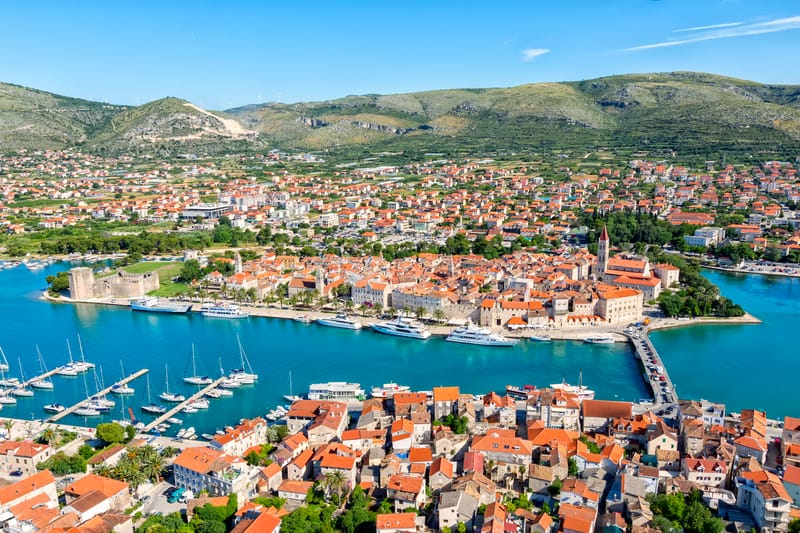
Zadar to Dubrovnik - Trogir
Trogir

Zadar to Dubrovnik – Travelling on the mainland, by bus, only

  • Start in lovely Zadar with so much to explore and enjoy here!
    …1 hour 30 minutes by bus to…
  • Sibenik – a charming old town, with its two UNESCO World Heritage sites (definitely visit the fortresses!), and a lovely harbourfront 
    30 minutes to…
  • Skradin to visit Krka National Park, a gem of a national park with its gorgeous waterfalls and lakes, plenty to explore on a day or two here
    …just over 1 hour to… (N.B. Only one bus a day at 17.30 with Best Line)
  • Trogir – a gorgeous little town, lots of tiny cobbled streets, good restaurants and cafes
    …only 30/45 minutes to…
  • Split – Croatia’s second city, a must-visit on your way down from Zadar to Dubrovnik! So much to see and do here, plus excellent restaurants, bars, shopping, beaches…the list goes on!
    …just over 1 hour to…
  • Makarska – another highlight on this part of the coast, a popular holiday destination with great amenities and rather impressively loomed over by Mount Biokovo
    …2 hours 30 mins/3 hours to…
  • Dubrovnik – the pearl of the Adriatic!

So, the above is actually only 5 places to stop off at when travelling down from Zadar to Dubrovnik. I think this is a good amount as you can base yourself in any one place and then make additional bus trips to nearby locations.

I would have liked to add in an extra place between Makarska and Dubrovnik for you, but this part of the coast thins out a little in terms of towns to visit. One place to explore would have been somewhere on the Peljesac Peninsula e.g. Ston but it is only possible to travel there from Makarska (if travelling by bus) via Dubrovnik, which wouldn’t make much sense.

The GetByBus website will help you look up bus timetables and book tickets.

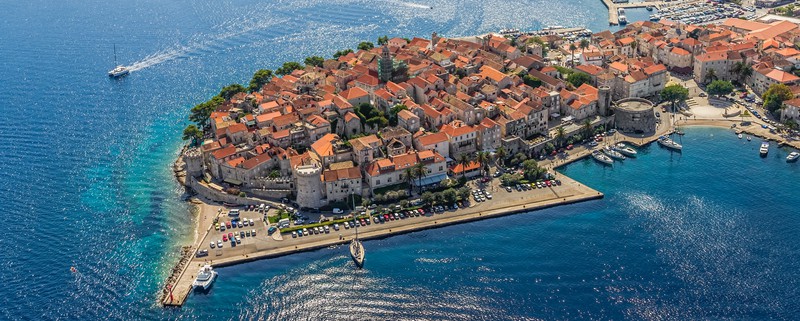
From Zadar to Dubrovnik - Korcula Town
Korcula Town

Zadar to Dubrovnik – Mainland by bus to Split and then by catamaran down to Dubrovnik

Now for the second option. The start is as the above itinerary, for the Zadar to Split portion, and then from there: 

  • Split
    …1 hour by catamaran…
  • Hvar Town on Hvar – a popular island town with great restaurants and interesting sights (the Spanjola Fortress on the hill is a must-see); taking a taxi bro to the Pakleni islands on a day trip is also recommended
    …1 hour 10 mins by catamaran to…
  • Korcula Town – a mini-Dubrovnik, a delightful place
    …just under 2 hours to…
  • Dubrovnik

Or two other islands you could do instead would be Brac (home to the famous Zlatni Rat beach) or Mljet (with its beautiful greenery and nature). Or any combination of two – Hvar and Mljet, Brac and Korcula…

Kapetan Luka and Jadrolinija run these catamarans; there are quite a few sailings on these routes (some – e.g. Split to Hvar – more than others) so the best advice would be to look up tickets on the ferry company websites to see what time the sailings are.

Enjoy your travels from Zadar to Dubrovnik!

September press coverage on Croatia round-up

In the first of a (perhaps) semi-regular series, I thought I’d round up some of the recent rather special UK press coverage on Croatia. There have been some great articles appearing in various newspapers and magazines this month!

A road trip from Split to Dubrovnik

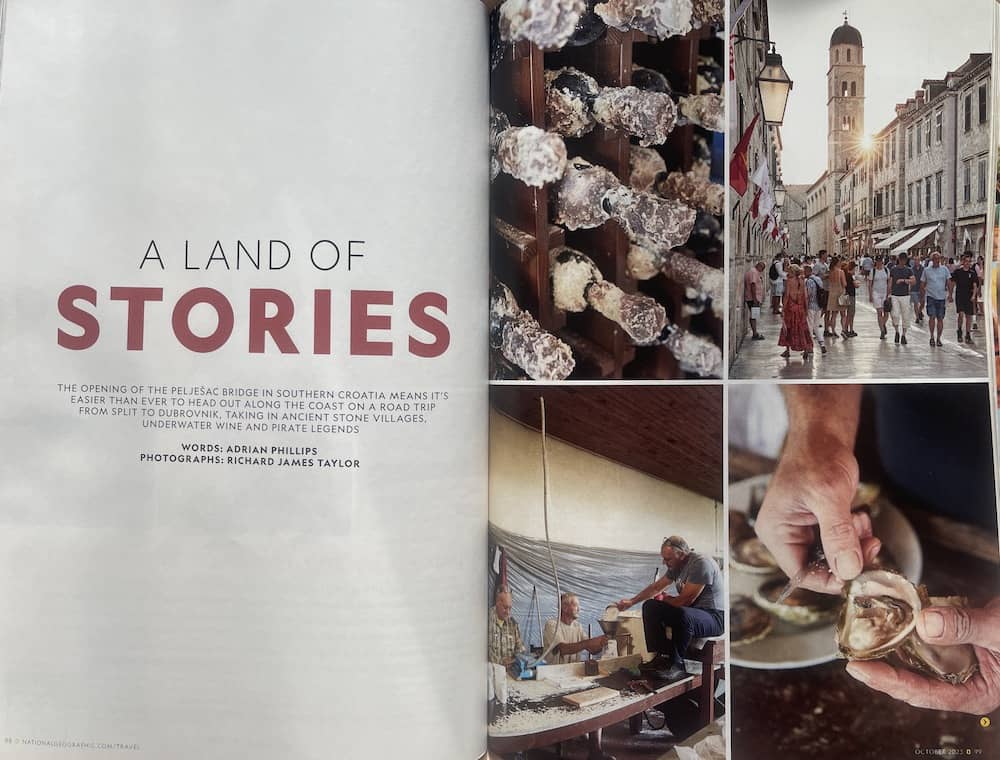
One of the best articles this month is featured in the latest edition (October 2023 issue) of the UK version of National Geographic Traveller magazine. In an article titled “A Land of Stories” in the magazine, the author Adrian Phillips undertakes a road trip from Split to Dubrovnik, making use of the new(ish) Peljesac Bridge.

Press coverage on Croatia - National Geographic Traveller

Adrian is particularly impressed by some of the eccentricities of Split – Froggyland, Gregory of Nin’s big toe, “Diocletian” making his way through the streets of his palace – before heading down to the former pirate HQ that is Omis. This part of Croatia is adventure central and that’s indeed what Adrian does – enjoying both zip-lining over the Cetina River and rafting before backtracking to Podstrana to try horseriding. A stop-off to explore Biokovo Skywalk is also on the cards, where Adrian nervously watches children jump up and down on the glass to see if it cracks!

Of course, it’s the Peljesac Peninsula where Adrian spends a fair amount of his time. He sets sail on the waters near Mali Ston to experience oyster and mussel farming, particularly enjoying freshly harvested mussels. The next day he meets with the team behind Edivo Winery, who seal and store Plavac Mali wine in amphorae underwater for two years. (Yes, really!)

You can read the article online here: A Croatian coastal odyssey: why road-tripping from Split to Dubrovnik is easier than ever although it’s really worth picking up a copy of the magazine for some glorious images of the Dalmatian coastline.

Family fun and adventure in Croatia

Another one of my favourite articles from the past few months is one written by Ben Machell in The Times. Ben and his family (him, his wife and his two kids) normally holiday in an all-inclusive resort (not in Croatia) and spend their time lazing by the pool. Wanting something different this year, he gambled on a two-week adventure itinerary in Croatia, starting off in Zadar and ending in Dubrovnik.

Ben and his family seem utterly delighted by Croatia and everything the country offers. As well as exploring the cities of Zadar, Split and Dubrovnik and the sights these cities have, his family try kayaking on the Zrmanja River (near Zadar), boating in the Kornati National Park, whitewater rafting on the Cetina River (as above!) – where the kids also embark on some cliff jumping – relaxing on Korcula and making use of everything the Sun Gardens Dubrovnik resort has to offer. This includes sea kayaking, where Ben and his son gained access to a hidden sea cave by swimming underwater two metres of solid rock.

One of the star quotes of the article:

…my first full dose of Croatia’s ridiculous natural beauty, , which — I would come to understand — could often seem almost hyper-real in colour and texture: bright-blue water, emerald-green forests, rugged, silver-grey mountains and gorges that sparkled in the sun.

Ben Machell, The Times

And overall? “We loved Croatia and we loved our adventures there.” A wonderful conclusion!

You can read the article online here: The adventure holiday that cured my family’s all-inclusive habit.

Wellness on Losinj

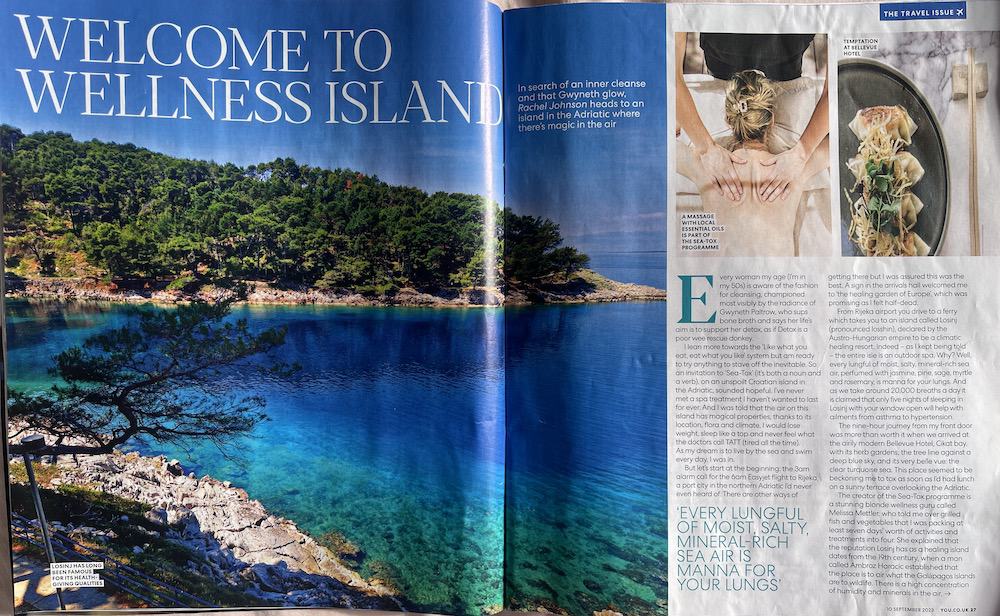
You magazine – The Mail on Sunday’s supplement – recently published a travel issue which featured an article titled “Welcome to wellness island” about the island of Losinj. Written by Rachel Johnson (yes, sister of you-know-who), I was initially amused to read that she had “never even heard of” Rijeka, to where she flew in Croatia to reach the island.

Press coverage on Croatia - You magazine

But once on the island, Rachel thoroughly enjoys partaking in something called a “Sea-Tox” at the Hotel Bellevue. Undertaking a full body analysis to better target a treatment programme for her, on the following days Rachel embarks on treatments such as massages and cryotherapy and activities such as hiking around Losinj.

The Sea-Tox is also supposed to include a limited diet, normally restricting carbs and sugar; rather amusingly, Rachel not only doesn’t partake in this aspect of the programme but also indulges in meals at the Michelin-starred restaurant in the neighbouring Hotel Alhambra.

After four days, I felt bursting with health, vitality and energy. I slept deeply, with the windows wide open, swam every day and never felt hungry.

Rachel Johnson, You magazine

Sounds idyllic and let’s face it – many of us would also indulge in meals at a Michelin-starred restaurant if we could!

For more press coverage on Croatia, take a look at our Articles on Croatia section.

Marco Polo Challenge

12th edition of Marco Polo Challenge on Korcula this Sunday, 24th April

This Sunday, 24th April 2022, the 12th Marco Polo Challenge triathlon will take place on the gorgeous island of Korcula – the reputed birthplace of the famous explorer after whom the triathlon is named.

Marco Polo Challenge, Korcula

About The Marco Polo Challenge

The middle distance triathlon, which will cover 1.9 km, 90km and 21km of swimming, cycling and running, takes place over the whole island of Korcula. This main event is to be held alongside a sprint distance triathlon, a sprint team relay and a 5km charity-fundraising run event.

The Marco Polo Challenge marks the opening of triathlon season in Croatia, and the event also hosts the middle distance Croatian championships. It is being jointly organized by Triathlon Club Split, Korcula Tourist Board and the town of Korcula in cooperation with Vela Luka and Smokvica municipalities and their tourist boards.

The organisers have prepared cash prizes and athletes will also have the opportunity to raise money for charity.


Nika Silić Maroević, Korčula Town Mayor, says:

“Welcome to Korcula – the island of Marco Polo that will enchant you with its natural beauty and cultural heritage. Discover our beautiful island; enjoy wandering around streets shaded by old stone houses, the most romantic sunrises, beautiful beaches and unique sword dances. Discover the taste of traditional local seasonal food and the finest Korcula wines and the extra virgin olive oils. Korcula is an ideal year-round triathlon holiday destination, as you will see for yourself during the competition.”

Hana Turudić, Korcula Town Tourist Board Director, says:

“Croatia has more than a thousand islands, and Korcula is different because of its wide range of activities. Korcula has been declared the safest Croatian island for a paradise vacation by Forbes magazine, which placed it on a list of the 12 safest islands in Europe. Get your bikes, running shoes and wetsuits ready for the challenging race and have a great time in Marco Polo’s home town. We invite you to extend your stay on Korcula and enjoy everything a warm springtime in the south of Dalmatia can offer.”

Korcula

Korcula – an ideal location for a triathlon

Korcula offers good weather conditions all year round, with open water swimming without wetsuits possible for most of the year.

Additionally, as the race is taking place in early season, the event’s accommodation sponsor, Aminess Hotels & Campsites, is offering participants top-of-the-line accommodation at extremely affordable rates.

Ivan Pavić, Race Director and General Secretary of Triathlon Club Split, says:

“We are thrilled to be bringing the championships in middle distance triathlon to this beautiful island of Croatia, and we are confident that athletes will have not only a great race experience but also a wonderful weekend in Korcula at the end of April.”

More info

All the details about the Marco Polo Challenge triathlon can be found on the official website: www.marcopolo-challenge.com. Learn more about Korcula on the Korcula Tourist Board website.

Marco Polo Challenge
24th April 2022, Korcula
www.marcopolo-challenge.com

Sibenik Spring gastro festival

First Sibenik Spring gastro event opens today

Sibenik Spring, the first gastronomic street food festival of its kind in the town of Sibenik, starts today until 12th June. Held in the lush green Robert Visiani Park, the festival will be open daily 5pm to 11pm (11am to 11pm on Saturday 12th June), and entry is free. There will be tasty food offerings as well as plenty of live music each day, and even a kids corner provided by Sibenik’s Bubamara.

Sibenik Spring gastro festival

The festival opens today, Tuesday 8th June, with live music from famous Croatian saxophonist Jaksa Jordes accompanied by DJ Kresh. Wednesday 9th June will see DJ Matthew Bee perform, whilst its DJ Bakula’s turn on Thursday 10th June. Friday sees local Sibenik legend DJ Bake senior take to the decks, whilst attendees on Saturday 12th will be entertained by Sibenik saxophonist Chuck Borris, accompanied by DJ PaleolitiKa.

Jaksa Jordes, Sibenik Spring
Jaksa Jordes
DJ Bakula, Šibenik Spring
DJ Bakula
DJ Bake Senior
DJ Bake Senior

But what about the food? There will plenty, all from well known Sibenik restaurants and caterers! Festina Lente Restaurant will be providing guests with a choice of juicy burgers, crispy chicken wings and pulled pork sandwiches. Pjat will have amazing-sounding tuna ceviche tacos and porchetta (pork belly) flat breads. Bistro Pucalina will offer up a feast of items including manistra (a Dalmatian soup/stew dish) with cuttlefish, lamb and desserts such as Sibenik gibanica and Skradin chocolates. Karoca will offer healthy juices, frappes, smoothies and cocktails; Konoba Lola will have traditional Dalmatian platters; whilst pastry shop Yum will be selling all manner of innovative desserts. And if you need something cold to wash down these tasty offerings, there will be Staropramen and Grif beers, Wai hard seltzer, Jamnica, Henricks gin and Thomas Henry mixers, Freixenet and Grasevina Kutjevo wine.

Sibenik Spring food
Dalmatian platter
Grill Sibenik Spring

If you’re in the Sibenik area, come down and sample the sumptuous food on offer as well as the refreshing drinks, enjoy the live music and revel in some open air fun!

Sibenik Spring is organised by the S2 Group, with support from the City of Sibenik, Sibenik Tourist Office and Sibenik-Knin County Tourist Office.

Sibenik Spring
8th – 12th June 2021
Robert Visiani Park
Sibenik Spring on Facebook

Island Hopping in Croatia by Car

Travel Question: Island-Hopping in Croatia by Car

Hope this message finds you well. I am contacting you since I am planning to travel to Croatia in July.  Preparing for the trip, I am planning to visit the islands. The idea is to travel from Split to Brac, from there to Hvar, from Hvar to Korcula and follow to Orebic in order to finish in Dubrovnik. 

Island Hopping in Croatia by Car

Looking for the ferry lines I am not sure if travelling by car will be possible, visiting all the islands using ferries between them. 

Could you please help me with this? It will be great to have the ferry line company connections. I see a lot of catamarans but not sure about the car. 

Regarding the option of leaving the car in Split, and then using catamarans for foot passenger transportation, so it is possible for us to do: Split – Brac – Hvar – Korcula – Dubrovnik, using foot passenger catamarans? If yes, that seems a great alternative. 

When visiting the islands, do you know if it is an extended option to hire a motorbike, quad or similar on each island? That will help us to have more mobility. We did something similar in Greece and if yes, that’s everything solved. 

Thanks in advance for your time.

U.

Yes, what you have found is correct – there are very, very few car ferries that travel from island to island, making island hopping in Croatia by car a little tricky. For the region you’re visiting, you can see what car ferries exist on this Jadrolinija map (the car ferries being shown as a dotted line), the company that operates them.

If you were using foot-passenger-only catamarans then yes, you would be able to hop SplitBracHvarKorculaDubrovnik.

If you do want to visit the different islands you mention with a car, you will almost always have to return to the mainland after each island e.g. Split to Supetar on Brac, then back to Split; then Split to Stari Grad on Hvar, then either back to Split to go to Vela Luka on Korcula OR drive to eastern Hvar (Sucuraj) to take the ferry to Drvenik and then drive down the coast and up the Peljesac Peninsula to get the car ferry from Orebic to Korcula.

It obviously depends on how much time you have for your trip overall as to whether you’d mind this extra travel time (going back to the mainland after each island).

(Note: the above regarding car ferries has been the case for the past few years, it is nothing to do with the coronavirus pandemic.)

This year, it is now possible to make a booking for a car ferry for a particular time (before you were not guaranteed a time on the day of travel) for some car ferry routes. However, in peak summer, it is still advisable to get to the port 60 minutes before departure time.

So I would suggest you to consider how much exploring by car you wish to do on each island – do you really need a car for all of them? Perhaps you could visit some islands on a day (or two) trip from Split / another island by catamaran and leave your car behind? Or not rent a car initially, do some day (or two) trips and then return to Split and rent a car for the second half/part of your trip?

Yes, you can definitely do Split – Brac – Hvar – Korcula – Dubrovnik by catamaran. Jadrolinija basically does this exact line – timetable here.

Alternatively, Kapetan Luka has a catamaran that sails Split – Milna (Brac) – Hvar Town – Korcula Town – Pomena (Mljet) – Dubrovnik, timetable here.

Best islands in Croatia - Korcula

You can use the different catamarans AND utilise others too – for example, Jadrolinija have another Split – Bol catamaran (timetable here) that you may prefer to use for that portion of your journey, maybe it departs at a slightly better time for you. 

There is no “flexi-ticket”, “hop-on/hop-off ticket” for these long-range catamarans or similar – you will need to buy tickets for each leg that you do. So this is why it does not matter if you e.g. do Split to Bol to Hvar with Jadrolinija, then Hvar to Korcula with Kapetan Luka, then Korcula to Dubrovnik with Jadrolinija again.

What I would suggest is that you go on both companies’ websites and look up timetables via their ‘book tickets’ facility and then see what catamarans are the most suitable for you.

Just to confuse matters a bit more 🙂 there is also a company called TP Line that operates a Korcula – Dubrovnik catamaran in July and August that you could also use. (Timetable here.)

To answer your other questions – yes, you would definitely be able to hire (more likely) a moped, bike or even a small car on each island to explore for a few hours/a day. Some locations would offer a quad bike e.g. this company on Brac.

Enjoy your island adventures in Croatia!