
What can you expect when eating in Croatia? It may come as no surprise that when dining out in the country, you’ll come across a mixture of Mediterranean (Italian) and Eastern European food. There are strong Italian influences along the coast – mixed in with plenty of fish and seafood, of course – whilst more traditionally Eastern European dishes – stews, soups, goulash, and meat dishes – can be found in places in the Croatian interior.
Croatian cuisine doesn’t exactly have the best reputation, but we think this is unfair. It may well be that Croatian food just hasn’t had much coverage in the last few decades, although this is certainly something that’s changing, and you’ll often find articles on the gastronomic delights of Istria or the fabulous seafood along the coast. Even Croatia’s capital, Zagreb, has its fair share of fantastic restaurants!
BBC Good Food have an interesting guide to the Top 10 foods to try in Croatia, and you might also like to know that the country was voted in 9th place in The best countries for food at Condé Nast Traveller’s 2026 Readers’ Choice Awards.
Eating in Croatia – what to expect and what to try
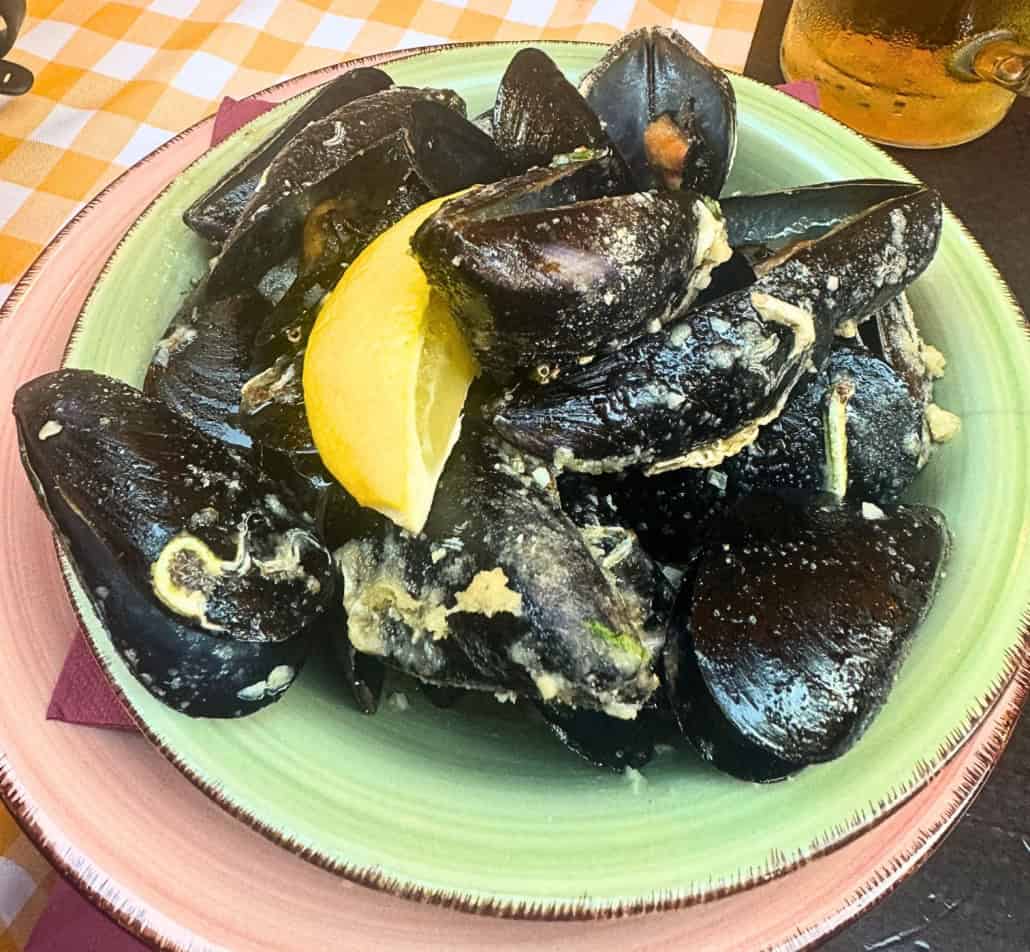
As we’ve mentioned, it’s no surprise that coastal Croatia serves up some excellent fish and seafood dishes. You can’t visit Croatia without trying locally sourced mussels, oysters, prawns, octopus, squid and numerous types of fish. Not into seafood? No problem…as long as you’re into meat! Meat-based dishes of all varieties are commonplace – grilled, baked and roasted.
Croatian dishes of note to look out for include:
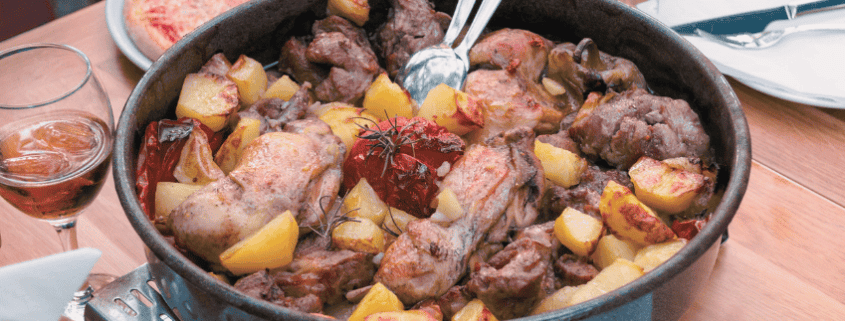
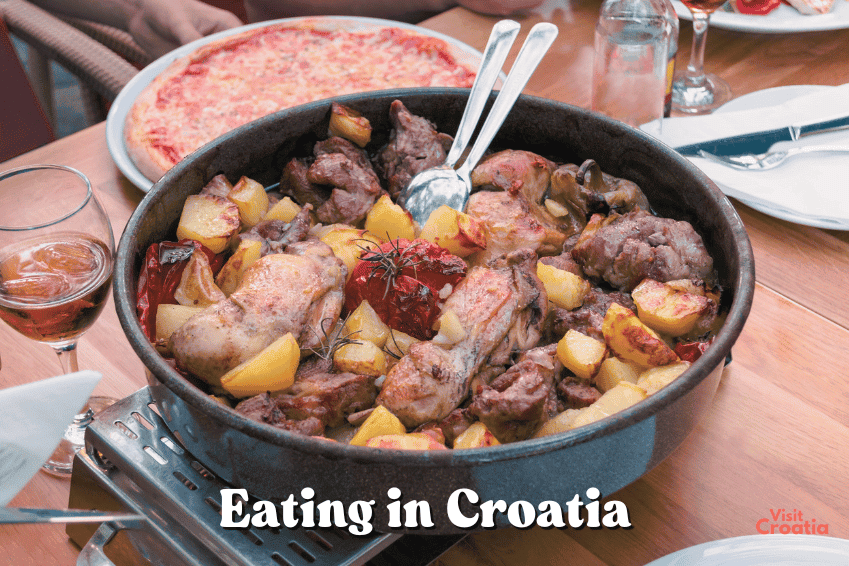
Peka (or ipsod peke) in which meat (often lamb) or seafood (octopus or squid) is cooked under a bell-shaped lid that’s placed on hot coals with additional hot coals placed on top. (Vegetables are often added alongside the meat or fish at some point in the cooking.)

Brodet is a fish stew from Dalmatia that is made with mixed fish, normally including eel. It is usually served with polenta or rice.
The hvarska gregada is a typical fisherman’s dish from the island of Hvar, with different types of fish cooked in a pan alongside potatoes, herbs and white wine.
Bakalar s krumpirima (dried cod with potatoes) is a Dalmatian dish that is commonly served at Christmas time.
Pasticada is a deep and delicious beef stew, most commonly found in Dalmatia, that’s usually served up with gnocchi.
Istria is very famous for its truffles (tartufima), and you’ll find many dishes served with some kind of truffle element. Fuzi s tartufima is a pasta dish with truffles – the fuzi are shaped like a thin tube.
Look out for fritaja, especially made with sparoga (asparagus) in Istria. This is a kind of omelette dish that also contains other vegetables, herbs and sometimes meat.
Istarska jota is another stew that’s popular in Istria (hence the name!), which this time contains beans, potatoes and several different types of pork – including ribs.
You may come across djuvec in the Croatian interior. This is a tomato-based meat and vegetable stew that is similar to ratatouille. Also common in inland Croatia is mlinci, which seem like pasta or noodles but are actually broken-up pieces of flatbread (made from a simple flour dough) that are softened after baking and typically served with the fat from roasted meat such as chicken.
Individual items that are absolutely worth trying include Croatian prsut (prosciutto) and paski sir – sheep’s cheese from the island of Pag (although you can also find it elsewhere) that has a wonderful taste. Another excellent salami is kulen, made from smoked, spiced (with paprika) sausage that is traditionally from Slavonia in eastern Croatia.
On the slightly more “fast food” end of the scale, cevapcici and burek are two culinary examples of food that have made their way from the Middle East, through the assorted parts of the former Yugoslavia (and even further beyond), and are now fairly common in Croatia! Cevapcici are like very thin sausages, or kebabs, made from minced meat. Burek is a baked pastry dish that contains numerous layers of filling and pastry. The most common fillings are ground meat, spinach and cheese, although you can also find sweet options.
Pizzas in Croatia are also of a pretty decent standard…no, scratch that, they’re delicious! Don’t discount pizza when choosing to eat out in Croatia. Not only are pizza restaurants often far better quality than they perhaps might appear from the outside, but they’re also a cheap meal out.
Eating in Croatia – Desserts
Yum, right? Who doesn’t like desserts? Well, not the Croatians, that’s who! You’ll come across numerous patisseries in Croatia serving up the most amazing cakes and sweet treats, with too many combinations of fruit, chocolate and cream to mention. One such famous place is Vincek, who are based in several locations in Zagreb.
Other dessert or sweet specialities to look out for include fritule, a small, doughnut-type delicacy, often flavoured with a hint of fruit. They are popular around Christmas time.

Trying out a slice of kremsnita is a must in Croatia – this is a custard and vanilla cake. The best kremsnita supposedly comes from Samobor, a small town near Zagreb.
Orehnjaca is a walnut roll that has a mild taste and is a nice alternative to all the sweet, creamy desserts. Very similar to this is makovnjaca, which is a poppy seed roll.
Oh, and you MUST partake in numerous helpings of ice cream (sladoled) from the many ice cream shops and stands. Ice cream in Croatia isn’t perhaps as amazing as it is in Italy – but it’s very, very close.
Top Restaurants in Croatia
If you’re after dining at one (or some) of the top restaurants in the country, you should certainly head to one of the ones that have been awarded a Michelin star. The following have all achieved this accolade:
Restaurants in Croatia with Two Michelin Stars
Agli Amici
Rovinj (part of the Grand Park Hotel)
Restaurants in Croatia with One Michelin Star
Noel
Zagreb
Dubravkin Put
Zagreb
Harry’s Piccolo
Porec
Monte
Rovinj
Cap Aureo
Rovinj
Nebo
Rijeka (part of the Hilton Rijeka Costabella Beach Resort)
Alfred Keller
Island of Losinj
Boskinac
Island of Pag
Pelegrini
Sibenik
Krug
Split
LD Restaurant
Island of Korcula
Restaurant 360
Dubrovnik
Korak
Jastrebarsko
Where to eat in Croatia
Take a look at some of our individual guides to places to eat across Croatia:
- Eating in Zagreb
- Eating and Drinking in Zadar
- Eating and Drinking in Split
- Eating and Drinking on Hvar
- Eating and Drinking on Vis
- Restaurants in Dubrovnik
Food items to take home from Croatia as souvenirs
Once you’ve had your fill of delicious Croatian food whilst travelling in the country, I just know that you’ll want to take some delicious foodstuffs home. Whilst you can’t exactly fill your suitcase full of Hvarska gregada (fish stew), there are a number of food-based souvenirs that would be suitable for taking home to recreate eating in Croatia. Make sure to give some to friends so they can sample Croatian food too!
Here are some ideas:
- Olive oil – Croatia is home to a number of award-winning olive oil producers, and you’ll be sure to find a great bottle to take home in many shops
- Olive spread – an alternative (or complementary item) would be a jar of this spread made from tasty Croatian olives
- Truffle products – a small jar of truffle spread or truffle spices to add to your home cooking would be ideal; search for Zigante Tartufi shops
- Cheese – who doesn’t love cheese? Pag cheese, in particular, is famous – look out for Sirana Gligora shops, which are in many cities in Croatia
- Chocolate – did you even visit Croatia if you don’t go home with a box of Bajadera?
- Ajvar – this exceedingly tasty condiment (made from red pepper, tomato and aubergine) goes with everything…at least, that’s how I consume it.
- Salami – I can never leave Croatia without a packet of cured meat kulen – easy to buy in any supermarket
- Croatian wine and/or liqueur – this goes without saying!