
In recent years, Pag has become an increasingly popular island to visit in no small part because the resort of Novalja – to the north of the island – is considered one of Croatia’s premier party destinations. With a reasonable amount of open-air clubs which are also the venue of several summer music festivals, Novalja is the perfect place for those who want to party away their holiday.
Of course, if that’s not the kind of holiday you want at all, don’t be put off coming to Pag. There’s plenty more on the island besides clubbing the night away. Pag Town, roughly in the centre of the island, is also a popular resort.
The island is also very famous for its lace-making, and the local cheese – the award-winning paski sir (meaning, Pag cheese) – that is made from sheep’s milk. If you visit, you absolutely have to sample both of these.
Pag Town is also famous for its carnival, with both a ‘winter’ and summer version, the latter taking place in July. The Pasko kolo is a traditional folk dance that is often performed during the carnival.
Pag is also very easy to reach from the mainland, possibly the easiest out of all the Croatian islands. This is largely because the island is, in fact, connected to the mainland (at its southern tip) by bridge.
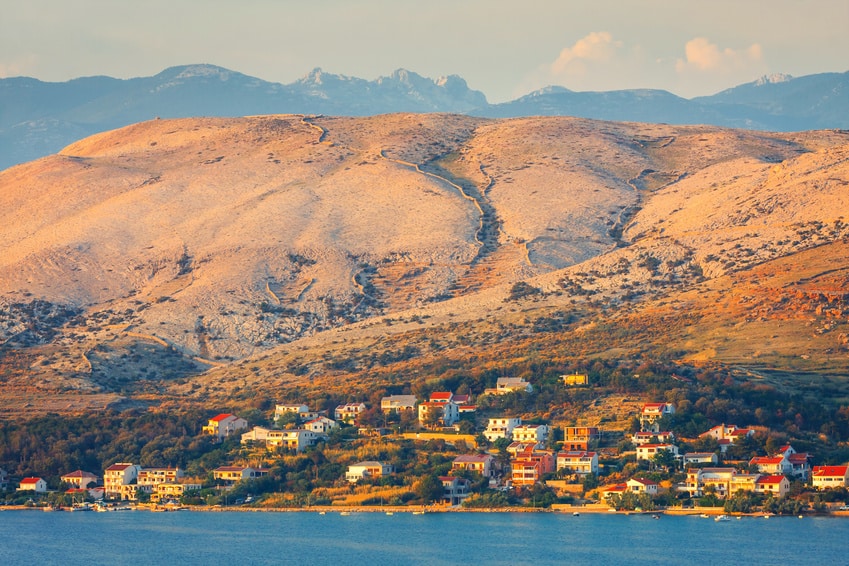
The second longest island in the Adriatic, the island covers an area of 110 square miles (284.6 square km) and is 37 miles (63 km) long. Due to the strong “Bura” wind, the island has very little vegetation but the numerous stone walls built by farmers and shepherds allow for some cultivation. In spite of this, the island has a lot of charm.
As mentioned, the main resorts on the island are Pag Town and Novalja. Pag Town was built according to plans by the famous Croatian Renaissance builder, Juraj Dalmatinac. Novalja is the largest resort on the island, and is well-known as being the most party-orientated place throughout the whole of Croatia.
About Pag Island
Please see our guides for more information on the island:
- History
A quick history of the island - Getting to Pag
The best and easiest ways of getting to the island - Sightseeing
The top sights - Nightlife
The best places to party the night away - Novalja
All about the most popular destination on the island of Pag
Eating and Drinking on Pag
One of the best places to dine on the island is at Restaurant Boskinac, located in the hotel of the same name that’s slightly inland from Novalja. The restaurant serves up Pag specialities reinterpreted in a modern and creative way, with plenty of twists on typical meat, fish, cheese dishes and more. They also offer a wonderful wine selection with some perfect pairings for their dishes.
Accommodation
There are a number of hotels in both the main towns on the island, and private accommodation is also plentiful. See our Accommodation on Pag section or see what’s available using the search map/box below:
More information on Pag
- Pag Town Tourist Office
- Novalja Tourist Office
- Novalja.info