
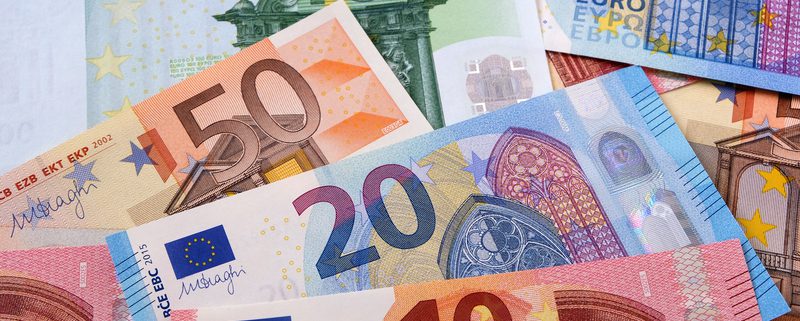
After almost 30 years of the Kuna – and 10 years after joining the EU – Croatia officially adopted the Euro as its currency on 1st January 2023. Read more about the country’s currency and money in Croatia in general on this page.
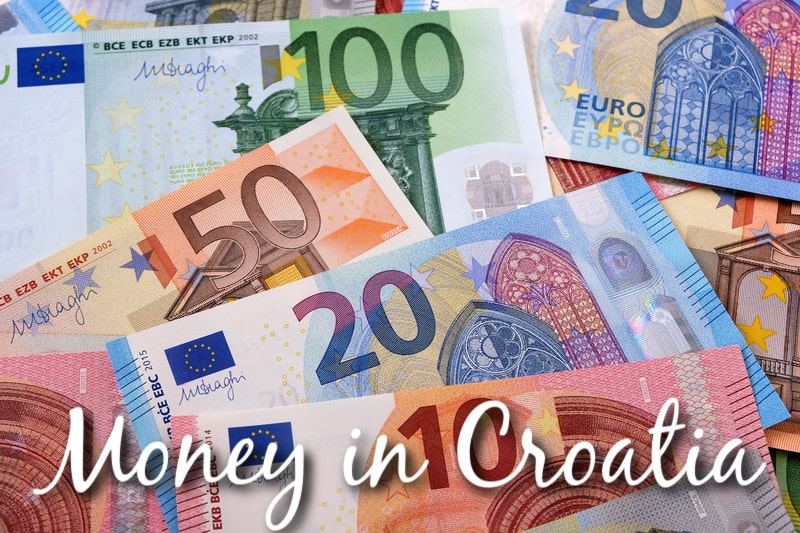
Money in Croatia – The Euro
Yep, let’s say that again – the currency in Croatia is the Euro. The Euro was adopted as the official currency of the country on 1st January 2023.
You may like to read more on the background of Croatia adopting the Euro here: ‘Amazing journey’: EU accepts Croatia as 20th eurozone member. Alternatively, take a look at our page on New currency from 1st January 2023: Euros in Croatia.
The Croatian Euro and cent coins feature designs related to the country. These designs include a map of the country, a pine marten (which in Croatian is a kuna), an image of famous inventor Nikola Tesla, and the Glagolitic script, the first known Slavic alphabet. You can see the designs on the Croatian government website.
Obtaining Euros prior to your visit to Croatia
As it’s such a widespread currency, you shouldn’t have any issues with obtaining Euros prior to your trip to Croatia. Even better, perhaps you are visiting Croatia from a country that also uses the Euro…so you already have them!
Money in Croatia – ATMs
Alternatively, you may not see the need to purchase Euros prior to your trip, which is perfectly understandable. In this case, our first piece of advice would be to take a bank card/cash card instead. This avoids the need to travel with large-ish amounts of cash, and ATMs are readily available in almost all resorts, towns and cities in Croatia, in banks, supermarkets, airports and elsewhere. Even small islands (but not all!) usually have at least one ATM. This really is one of the easiest ways of obtaining money in Croatia.
The Croatian National Bank have a helpful map of ATMs (and bank branches). Use this to look up the nearest ATM(s) to where you will be staying: Croatian National Bank – Map of ATMs and Bank Branches.
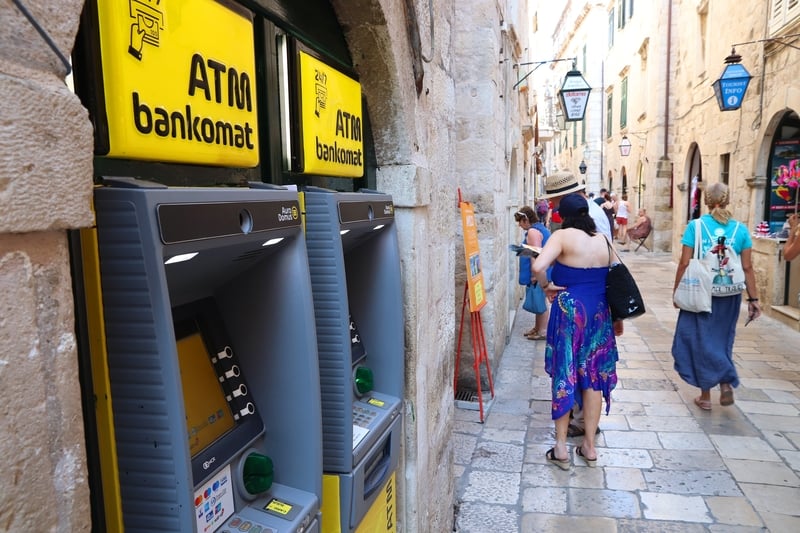
As a foreign card is inserted into the machine, you will most likely be presented with a choice of languages – no need to navigate through Croatian-language menus. The exchange rate you’ll receive will be fairly good, and there may only be a small service charge, which depends on your bank back home – it is a good idea to check before travelling. Local banks may also charge an operating fee on top of this.
If you travel a fair bit, try and see if you can find a bank/cash card provider in your home country that will offer you a debit card that doesn’t incur charges (or only very low charges) when used abroad.
Paying by debit and credit cards
Paying for items (accommodation, shopping, food in restaurants) is a bit hit-and-miss in Croatia. In larger shops (supermarkets, drugstores/pharmacies, souvenir shops), cards are readily accepted. Paying by card in a hotel is also very straightforward.
More established restaurants in larger towns should also accept cards. The smaller the town/restaurant (particularly on the islands), the less likely it is that cards are accepted. It’s therefore always a good idea to have some cash to hand.
Tolls can be paid by card, as can entrance tickets to the national parks. Transport (bus, train, ferry tickets) can be paid for by card; in many cases, these tickets can be bought online before travel.
Private accommodation places, in almost all cases, do not have the infrastructure to accept cards; they must be paid in cash at the time of your stay if you are not making payment in advance online. However, your accommodation will advise you on this before you arrive, so you can prepare yourself.
Currencies to take with you and changing money in Croatia
If you don’t obtain Euros in advance, taking your ‘home’ currency (e.g. UK Pounds or U.S. Dollars) to Croatia and changing it there will not result in any problems. They are easy to exchange for Euros in the country, although other currencies can, of course, be changed too.
Hotel exchange rates are usually quite poor, so try to avoid changing your money at your hotel. You’ll be better off changing your money in a bank or in one of the numerous money-changing places dotted around. Look out for signs for a ‘mjenjačnica‘.
Are Euros accepted in Croatia?
You will find that you can pay in some places – private accommodation, taxis – in Euros. Do note that this is entirely on an unofficial basis; the Euro is NOT yet the official currency and NO business/individual is required to accept them as payment.
But why do some places accept Euros, you may wonder? This harks back to the days of Yugoslavia when people were happier “holding” Deutschmarks rather than the unstable Yugoslav Dinar. It is more likely for small family-run ones to accept Euros.
YES, THEY ARE! 😄
Money in Croatia – The old currency, the Croatian Kuna!
Who isn’t a fan of monetary nostalgia?! We thought we’d keep our section on the Kuna here for everyone to reminisce fondly.
The Kuna was divided into 100 lipa. When listed as a price, Kuna was abbreviated to Kn.
The word ‘Kuna’ means marten, a weasel-like animal whose fur Croats used as payment for goods many centuries ago. The word ‘lipa’ means lime tree, but we don’t know the connection here!
The Kuna used to come in denominations of 5, 10, 20, 50, 100, 200, 500 and 1,000 as notes and 1, 2, 5 and 25 as coins. (The 25 Kuna coins were largely commemorative. For example, when the Peljesac Bridge was opened in July 2022, 25 Kuna coins were minted depicting the bridge.)
The Lipa existed in coins of 1, 2, 5, 10, 20 and 50.
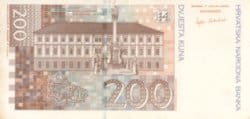
The plural of Kuna was Kune (pronounced ‘koo-neh’), although it was/is fine to pluralise it – as many outside of the country do – to Kunas.
The Kuna was, in fact, Croatia’s second currency. The first currency the country used was the transitional currency, the Croatian Dinar. This was used from December 1991 (after the country gained independence) to May 1994 when the Kuna was introduced.
What if I still have some Kunas?
As of 1st January 2024, there is only one location in Croatia where you can exchange your old Kunas for Euros – the Croatian National Bank in Zagreb. It is now only possible to exchange notes, not coins.
You can see more information on this here: Kuna exchange only in CNB from next year.