
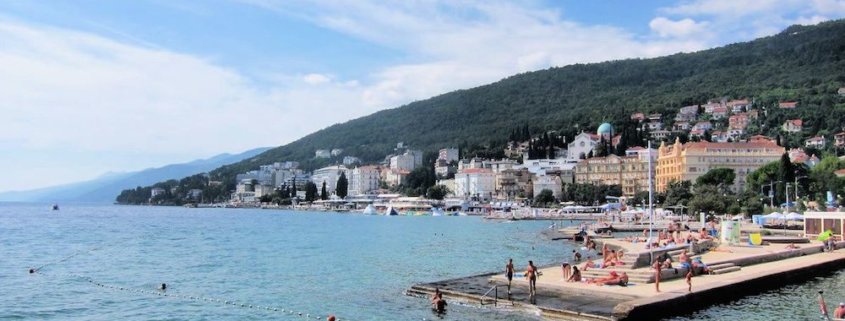
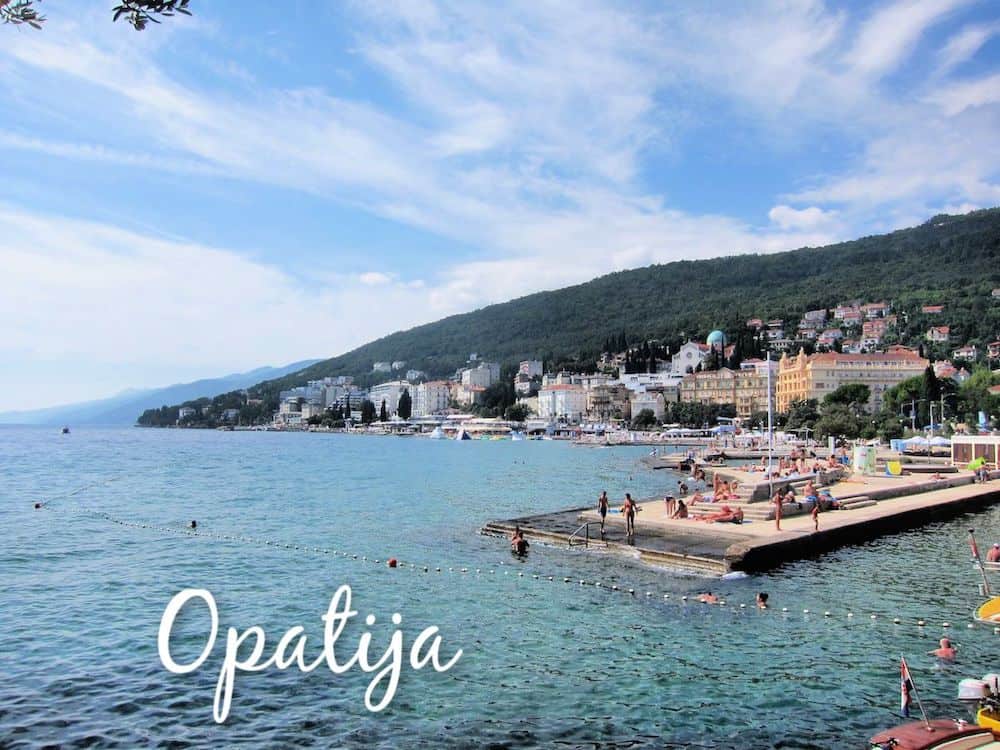
With a population of around 10,000 people and lying about 9 miles (14km) west of Rijeka, Opatija was once upon a time the grand dame of Croatian tourism. It was the most fashionable seaside resort during the Austro-Hungarian Empire and many fine hotels, residences and houses were built there during that period. European royalty also stayed there then, as did famous celebrities (well, back in the day!) such as the singer Gigli, the dancer Isadora Duncan, and composers Mahler, Puccini and Lehar.
The place has still retained much of its glamour which means that some hotels can be a little on the pricey side. If you’re on a budget, private accommodation is a more suitable choice – info can be obtained from the tourist office in the centre of town.
Opatija really does seem a little different to many other towns on the Croatian coast. You would be forgiven for thinking you might actually be on the French Riviera!
Getting to Opatija
Rijeka Airport is the nearest airport to Opatija; see our Getting to the Kvarner Riviera page for more details on flights from the UK and Europe to Rijeka. Pula Airport would also be suitable for reaching Opatija; see our Getting to Istria page for details of flights there.
You could also fly to Trieste in Italy, as there are direct buses from Trieste Bus Station to Opatija with Arriva.
The Arriva website is also your best bet if you want to check bus timetables for routes from elsewhere in Croatia to Opatija.
History of the town
Opatija emerged from an abbey that was built on the present-day site of the town. The Abbey of St Jacob (or Opatija Sv. Jakova in Croatian – as you can see, the Croatian word opatija means abbey) was built in the 14th century.
Its proper emergence as a town took place in the 19th century, when it was part of the Austro-Hungarian Empire. A wealthy Rijeka businessman, Iginio Scarpa, built the Villa Angiolina in 1844 as a holiday home and to entertain clients and Austrian nobility.
From this point on, Opatija emerged as a popular tourist destination, especially as it and nearby Rijeka were linked to Vienna by rail. Further hotels and villas were built in the latter part of the 19th century, including the Hotel Kvarner and Hotel Imperial. The 12km-long promenade by the sea, the lungomare, was also built during this time. As mentioned, Opatija became something of an upscale, elegant resort and was popular with nobility, royalty and the celebrities of the time. It even became known as the “Austrian Nice”! Its positioning meant it has – and still does have – a temperate climate, and so was also considered a spa and health resort, suitable for treating a variety of ailments.
Sightseeing in Opatija
St James’s Church is built on the site of the abbey from which Opatija grew. Parts of the church are from the early 16th century, but the majority of its current structure was reconstructed in 1937.
Villa Angiolina, the first major building to be built in modern-day Opatija – in 1844 – still exists today. It is surrounded by a beautiful nature park, with plants brought (at that time) from India, China, Japan, South America and Australia.
The lungomare is the 12-km seaside promenade, initially constructed in 1889, which stretches all the way to Lovran. Originally intended for use in physiotherapy (as mentioned, Opatija was a health resort), the path winds past many of Opatija’s attractions and is a lovely walk to stroll along the sea.
One of the town’s most famous symbols is the Maiden with the Seagull (shown below). Built in 1956, this sculpture depicts a girl with her hand stretched out to a seagull, looking out to sea.

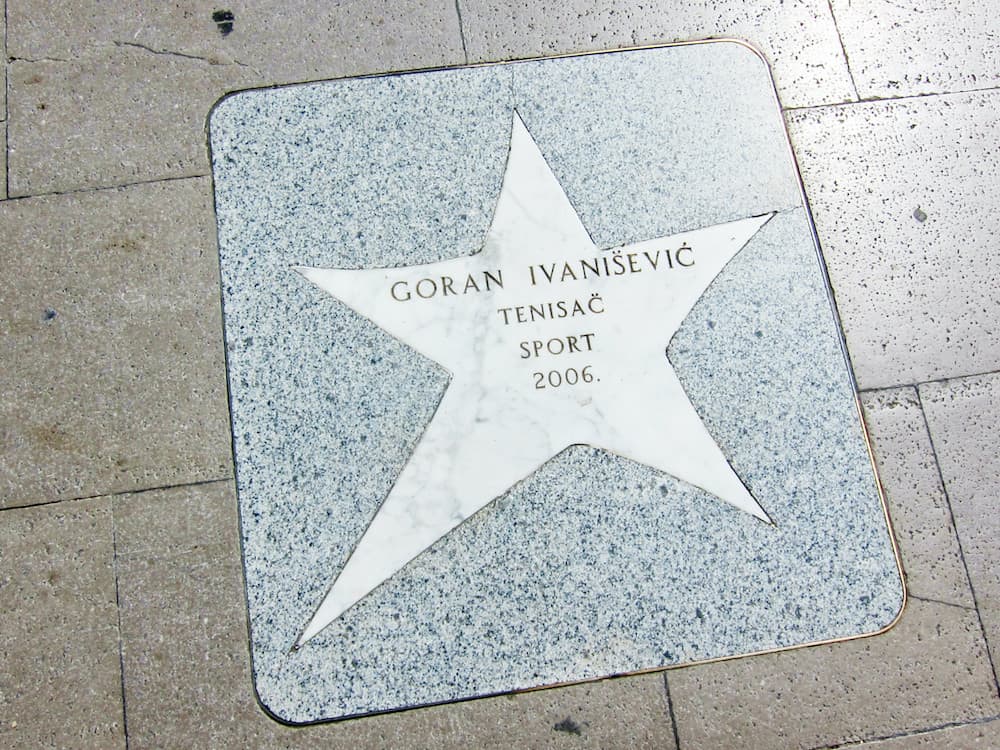
The main street in town has a ‘Walk of Fame’ on its pavement, modelled on Hollywood’s version! Stroll over it to see tributes to famous Croats; these include tennis player Goran Ivanisevic, skier Janica Kostelic and inventor Nikola Tesla.
Eating and Drinking in Opatija
For a fine dining, special meal out, you won’t go wrong at the Michelin-starred Restaurant Navis (in the Design Hotel Navis). Expect wonderfully modern and delightful dishes with attentive service.
Restaurant Ruzmarin offers a wide variety of delicious pasta, risotto, meat and fish dishes in a comfortable setting.
Roko is a great choice for really tasty pizzas, although they also offer plenty more besides!
Bocarija Opatija is the place to head if you are hankering after big grilled portions; very reasonable too.
Stop by Caffe Wagner for coffee with a sweet treat (kremšnita!) with glorious views. Kaokakao is also a great choice for beautiful cakes and patisserie picks or a tasty ice cream.
Angiolina is a good choice for cocktails and nighttime fun.
Accommodation in Opatija
Opatija is considered one of Croatia’s premier resorts, which means it has quite a few 4- and 5-star hotels. For the ultimate in luxury, consider the 5-star Hotel Milenij, the Design Hotel Navis, the Hotel Mozart, or the Hotel Sveti Jakov.
There’s also a good choice of 4-star options, including the Grand Hotel Adriatic, the Hotel Bristol, and the Grand Hotel Palace.
For something more budget-friendly, there’s the Hotel Galeb, the Hotel Istra, and the Villa Ariston.
There’s also the 5-star Ikador Luxury Boutique Hotel & Spa located in Ika, about 5km out of Opatija.
For full listings of accommodation options, see our Accommodation in Opatija page.
General info
The Tourist Office can be found at Marsala Tita 146, tel: 051 271 310, email: tic@visitopatija.com
Find out more at the Opatija Tourism Office website.
Take a look at our Photos of Opatija page for more sights from the town.