
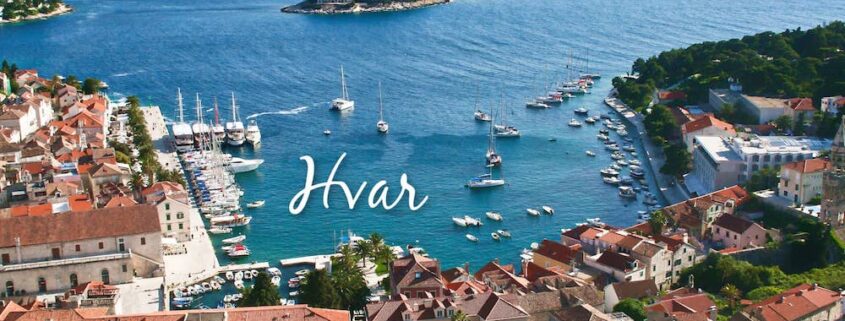
Hvar is the fourth largest of Croatia’s islands at 182 square miles (300 square km) in size. It is even sunnier than Brac, getting almost 2,800 hours of sunshine per year. There is however enough rain to keep the island green and to maintain the beautiful fields of lavender, rosemary, sage, marjoram and thyme and the carefully cultivated vineyards. For this reason, many people remark that in the spring the island smells like a herbalist’s shop! When visiting, you must purchase some lavender oil (or lavender itself), which is the main export of the island.
Local hoteliers pride themselves on consistently good weather – if there is more than four hours of rain per day, they give a reduction on your stay and if snow falls, your stay is free!
The main resorts are Hvar Town, Stari Grad, Vrboska, Jelsa and Sucuraj.
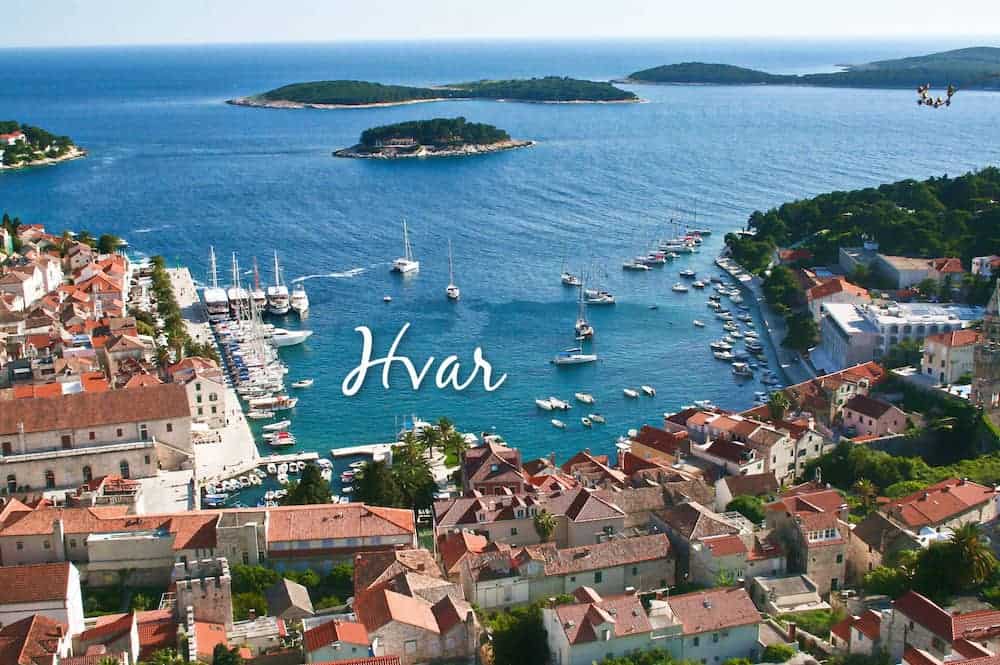
Hvar (and in particular, Hvar Town) is increasingly obtaining a reputation as something of an upmarket destination in Croatia. This is partly because it can be a little on the pricey side (everyone always exclaims how “expensive” the coffee is) compared to some other destinations, but it’s also favoured as a destination by the rich and famous (or fabulous) who sail into town on their amazing yachts. In recent years, Prince Harry (who famously fell into a pool whilst dancing at Carpe Diem Bar); Jay-Z & Beyonce (who debuted her baby bump there of their first child) and Roman Abramovich have all been spotted.
Hvar also regularly appears in travel publications’ “best of…” lists, such as Travel + Leisure’s 25 Best Islands to Around the World 2024 (according to readers).
There’s still plenty for those of us who don’t have a mega-yacht, though! It really is a beautiful island, and well worth a visit or a longer stay. Read our guide on the following pages:
- History A brief history of this beautiful island
- Getting to Hvar How to reach the island via various ferry and catamaran options
- Hvar Town The islands premier destination
- Stari Grad All about this charming town
- Jelsa Another great choice when you stay here
- Accommodation Tips on where to stay on the island
- Sightseeing Some of the best sights
- Eating & Drinking The best places to dine and drink on the island
- The best Hvar day trips What trips to undertake on the island and nearby
Tourist Offices
Tourist Office in Stari Grad at Obala F. Tudmana bb, 21460 Stari Grad, Email: tzg-stari-grad@st.tel.hr
Tourist Office in Hvar Town at Trg sv. Stjepana 16, 21450 Hvar, email: tzg-hvar@st.t-com.hr
Tourist Office in Jelsa at Riva bb, 21465 Jelsa, email: info@tzjelsa.hr
Tourist Office in Sucuraj at Sucuraj bb, 21469 Sucuraj, email: tz.sucuraj@st.t-com.hr
Agencies on Hvar
- Luka Rent in Hvar Town offer car, bike, scooter and speedboat rental! They also organise a wide variety of excursions
- Hvar Adventure have a great selection of excursions and activity tours
- Pelegrini Tours in Hvar Town offer accommodation, transfers, excursions and bike, scooter, car and boat rental
More information on Hvar
- Hvar Town Tourist Office
- Stari Grad Tourist Office
- Jelsa Tourist Office
- Sucuraj Tourist Office
- Kino Mediteran offer open-air film screenings in Hvar Town during the summer
- Hvar Climbing Invaluable if you’re into climbing, this details many of the top places to undertake this sport