Visit Croatia
...Travelling Around...

Introduction
Planning Your Holiday
Area Guides
Holidays in Croatia
Features


The bus service in Croatia is first class: there is even a bus connection between the smallest villages in the country. There are express buses that cover longer distances and which are reasonably comfortable. Bus travel is also inexpensive, and the new motorways in parts of the country have reduced journey times considerably.

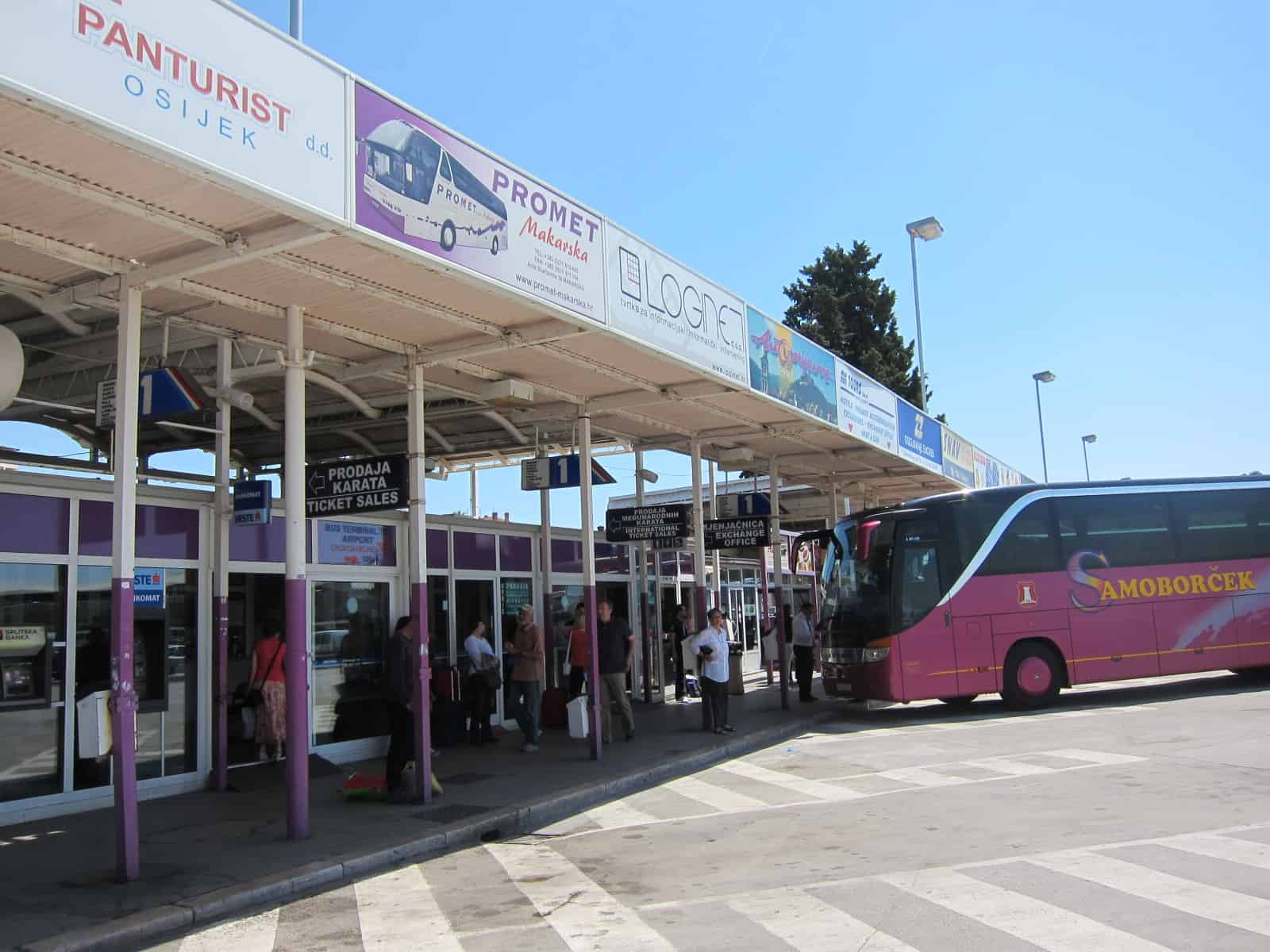
In almost every larger town, there is a bus station (Autobusna Stanica) where tickets are sold and timetables are clearly displayed.

Bus Companies in Croatia
Please see the following websites for timetable and price details. (Unfortunately, some of these websites are in Croatian only!)

AK Karlovac
APP Variety of domestic routes
Autopoduzece Imotski Routes between main cities
Autotrans Rijeka based company
Brioni Pula based company
Cazmatrans
Croatia Bus Zagreb based company
Contus Services between Zadar and Zagreb
Panturist Routes from Osijek to Zagreb and the coast
Promet Makarska Routes from Makarska down the coast and to Zagreb
Promet Split Routes in and around Split
Samoborcek Routes between Zagreb and Split

Bus Terminals in Croatia
Timetables can also be found at the following websites.

Dubrovnik Bus Terminal
Split Bus Terminal
Varazdin Bus Terminal
Zadar Bus Terminal
Zagreb Bus Terminal

Autobusni Kolodvor is also a very useful website on which you can look up bus timetables for the whole of Croatia.

Travelling by bus in Croatia - Tips
Here are some useful tips on travelling by bus in Croatia to try and make your journey that extra bit more relaxing!

Buy tickets in advance
It is not possible to buy tickets for bus journeys in Croatia online. Tickets can only be bought at bus stations or on buses.

But nevertheless, try and buy your bus tickets for your intended journey (from the bus station) earlier than when you actually travel, the day before for example. This will save you time and hassle on the day, and you'll know for sure that you've got a space on the bus you want to be on.

Sometimes, however, you may only be able to buy tickets on the bus on the day of travel, so keep this in mind.

Allocated seats
Most bus tickets will have an allocated seat number. These are not always abided by…though they sometimes are. Play it by ear; see what other bus passengers are doing and follow their example! However...

Seating on buses
You may find some bus journeys have more travelers than seats, especially on popular coastal routes! So, forget about trying to sit in the seat you've actually been allocated (there may be someone in it anyway), simply take any free seat.

If you find no seats available, you may have to stand. The bus driver/ticket inspector, however, may find a seat for you, especially if you're travelling a long distance and have pre-bought your ticket (and, to be honest, look like a tourist); locals may have hopped on along the way and may not be travelling all that far.

Rest stops
Longer bus journeys will have a few rest stops. If you're on a route that involves a motorway, you will most likely stop at a petrol/gas station where you can stock up on snacks and drinks, as well as taking a toilet break!

As with most countries, these petrol stations can be relatively pricey, so why not buy snacks and drinks (and even make your own sandwiches, if you can) at a supermarket the day before?

Beyond a stop at a petrol station, there will also be short breaks at the larger bus stations along the way if you need another toilet break or to grab some water. Just keep an eye on the bus to make sure it doesn't leave without you!

Busy routes & full buses
We've had experiences of some buses being too full to accept (all of the) new passengers. This can be true if you're trying to join a bus halfway along its route. And its especially the case if the majority of those trying to get on the bus are locals with one little shopping bag, whilst you're travellers with large backpacks and suitcases...you just won't be able to get on!

If this happens, and the next bus is too many hours ahead, try travellling to the nearest big town and then taking another bus from there. For example, we were once stuck in Trogir after the 9am daily bus refused to let us board. So, we took a local bus (no. 37) to Split, and then caught one of the many buses from there to Dubrovnik. (And as the buses originate at Split, we were almost guaranteed a space on the bus.)

Paying for luggage
If you have anything to place in the hold (suitcases, backpacks, large items), you will have to pay for them. Each piece costs approximately 6-7 Kunas, so keep some change close to hand whilst you get ready to board the bus.

You will be given a little receipt with a number that corresponds with a sticker placed on your item(s) and it's a good idea to hold onto this, just in case! However, we never had to "prove" which items were ours at the end of the journey.

Travelling to Dubrovnik? Keep your passport handy
If you are travelling by bus to Dubrovnik, you will pass through a small section of Bosnia called the Neum Corridor. You'll need to show your passport both when you enter and leave the Corridor, so make sure it is within easy reach! Usually, border guards will board your bus and only take a quick glance at the photo page of your passport.

Your will most likely also have a rest stop at a shop in the Neum.

Passing time on journeys
What to do on all those long journeys? If you're travelling with companions, at least you'll have people to talk to/play cards with!

Otherwise equip yourself with a book and – perhaps more importantly – some kind of MP3 player. Buses seem to like playing radio or their own music, which may not be to your liking. Also, take some kind of small (travelling) pillow – these journeys are a perfect time to catch up on some ZZs.


Beaches in Croatia


Visit Croatia © 2009 About Us | Sitemap | Guestbook | Useful Addresses | Contact Us