November may be a bit of a quiet month as far as celebrations go. Autumn has well and truly set in – bringing rather changeable weather – the days are shorter, the madness of Halloween is over and there’s no Christmas cheer (yet) to entertain us. If that’s your current mood, here’s something that will cheer you up – Martinje / St Martin’s Day! The charming town of Sveti Ivan Zelina, just 40 kilometres north east of Zagreb, is holding its Martinje celebrations on Saturday 8th November this year – read on below for their plans.
What is Martinje?
St Martin is the patron saint of vintners and wine, and the saint’s day is marked on 11th November each year. (Celebrations are normally held in the days before or after, depending on where in the week this falls.) This particular day is when wine is blessed and thanks are given for a good harvest; it is also the day when “young” wine is considered good to drink. It’s the perfect event in the run-up to Christmas – full of good wine and food, and general cheer and merriment. Just the thing for autumn.
Martinje is marked in many towns and locations across Croatia. Check locally to see what events are taking place.
Young wine
This year’s Martinje celebrations in Sveti Ivan Zelina
At 11am on Saturday, 8th November on the central Ante Starčević Square in Sveti Ivan Zelina, Martinje celebrations will begin. There will, of course (of course!), be plenty of opportunity to sample young, local wine, expertly poured for you by Zelina winemakers and the Winemakers and Winegrowers Association Brina. Tasty food such as hearty sausages will be available, and excellent music will be a feast for your ears, provided by the tamburitza band Fini dečki.
A very important part of Martinje celebrations is the blessing of the young wine – this is a centuries-old tradition. This will also take place, performed by the Bishop of Martin.
The blessing of the wine
This year’s events will be hosted by Sveti Ivan Zelina alongside Zagreb County and the towns of Jastrebarsko and Samobor as part of the In cultura veritas project.
Marinka Zubčić Mubrin, the director of Sveti Ivan Zelina Tourist Office, says:
Don’t miss this chance for good entertainment, socialising and enjoyment of a good drop of wine. St Martin is coming! He will baptise it, you will drink it!
https://www.visit-croatia.co.uk/wp-content/uploads/2025/11/Martinje_1.jpg6631000annazhttps://www.visit-croatia.co.uk/wp-content/uploads/2017/09/visit-croatia-logo5.jpgannaz2025-11-06 13:44:532025-11-06 13:49:04Martinje celebrations in Sveti Ivan Zelina this weekend 🍷
October is definitely chestnut month. If you’re currently experiencing the full force of autumn, as well as all of the colourful leaves that are a’falling, you’re probably tripping over chestnuts a’plenty! A number of locations in Croatia also celebrate chestnuts this month. One of the best festivals is Kestenijada in Sveti Ivan Zelina, just northeast of Zagreb. Taking place on the weekend of 18th and 19th October 2025, Kestenijada is in its 27th year this year and will offer a rich and entertaining programme for all ages. The majority of the festival centres around Kladešćica, the peak of Zelina Mountain.
Kestenijada was listed as one of the Top 100 Stories at the 2025 Green Destinations Awards, which promotes sustainable tourism development. You can read the detailed report about Kestenijada from Green Destinations here.
Healthy, eco walk to Kladešćica
At 10am on Saturday 18th October, Mario Valentic (creator of the HealthyFIT Experience) will lead the 6-kilometre walk to Kladescica, the peak of Zelina Mountain. This hike sees a welcome return for this year, but there will be an additional activity this year. Register ahead of time to join the ecological campaign to clean up the local environment. Participants will be rewarded with a coupon at the start to receive a free lunch and a refreshing Zelina Chestnut Smoothie by Mario Valentic, made from local chestnuts.
The walk to Kladescica – aided by Izvor Mountaineering Association – will also feature “body & mind training” and “breathe & flow exercises” which aim to strengthen the mind and body and improve health. Suitable for all ages.
For anyone thinking that such a walk may only be for the super-active or highly trained, don’t worry! The trail starts near the village of Biškupec, winding through beech and chestnut forests. You’ll walk past the ruins of Zelingrad Fortress, a once majestic medieval castle. Whilst you walk, you’ll notice numerous educational points detailing the local animal and plant life, some of which are endangered or protected.
The walk should take one and a half to two hours.
Party Time…and food and drink time
Sunday 19th October will be party time, as well as food and drink time! From 10am to 6pm at Kladescica, numerous excellent chestnut gastro offerings will be available – including roast chestnuts (which are of course absolutely delicious), chestnut delicacies and craft beer and Zelina wine – all thanks to local association Amanita. Indulge in chestnut treats with a nice glass of a local drink, with live music playing in the background. The perfect party!
The first 200 walkers to reach the Kestenijada (Chestnut Festival) will be rewarded with a scoop of delicious chestnuts, a gift from the town of Sveti Ivan Zelina to say thanks to participants for the protection of the Mount Zelina ecosystem.
The local hunting lodge will once again be hosting a competition for the best hunting stew. Organisers from Hunting Society Srndać will provide participants with the necessary supplies and wood. After 2pm – when the winner is announced – you can taste the delicious goulashes! The same hunting society will also be holding a talk on the animals of the region, so you can learn more about the local inhabitants.
Plenty of fun for the younger ones
The festival will provide “Games Without Screens” for children from 12pm to 2pm, offering kids the chance to enjoy themselves without any digital devices!
A variety of games will be available to play with, including giant Jenga, giant Tic Tac Toe, Mölkky, ring toss, tug of war and relay race games. Such games and activities allow children to develop their gross motor skills, and encourage communication and resourcefulness – with a bit of competition too. All in the outdoors!
Thinking of the Environment
Kestenijada promotes a zero-waste initiative, and single-use plastic is banned. Furthermore, visitors are encouraged to bring their own glasses, crockery and snacks in reusable containers.
Anyone arriving at the festival by car instead of on foot will be part of a one-way traffic system to avoid long queues.
Kestenijada Programme
Saturday, 18th October 2025
A walk along the trail in the company of Mountaineering Association Izvor and Mario Valentić feautring HealthyFIT body&mind training and breathe&flow exercises program and an ecological environmental cleaning action
Free lunch and a refreshing smoothie available for all participants of the eco-action and HealthyFIT program
11 am: Walk to Kladeščica – Walk along the hiking trail, suitable for all
10 am – 6 pm: Kestenijada, The Zelina Chestnut Festival
A diverse and rich gastronomic offering that includes roasted chestnuts, chestnut delicacies, various dishes and refreshing craft beer and wines from Zelina
Surprise musical performance!
Free mushroom talk
From 10am: Free scoop of chestnuts for the first 200 people who reach Kladeščica on foot
12pm – 2pm: “Games Without Screens”– outdoor activities and games for children and workshops on the theme of autumn fruits
10am – 6pm: Hunting stew competition organised by Hunting Society Srndać
10am – 6pm: Socialise with the Moto and Off-Road Club of Sveti Ivan Zelina
https://www.visit-croatia.co.uk/wp-content/uploads/2025/10/Kestenijada_foto-3.jpg6671000annazhttps://www.visit-croatia.co.uk/wp-content/uploads/2017/09/visit-croatia-logo5.jpgannaz2025-10-12 21:50:472025-10-12 21:50:49Join the Kestenijada (Chestnut Festival) in Ivan Sveti Zelina
Large swathes of Croatia are home to absolutely beautiful nature – you may well have been lucky enough to have visited one of the eight national parks or one of the many nature parks. The country’s nature parks are perhaps less known than the national parks, especially those such as Plitvice and Krka, but let me tell you – they are no less gorgeous, or any less dedicated to absolutely stunning nature. One such place is Papuk Nature Park, located in Slavonia in Eastern Croatia which has also been designated a Geopark – Croatia’s first. It is an area that offers so much for all ages – nature, yes, but also adventure and activities, and the opportunity to learn more about the amazing geological history at the local info centres.
If you’re visiting Croatia this autumn, consider a trip to Papuk Nature Park – it’s one of the best times of year to visit!
About Papuk Nature Park
Papuk Nature Park is centred around Papuk Mountain, the largest mountain in Slavonia, although at “only” 953 metres high, it pales in comparison to some of its coastal cousins! However, the mountain area extends over more than 300 square kilometres of incredible diversity, from dense beech and oak forests to steep cliffs to peaceful valleys and streams.
The mountain has an amazing geological history, for it was once an island in the Pannonian Sea many millions of years ago. Fossils found in the nature park’s rocks attest to the life that once flourished here.
Papuk was designated a nature park in Croatia in 1999; this status means that the park’s activities are dedicated to protecting and preserving the nature that is located here.
In 2007, Papuk Nature Park was awarded the status of a Geopark, part of the European Geoparks Network and part of the UNESCO Global Geoparks Network. A geopark is an area of significant geological heritage that promotes sustainable economic development and preserves its heritage for the benefit of the local community.
Start your visit at the Geo Info Centre
Start your exploration of the park at the Geo Info Centre, located in Vocin – one of the main entrances to the park. This modern multimedia space tells the full story of the Geopark from geological, biological and historical viewpoints. It is here that you can learn more about the fascinating history of Papuk as an island in the Pannonian Sea, and how rocks, mountain ranges and entire ecosystems were formed so long ago. You will be able to fully immerse yourself in a time when dinosaurs roamed the land, when the ice age was prevalent or when the first human communities started populating the area.
The Geo Info Centre includes numerous fully interactive displays and experiences, not least the 6D Cinema Hall. You will really feel like you’ve gone back in time!
The 6D Cinema Hall at the Geo Info Centre
Those with an archaeological interest will be fascinated by the displays showing numerous different periods of the Papuk region. Find out how people lived in this part of the world from the Iron Age through to the Middle Ages.
There are also numerous exhibits on the flora and fauna of the park, and young kids will delight in the Geo Capsule corner where they can explore to their heart’s content.
The Geo Info Centre is open Tuesday to Friday from 8am to 5pm, and on weekends and public holidays from 9am to 5pm.
Tickets are priced at €8 for adults, €7 for concessions and €6.50 for children aged 4 to 18 years.
Visiting Papuk Nature Park
What could be better than surrounding yourself with the stunning nature of the park? Papuk really does lend itself to a multitude of walks or hikes throughout its area. Whilst exploring, you may come across Jankovac Forest Park and its lakes or Skakavac waterfall. Maybe you’ll spot an Ivanjski rovaš whilst you’re roaming? That’s the smallest lizard in Croatia!
If you want to extend your knowledge of the nature park, consider signing up for one of the educational programmes that are available.
Activities in Papuk Nature Park
If you’re interested in something beyond “just” enjoying the stunning nature here, there are many adventurous activities for you to take part in.
Adrenaline Park Duboka offers an aerial assault course for kids and adults, whilst another adrenaline park is being built in Slatinski Drenovac that will offer ziplining, climbing and more.
Do also look at the Nature Park’s Outdoor Programmes for details on activities such as canoeing, mountaineering, climbing, geocaching and even horse riding.
Getting here
The Nature Park is roughly 200 kilometres southeast of Zagreb, and about 100 kilometres west of Osijek. Really, the Nature Park is best visited by car and would be an ideal stop if you’re exploring this part of continental Croatia.
There are four entrances to the park – the aforementioned entrance at Vocin (where the Geo Info Centre is located), two more northern entrances at Slatinski Drenovac and Orahovica and a southern entrance at Velika.
For a longer stay, there’s a small campground – Camp Duboka – which can accommodate 11 campervans, and which also has an area for tents.
More info
You can learn plenty more about the lush nature of Papuk Nature Park on the official website www.pp-papuk.hr or on Vrata Papuka.
https://www.visit-croatia.co.uk/wp-content/uploads/2025/10/PP-Papuk2.jpg8001200annazhttps://www.visit-croatia.co.uk/wp-content/uploads/2017/09/visit-croatia-logo5.jpgannaz2025-10-02 14:00:152025-10-03 15:22:31Spotlight on: Papuk Nature Park
The small town of Sveti Ivan Zelina welcomes you all to Wine Fest 2025, taking place this Saturday 14th June from 5pm at the Vina Kos winery on the outskirts of the town.
The fourth edition of the festival, Wine Fest 2025 will feature top-quality wines, excellent food from the Cubismo burger bar food truck, live music from the talented Bruno Rački and the gorgeous green nature of the Zelina hills. Whether you’re a wine connoisseur or a novice (who wants to learn more!), this event is for you. Wine Fest will be the perfect mix of good company and a great atmosphere…and excellent wines too, of course! It’s also a wonderful way to celebrate the start of summer.
Bring your family and friends! Admission to Wine Fest 2025 is free.
About Vina Kos
A family-run winery that was established over 100 years ago – in 1906, no less – Vina Kos is based in the village of Hrnjanec, a location that is known for its mild climate and wine-growing tradition. The winery was founded by Juraj Kos, who constructed the first three wooden wine barrels – unaware that he would be laying the foundations for what is now five generations of winemakers in the family.
These days, the entire Kos family is involved in wine production, ensuring both the wine and the vineyards are nurtured with the utmost care – making wine cultivation something the family is very proud of.
The wines of Vina Kos
There’s no doubt that Vina Kos has a long-standing wine tradition; however, the winery also embraces innovation and modern trends in winemaking. Their wines have been recognised on the international scene, with the Kraljevina and Anita sparkling wines winning bronze medals at the 2023 Decanter World Wine Awards, and the Pinot Noir winning silver in 2020.
Vina Kos Winery underwent a full renovation recently and was awarded the BIG SEE Interior Design Award 2025. The stunningly designed, modern tasting room is an exquisite place to undertake guided tastings, which see each wine paired with selected local and seasonal snacks. You’ll receive a full gastronomic experience here!
The stunning tasting room at Vina Kos
More info
Sveti Ivan Zelina is around 45 kilometres (45 minutes’ drive) northeast of Zagreb. Learn more about the town on the Sveti Ivan Zelina Tourist Board website.
Full details on Vina Kos and their wines can be found on their website.
https://www.visit-croatia.co.uk/wp-content/uploads/2025/06/Kos_winefest_3.jpg6671000annazhttps://www.visit-croatia.co.uk/wp-content/uploads/2017/09/visit-croatia-logo5.jpgannaz2025-06-12 12:30:312025-06-12 12:30:33Sveti Ivan Zelina celebrates Wine Fest 2025
While holidays are normally ultra-laid-back in general, something that can really up the relaxation stakes is a visit to a spa! Here, we round up some of the best thermal spas in Croatia.
Thermal spas generally make use of naturally occurring hot waters under the earth; these are used in the spas’ pools for therapeutic and restorative reasons. Many of the spas featured in this guide do so, and for that reason, many of the spa resorts are used by people for physical rehabilitation. However, this kind of water therapy can also greatly help anyone with skin issues or rheumatic conditions, even those with certain injuries, and also those seeking fertility treatments.
These spas also offer large pools, usually both indoor and outdoor, with elements to entertain the whole family (hello, water slides!) as well as beauty treatments and other typical restorative spa options. Whilst the indoor sections of these spas are more than enough to entertain during a visit, the large outdoor parts also mean they’re great to visit over the warmer months.
Many of the thermal spas featured here are in inland Croatia, in locations that are perhaps not so frequently visited by foreign tourists. Why not combine a visit to one of these spas in Croatia with exploring the interior of the country too?
Terme Tuhelj, Tuheljske Toplice, central Croatia
Just 40km from Zagreb, a visit to Terme Tuhelj could be easily undertaken as a day trip or an overnight break when visiting Croatia’s capital. Established just over 20 years ago, this modern spa is based on a thermal spring and a healing mud spring, and these are two of the main benefits of visiting this spa. The sulphurous outdoor pool has a constant temperature of 32/33C which is incredibly soothing for bathers. Do also cover yourself in the therapeutic mud for the ultimate in natural healing.
In such an environment, it’s no surprise that the Terme Tuhelj spa is also home to a large-scale beauty and treatment spa named the SPAeVITA Center. The treatment list is vast, and surely their signature massage with thermal mud is a popular choice. Should that not feel quite right for you, you could opt for a chocolate massage (wow!) or a regular massage with aromatic oils.
Part of the pool complex at Terme Tuhelj
Another massive draw to this place is the huge pool complex covering 15,000 square metres – in fact, the largest such complex in Croatia! This includes water slides, a wave pool, a small section for the youngest swimmers and a children’s water city for those aged between 3 and 10. As an adult, carry on with your relaxation in the 250-metre-long lazy river which flows into two lagoons that offer underwater massage currents. You can even enjoy a cocktail in the water.
The accommodation choice is vast here, from the four-star Hotel Well to Camp Vita, one of the top-rated campsites in Croatia. There are also luxury modern mobile homes at the Terme Tuhelj Glamping Lodge or get more at one with nature by staying in one of the Safari Tents.
B
Terme Sveti Martin, northern Croatia
Terme Sveti Martin is located in the very northern tip of Croatia, very close to the border with Slovenia, in the lovely region of Medjimurje. Declaring itself the “first healthness resort in Europe”, this resort is the ultimate for those wanting a peaceful break in nature. Surrounded by 27 hectares of beautiful countryside, you will find yourself surrounded by gorgeous greenery at all times…and may even come close to wild deer.
The resort’s principle target is promoting healthness which they say combines “active rest, wellness experience, and [a] raising awareness of one’s own health”. Where to start your journey into this than at the pool complex, called The Temple of Life, where the thermal-mineral waters are at a constant temperature of 35C. Containing lithium, selenium and potassium, a dip in the pool is sure to give you an energy recharge and also provide an anti-inflammatory effect for anyone looking for skin treatments. Just the surroundings of the pool, with its calming wooden materials and softly curved structures, will put you in a relaxing mood. Unbelievably, the waters here are believed to be 43,000 years old – but only known in modern times since 1911 when the ground was drilled to search for oil. (Something better was found instead!)
Terme Sveti Martin – The Temple of Life pool (Credit: Terme Sveti Martin)
Beauty and spa treatments are also readily available here, of course, in the 1,800 square metre spa centre. Opt for one of their signature grape seed massages which they use as an anti-oxidant for promoting a youthful appearance. That’s just one of the interesting treatments on offer – others include a pumpkin body care programme, a milk and honey treatment, and a cherry blossom and lotus body treatment (which is Japanese-inspired). There are special beauty treatments aimed at teenagers, massages for pregnant ladies and even “mummy and me” or “daddy and me” wellness treatments aimed at parents and their children.
Body vitality scans are also available for you to book – these are diagnostic scans that may help identify certain ailments or issues and may result in recommendations for lifestyle or nutritional changes.
Families will be delighted by the small water park MartiLandia with its selection of outdoor pools with water slides.
Davruvar Spa is located around 140km southeast of Zagreb in the Slavonian spa town of Daruvar which has long been associated as a location for healing water treatments…even as far back as Roman times. The spa places great importance on physical therapy and rehabilitation and many of the guests staying here are undertaking such programmes. Daruvar Spa also focuses on fertility treatments, and offers a longer-stay programme in this regard called “Joy of Life“. Stress relief and weight loss programmes are also offered.
One of the pools at Daruvar Spa (Credit: Daruvar Spa)
Of course, as with any thermal spa, this one has several indoor and outdoor pools filled with thermal water with temperatures ranging from 28C to 35C. This thermal water is said to help with joint, muscle bone issues, and rheumatic illnesses although anyone is sure to benefit. One of the pools also offers aqua-spinning – riding an underwater bicycle – which is an excellent way of achieving the benefits of cycling whilst being far easier on joints and muscles than riding on a hard surface.
Anyone wishing to combine a spa break on the Croatian coast with some time at a thermal spa should definitely consider Istarske Toplice. This spa is located in inland Istria, close to the town of Buzet, and about 50km northeast of Porec,
The resort’s thermal pools contain sulphuric mineral-rich waters that have an average temperature of 32-34C. The centre also offers medicinal mud treatments in which mud is layered onto the skin at a thickness of 3-4cm and a temperature of 40C for around 40 minutes, before being washed off by the thermal water.
Istarske Toplice (Credit: Istarske Toplice)
There are many other therapies and treatments here besides – sulfur vapour inhalation which targets respiratory tract illnesses and inflammation; kinesiotherapy; water therapy; electrotherapy; massage therapy and more.
Istarske Toplice is also home to a number of different saunas including an infra sauna, a Finnish sauna and an aroma steam sauna that makes use of medicinal herbs.
For accommodation, why not stay at one of the many private rentals located nearby?
Varazdinske Toplice, northern Croatia
The oldest thermal spa in Croatia, the Roman settlement Aqua Iasae was once located here, and the thermal waters were used as a spa all those centuries ago. But even the modern-day Varazdinske Toplice resort has its roots in a spa that was first opened in the 18th century, and by the early 1900s, the spa had become a popular destination for those seeking medical treatments.
The resort offers a very wide range of medical therapy, from many water-based therapies that involve the thermal waters to more usual treatments such as cryotherapy and paraffinotherapy.
The outdoor pools at the Varazdinske Toplice spa resort (Credit: Minerva)
Those not seeking treatments will be able to have plenty of fun in the numerous pools, especially the outdoor pools with water slides.
Other Thermal Spas in Croatia
The Stribor Resort in the gorgeous inland Gorski Kotar region (around 90km east of Rijeka) provides the perfect opportn
s
Terme Bjelovar is presently under construction, due to open in 2026. Located in the northern town of Bjelovar, the complex will eventually offer seven different pools including an Olympic-sized one.
More info
For other super relaxing destinations and locations in Croatia, look at our A Wellness Break in Croatia guide. This guide includes plenty of recommendations for spa hotels in Croatia, especially some very fine options on the Croatian coast.
https://www.visit-croatia.co.uk/wp-content/uploads/2025/01/terme-sveti-martin-pool.jpg10021817annazhttps://www.visit-croatia.co.uk/wp-content/uploads/2017/09/visit-croatia-logo5.jpgannaz2025-01-24 15:58:482025-01-24 17:21:29Thermal Spas in Croatia
Although January is a fairly quiet time of year as far as events go, it is the month that one of the most charming items on the calendar takes place. Vincekovo! Vincekovo is St Vincent’s Day, officially on 22nd January each year, although most celebrations take place on the weekend before or after. What celebrations might that be, you wonder? As the patron saint of wine, Vincekovo marks the start of the new wine-growing year.
Vincekovo in Sveti Ivan Zelina
In Sveti Ivan Zelina, the small town that lies around 40 kilometres northeast of Zagreb, Vincekovo celebrations will be held this Sunday, 26th January 2025. The day will start with a mass at 11am at the Chapel of the Holy Spirit (Kapela Duha Svetoga). The mass will see winegrowers praying to St Vincent to bless them with an abundant wine harvest during the year, and to protect the vines from frost or hail, disease, pests and similar.
At 12pm, the day moves on to the blessing of the vineyards. Winemakers visit their vineyards to pour a drop of good wine on the wines and adorn them with homemade sausages. These symbolise gratitude and hope for the year ahead.
Winemakers also take a cutting of the vines, to take home and place in water. After a few weeks, they will show how the wines survived through the winter, indicating the possibility of a good harvest.
Following this traditional ceremony, the Hrvatsko pjevačko društvo Zelina (Croatian Singing Society Zelina) will perform, and guests will be able to indulge in a warming glass of mulled wine and a delicious meal of cooked sausages.
The organisers say – “Come, enjoy the charms of the wine-growing tradition and start the new year in good company!”
Wine and Sveti Ivan Zelina
The town has a long tradition of winemaking and indeed of celebrating wine – the first wine exhibition having been held here as far back as 1860. It was Dragutin Strazimir, the parish priest of Donja Zelina who did much to promote winegrowing. As well as writing the first modern book on viticulture in Croatia, he encouraged winegrowers to exhibit their wines and strive to achieve the best quality in their product. This, in turn, improved the economic standing of the region.
His legacy lives on in the wine exhibitions that are still held in the town to this day, and to the importance of wine growing in general in and near Sveti Ivan Zelina.
I
More info
You can learn more about the town and its Vincekovo celebrations on the Sveti Ivan Zelina Tourist Board website. Why not come down for the weekend and stay in one of the lodgings there and take part in this traditional event?
https://www.visit-croatia.co.uk/wp-content/uploads/2025/01/Vincekovo_4.jpg7491000annazhttps://www.visit-croatia.co.uk/wp-content/uploads/2017/09/visit-croatia-logo5.jpgannaz2025-01-21 14:15:352025-01-21 14:15:40Vincekovo in Sveti Ivan Zelina, 26 January
John Clayton is a UK citizen who has been living in the coastal city of Rijeka for 15 years. Following on from his previous post about Croatia: cycling heaven, and also cycling hell, in his latest post here, John talks about something you may now consider about Croatia – cross-country skiing!
I’ve just discovered the perfect winter activity for Croatia. I’m just not quite sure what it is called: Nordic ski touring? off-track cross-country skiing? Backcountry cross-country skiing? All are used but none quite have the right ring. Whatever the name is it, the mountains in Croatia are perfect for it.
Maybe it’s easier to describe than name, making your own cross-country ski trails to explore the mountains. This is very common in Nordic countries and in parts of the US but rare elsewhere. However, it turns out I have the perfect terrain on my doorstep. Gorski Kotar is the mountainous region just northwest of Rijeka, bordering Slovenia. It is almost entirely forested and when the snow falls the forestry trails transform into a perfect, picturesque network of snowy tracks just waiting to be skied.
Beautiful skiing wildernessSkiing in the twilight on Bitoraj
We discovered this niche type of skiing almost by accident. A couple of times a year we would go cross-country skiing in Slovenia using rented gear. It was certainly fun but the equipment was never very good and the boots always hurt. So we bought cheap sets of traditional track cross-country skis, aiming just to have something cheap but better than worn-out rental equipment. Once we had the equipment of course we wanted to use it. So whenever there was enough snow, we’d find ourselves making our own tracks up at Platak – the main ski “resort” in Croatia. We made many excellent trips but clearly our equipment wasn’t ideal so last year we invested in wider skis, stiffer boots and binding, and touring poles with wider baskets. It has proved to be a great decision as it has opened up so many new amazing winter adventures in the mountains.
Bear tracksWolf tracks
Over Christmas this year we explored the forest around Begovo Razdolje, the highest village in Croatia, near Mrkopalj. We had two beautiful sunny days, skiing our way up into new areas with trails forking off at every turn, all waiting to be explored another day. Other than a handful of hikers on snowshoers in the distance, we had the mountains to ourselves. Ourselves and the bears to be precise, both days we came across fresh bear tracks – shouldn’t they be hibernating?
Heading down to Begovo RazdoljeHeading up from Begovo RazdoljeSkiing past a memorial to Patizans at Matic Poljana
Transport to skiing and cross-country skiing locations in Croatia
Unfortunately, there is no public transportation to Begovo Razdolje so we had to hire a car, which luckily is remarkably cheap here in winter. More conveniently there is a public bus to Platak from Rijeka on weekends. Platak is the most popular ski area in Croatia and is just 35km from Rijeka. We recently had another fabulous snowy day exploring the trails in this area, and as usual, the more we explored the more potential we found for future trips. The weather was great in the morning but the snow forecast for the afternoon turned out to be rain, so we retreated to “Mali Dom” at Platak to dry out and to be revived by hot wine.
More surprisingly for Croatia, we even managed to go skiing by train. The trains in coastal Croatia are notoriously bad so rarely useful for leisure purposes. I like to think that we might even be the first people ever to ski by train in Croatia. We took the early afternoon train from Rijeka to Vrata, just a few minutes past Fužine, and headed up the slopes of Bitoraj mountain. We turned back just in time to catch the train back at 5pm. It was only a two-hour ski trip but a truly remarkable one, boarding the train in Rijeka in ski boots and being back home within four hours having skied in Gorski Kotar. All for less than €5 each!
Just in time for the train back to RIjeka
Of course, Croatia, famous as a hot summer destination, does not have reliable snow and like everywhere else is affected by climate change. As I write this, the mountains are almost bare of snow. Three days of rain cleared the snow completely and the few flakes that fell yesterday look pretty but are nowhere near enough to ski on. Now we have to be patient and hope for more snow while appreciating that we had such an excellent Christmas.
Croatia can be very snowyOn Bitoraj mountain
I’d love to be able to propose Croatia for a cross-country skiing holiday but it’s just not realistic. It really can be truly incredible but luck plays too much of a role when planning any snow sport here. You need to be nearby and waiting. However for anyone in the region when the snow does fall, the opportunities are as good as anywhere in the world. Maybe there should be a name for this combination of skiing, patience and luck, Gorski Hrvatskiing? No, perhaps not.
On a practical note, we are now using 80mm backcountry cross-country skis with backcountry “BC” NNN boots and bindings. This set-up is perfect. However, there is plenty of fun to be had on traditional track ski gear. The narrow pole baskets sinking into fresh snow is probably the biggest frustration.
Thank you once again, John, for such an informative and in-depth post, with some gorgeous photos too! Hopefully, this will inspire readers to give cross-country skiing in Croatia a go!
https://www.visit-croatia.co.uk/wp-content/uploads/2025/01/Beautiful-skiing-winderness.jpg5631000annazhttps://www.visit-croatia.co.uk/wp-content/uploads/2017/09/visit-croatia-logo5.jpgannaz2025-01-17 21:49:022025-01-17 21:49:04Is Croatia a cross-country skiing paradise? Almost!
The leaves are turning brown and/or a-falling, the rain keeps lashing down the days are definitely getting shorter and it’s almost the end of October. Do you know what this means? Well, sure Halloween in a second or two, but in other news – it’s almost winter! So there’s no time like the present to think ahead and consider Croatia in winter. But what would you do when visiting this fine country during the coldest months of the year? I’d love to hear your thoughts but in the meantime – here’s what I’d do!
Croatia in Winter: December
Let’s jump right in and talk about Christmas! I mean, what else is there to talk about in December…right?!
One of the biggest draws in Croatia during this month is the spectacular Advent in Zagreb Christmas fair and market that takes place in Croatia’s capital city each year. This year’s event will take place from 30th November 2024 to 7th January 2025, so December will be absolute prime time to attend. It’s often mentioned in the press as being one of the best Christmas markets in Europe and would be an excellent alternative to some of the more famous Christmas markets held in Germany and Austria. Advent in Zagreb was also voted “Best Christmas Market” in 2016, 2017 and 2018 by European Best Destinations.
But what’s actually atAdvent in Zagreb? Zagreb’s main square, Trg ban Jelacic, is obviously adorned with a giant Christmas tree that stands proudly for the duration of the festival. Here, too, you will find little stalls selling Christmas trinkets, delicious treats and piping hot drinks. Madusevac Fountain in the same square also houses the four advent candles that are lit in the countdown to Christmas.
There will be a large-scale ice rink – normally in front of the grand Art Pavillion – where you will be able to skate until late at night. On New Year’s Eve, you can normally even skate until the early hours!
The main square in Zagreb, Trg ban Jelacic, during Advent in Zagreb (Copyright: Julien Duval)
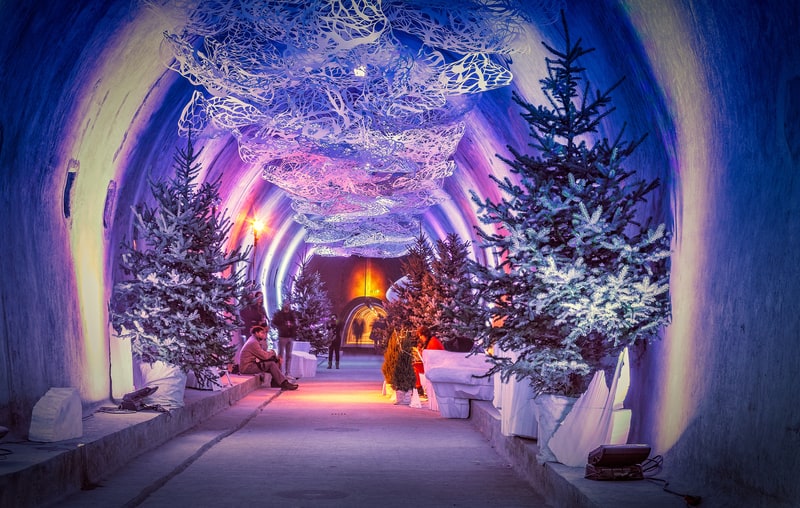
The magical Gric tunnel in the city is also a must, normally being decked out in full Christmas decor.
Christmas food and drink will of course be readily available. Two of the best places to try out local Chrismassy delights are at Fuliranje on Trg Strossmayer and in Zrinjevac Park. Both will have all manner of stalls selling excellent quality, hearty winter grub and warming drinks.
There are also concerts galore at venues across the city – both indoor and outdoor – with some being ticketed affairs and others open to all. Fuliranje, as mentioned above, has live music through its Advent run.
Kids will be fully catered for as well with all sorts of fun activities being held in December, and Advent very often also hosts events for our four-legged friends too
C
Really, a few days or a week-long break in Zagreb in December would be ideal to take in the full Advent in Zagreb experience.
Note: this year’s Advent in Zagreb calendar has yet to be announced, but it will be soon. Keep an eye on their website – and this one! – to
Alternative: Head to one of Croatia’s other larger towns and cities – such as Split, Dubrovnik, Pula or Zadar – for New Year’s Eve. Experience the festive and lively countdown to midnight on the Croatian coast, with live music, fireworks and a general all-around brilliant atmosphere.
W
Croatia in Winter: January
I know what it’s like in January. The madness of Christmas and New Year’s has died down, you’re cold and tired and just want to wrap up warm. But maybe you’re a tiny bit miserable and fed up with the weather and decide that January should actually involve a bit of fun.
The Croatian coast will be too cold and blustery for January and, anyway, it’s not like you can head down to the beach during this month. So why not explore parts of the Croatian interior for a true wintery experience?
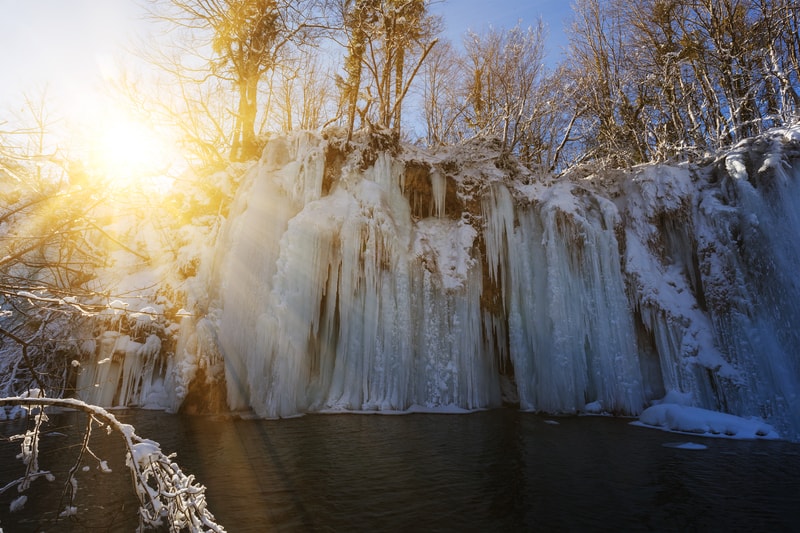
One of the best places to head to would be the Plitvice Lakes. A truly glorious location any time of year, winter makes the whole park rather magical and you may well be lucky to experience frozen waterfalls and very snowy paths and walkways. Make sure you bring your waterproof hiking boots and padded winter jacket!
The Plitvice Lakes in winter…complete with frozen waterfalls!
The park has reduced opening hours and limited trails at this time of year, but that’s no problem as you will still be able to do a good amount of exploring and see many of the main lakes and waterfalls. Visitor numbers will also be severely reduced from what they are in the peak summer months, and you may even feel like you have the park to yourself at times.
Spend a few days in the Plitvice Lakes region and explore some of the other attractions too. There are some very helpful suggestions on the websites of the Plitvice Lakes Tourist Board and Plitvice Valleys. And make sure you book yourself into a cosy B&B or guesthouse in the region and indulge in some hearty grub – the Licka Kuca restaurant is ideal for this.
If you want to do more exploring of the Croatian inland in winter, consider the Gorski Kotar region too. Yes, this mountainous region can get very snowy during the coldest months of the year, so this option is perhaps for the braver (and for the true winter lovers) amongst you. But you’ll be rewarded with a fabulous winter experience.
A very snowy scene in Gorski Kotar
Alternative: Croatia’s ski resorts – which are few and far between, let’s face it – start to open for the season in January. Whilst most of them offer not much more than fun for a few hours of skiing and snow play up a mountain, this activity would certainly be unusual enough (i.e. a must-try!) when visiting Croatia in January. Take a look at our Skiing in Croatia section for details of what ski resorts to head to.
Croatia in Winter: February
We’ve done Christmas, we’ve done snow fun so what shall we turn to in February? Love, of course!
There’s no getting around it – February is the month of love with the the arrival of the magical or tiresome (depending on your point of view) Valentine’s Day in the middle of the month. So why not choose Croatia to whisk your other half to for a romantic mini-break at one of the country’s top hotels. Better still, pick a hotel with a luxury spa and excellent dining options and you will both enjoy a relaxing, restful and romantic little break.
Our top choice would be the Grand Hotel Brioni in Pula. With an expansive spa offering multiple treatments, a sauna, an indoor swimming pool (there is an outdoor one too, of course, for the warmer months!) and multiple restaurants you will find plenty to do during your stay. But the fascinating sights of Pula are just a stone’s throw away too.
The indoor pool at the Grand Hotel Brioni (Copyright: Matthew Shaw)
The sauna at the Grand Hotel Brioni
Another option would be the Hotel Esplanade in Zagreb. A historic hotel, first opened in 1925 to accommodate guests travelling on the Orient Express, the Hotel Esplanade offers smart, luxury rooms, a lovely spa centre and exquisite cuisine at Zinfandel’s.
Or if you fancy exploring the gem that is Dubrovnik’s Old Town as part of your romantic getaway, consider the very fine Hotel Excelsior. With stunning views out to the Adriatic Sea and overlooking the Old Town itself, you will be able to enjoy 850 square metres of spa and three restaurants. Make sure you make time to have a coffee on the outdoor terrace.
So that’s my suggestions for winter in Croatia. Now I’m going to throw it over to you – what would you do for winter in Croatia?
https://www.visit-croatia.co.uk/wp-content/uploads/2024/10/croatia-in-winter_gorski-kotar-snowy.jpg600800annazhttps://www.visit-croatia.co.uk/wp-content/uploads/2017/09/visit-croatia-logo5.jpgannaz2024-10-21 14:00:592024-10-21 14:01:00Croatia in Winter: What would you do?
October is a month in which many Croatian delicacies are celebrated and enjoyed and this weekend it is the turn of chestnuts. The small town of Sveti Ivan Zelina (around 40 kilometres northeast of Zagreb) will be celebrating the 26th edition of the Chestnut Festival this Sunday, 13th October 2024.
If your only experience with chestnuts is having a conker fight (tell me you’re British without telling me you’re British) and you’ve never experienced roasted chestnuts, this festival will be the perfect introduction for you. Roasted chestnuts are one of the tastiest autumnal snacks and – trust me – Croats know how to roast chestnuts to perfection.
The majority of the action will take place in amongst the beautiful nature of Kladeščica, the peak of Zelinska Gora mountain. The centre of all the activities is around a 20-minute drive from Sveti Ivan Zelina, but the first 200 visitors to reach there on foot will receive a free portion of hot roasted chestnuts. What an excellent reward!
Chestnut Festival Fun
What will there be to see and do? Well, there will be plenty of tasty treats to sample – roasted chestnuts, of course, but other items made from chestnuts, mushroom and bean stews, BBQ food, chestnut cake, the craft beer “Angelus” and local wine too. Indulge in these treats at this outdoor festival – there will be plenty of seating – and take in the aroma and excellent natural surroundings. Not forgetting live music! The band Faringaši will be performing on the day as well. All in all, an excellent way to enjoy Autumn.
This year’s wide-ranging food offering is thanks to the Amanita Association and Restaurant 4M. In addition to this tasty food to eat, there will also be an exhibition of mushrooms for those who want to learn a little more.
The local hunting lodge will be hosting a competition for the best hunting stew. Participants will be given the required food and wood for participating, and stews can be tasted after a winner has been announced at 2pm.
Something for the kids
No gastro – or indeed, any kind of festival – in Croatia is complete without something to entertain the younger generation too The Chestnut Festival is no exception, with outdoor activities and fun and games planned from 12pm.
Pre-Chestnut Festival Walk
On Saturday 12th October 2024, there will be an additional celebration. The newly renovated educational trail “Through Zelinska Gora” will be opened with a 6 kilometre hike to Kladeščica starting at 10am. The hike will be led by Mountaineering Society Izvor and Mario Valentić who will be running his educational and entertaining fitness programme HealthyFIT Experience. Expect body and mind training and breathing exercises during the walk…and be rewarded at the end with a free outdoor lunch at Kladeščica.
https://www.visit-croatia.co.uk/wp-content/uploads/2024/10/Zelinska-kestenijada-3.jpg7501000annazhttps://www.visit-croatia.co.uk/wp-content/uploads/2017/09/visit-croatia-logo5.jpgannaz2024-10-07 13:37:522024-10-13 14:57:1726th Chestnut Festival in Sveti Ivan Zelina
Where is the point of inaccessibility in Croatia? And more to the point – what is a point of inaccessibility?
We were contacted by traveller Chris Brown who recently visited the point of inaccessibility in Croatia – the coordinates of which are:
Latitude: 45° 46.9747‘N
Longitude: 16° 29.8791’E
which is about 55km west of Zagreb and 8km south, south east of Dubrava, meaning it is in a small rural village called Mostari. At the Croatian point of inaccessibility, the nearest border is 61.4km away.
So, what is a Pole or Point of Inaccessibility?
Traditionally, the Pole of Inaccessibility for a large landmass like a continent, or an island, is the point furthest away from the ocean in any direction.
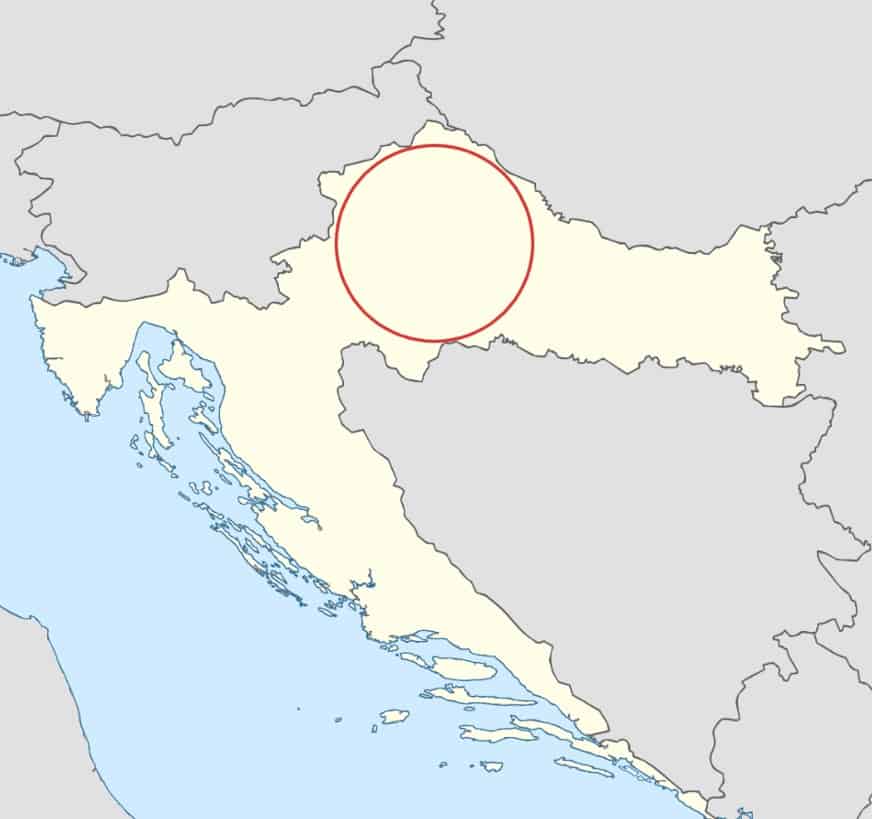
The easiest way to imagine it is to take a map of the land mass and draw the biggest circle you can without touching the ocean. The centre of that circle is the Pole of Inaccessibility.
Chris has simply extended that concept to any country or state where the border is well defined and called those POINTS of inaccessibility.
Chris has made it a hobby/mission to visit as many Poles of Inaccessibility (continents) and Points of Inaccessibility as possible. And during a trip to visit the famous Rimac factory in Zagreb, he was presented with the opportunity to visit the Croatian POI.
You can see from this sketch below that any other point in Croatia is closer to the border than the centre of the red circle – that centre being in Mostari.
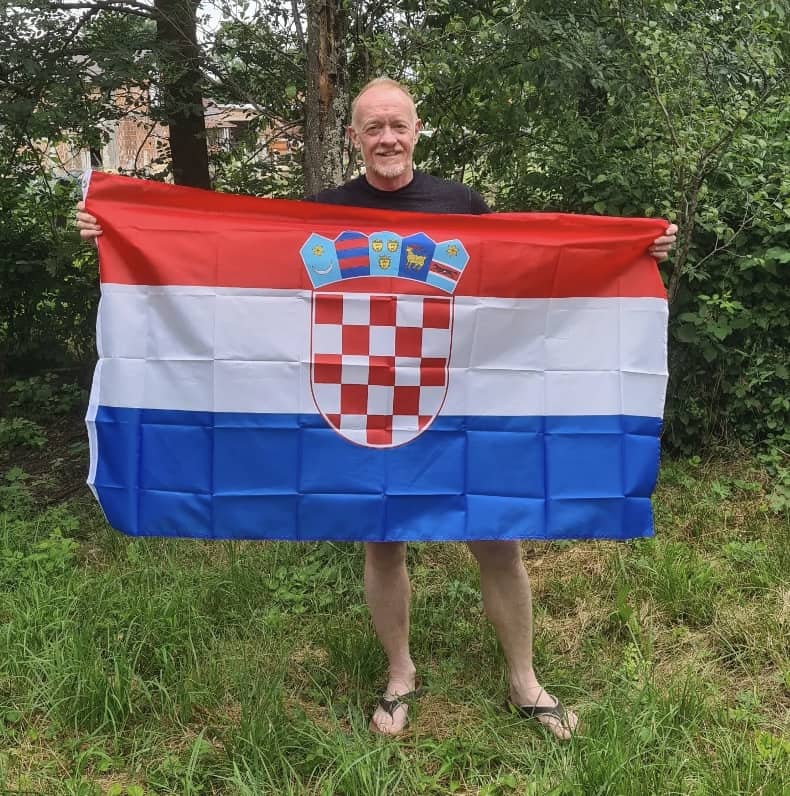
This is Chris standing at the POI for Croatia (well, actually 9m from the exact point because it was on private land).
https://www.visit-croatia.co.uk/wp-content/uploads/2023/08/chris-brown-croatian-poi.jpg796790annazhttps://www.visit-croatia.co.uk/wp-content/uploads/2017/09/visit-croatia-logo5.jpgannaz2023-08-02 23:02:052023-08-02 23:02:06Where’s the Point of Inaccessibility in Croatia?