
Here’s our guide to sightseeing in Zagreb, taking in the city’s most famous things to see.
Do also check out our guide to Museums in Zagreb.
Trg Bana Jelacica/Ban Jelacic Square
When sightseeing in Zagreb, it’s a good idea to head here first. Being the main square in the city, from here you are within walking distance of all the major attractions. (Furthermore, the main tourist office is at no. 11 in the square – head here to pick up useful leaflets, brochures and maps.)
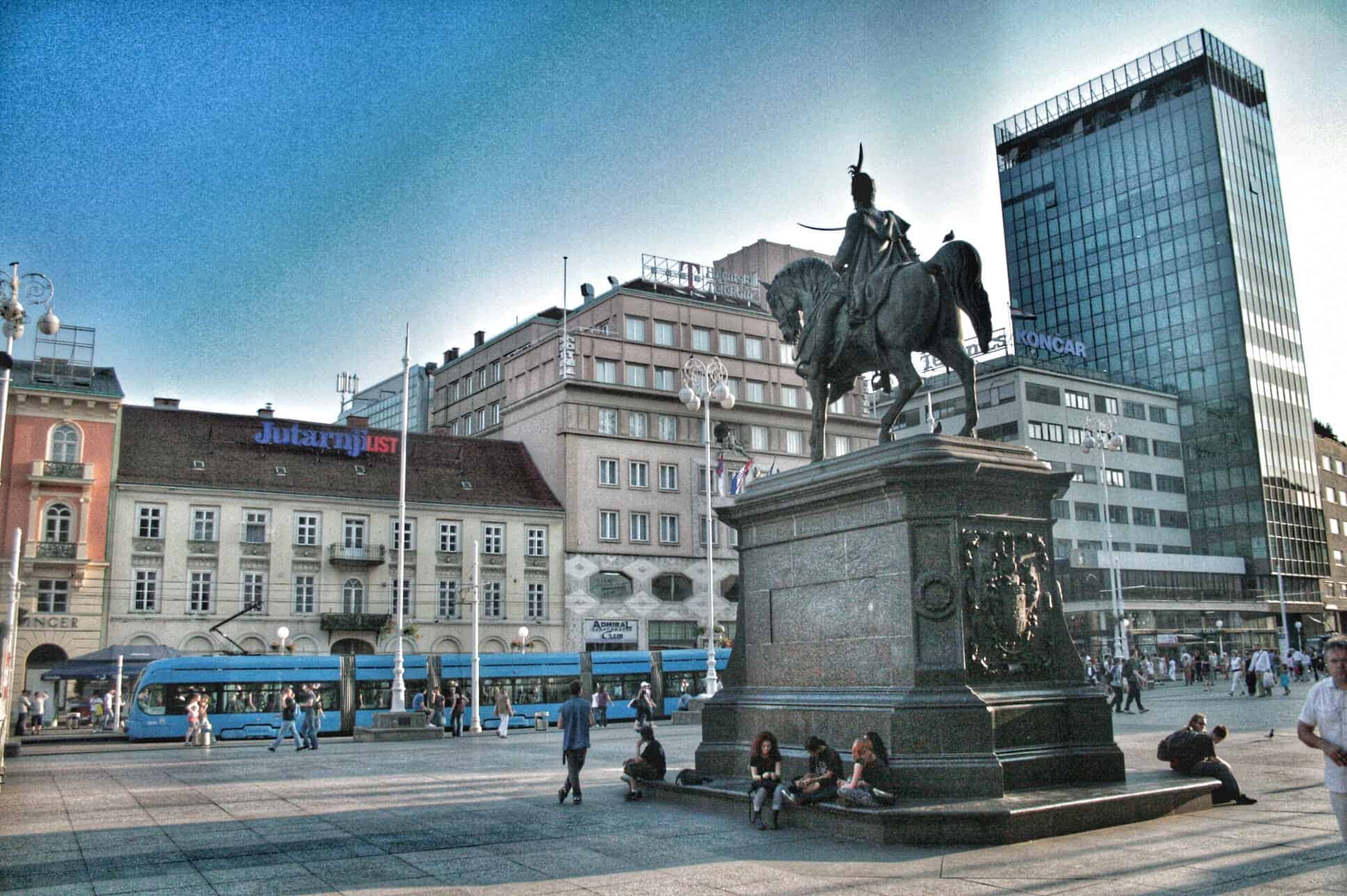
In the middle of the square you will of course see a statue of Ban Jelacic himself. Josip Jelacic is a Croatian hero (ban means viceory) who defeated the Hungarians in an uprising in 1848. His statue was erected in 1866 (in fact, pointing north towards Hungary) but was removed in 1947 after Yugoslavia was reformed post-World War II. (It was removed because of its significance to Croatia – Yugoslavia was not a country to allow individual nationalism from its republics.) The statue was placed back on the square in 1990 just prior to the break up of Yugoslavia – he now, however, faces the other way.
Whilst in the square, do take a look at the beautiful buildings on all sides. There’s also a plethora of cafes in the square – take a seat, order a coffee (or beer) and watch the world go by in the pedestrianised square.
You will also see a small fountain in the square – this is Mandusevac Fountain, which is in a slightly different location to its original position. The original fountain derived waters from Medvescak creek, which flowed from Medvednica mountain.
Zagrebacka katedrala/Zagreb Cathedral
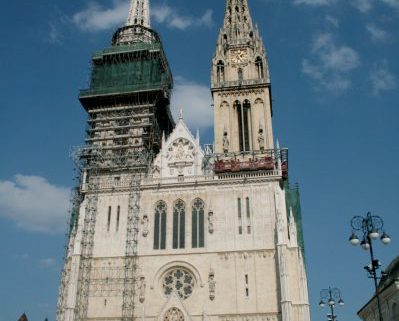
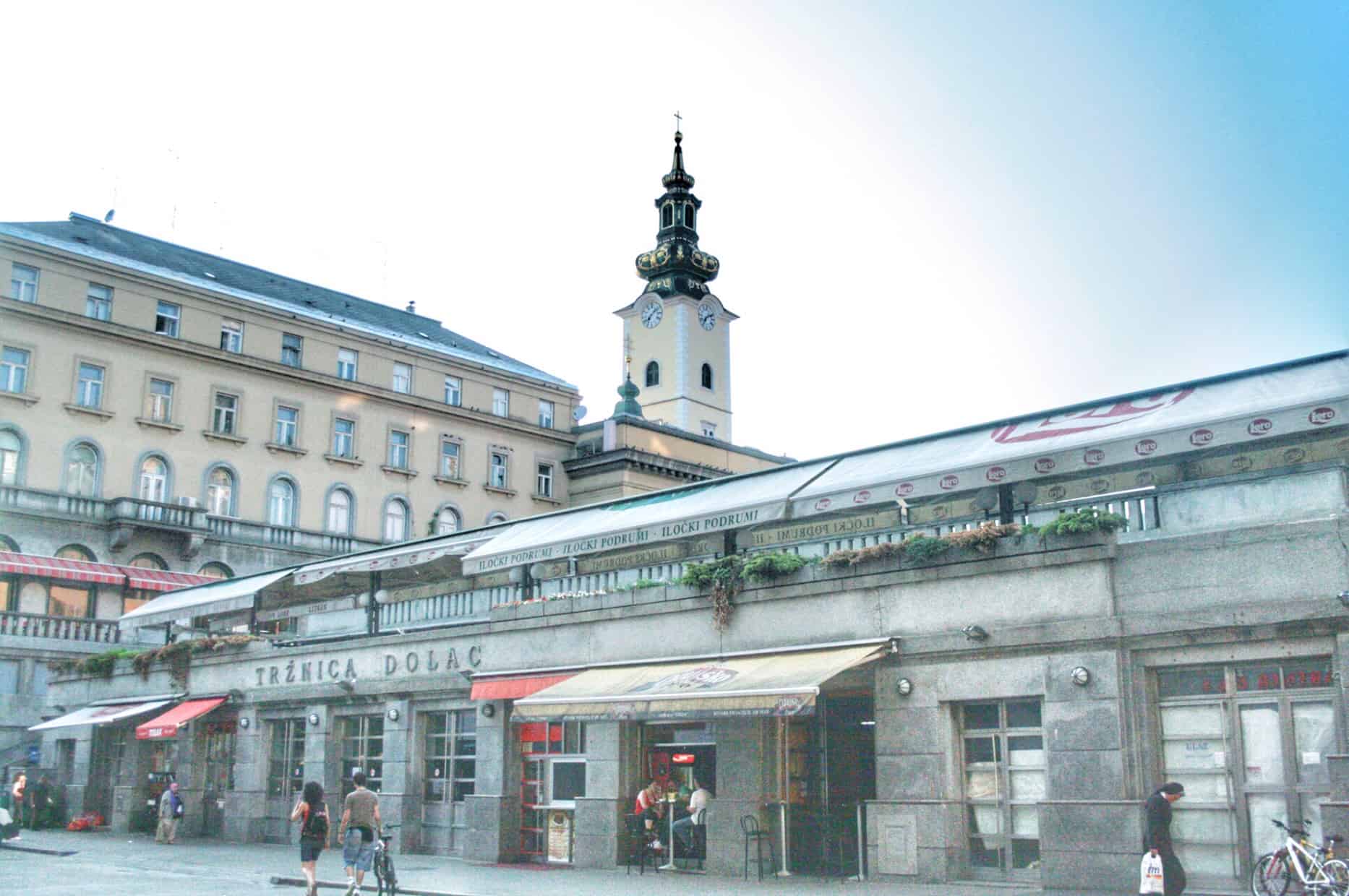
When facing north in the square, take the right-most street and head up it to see the twin neo-Gothic spires of the cathedral. Although parts of the cathedral date from the 13th century (and after), it was very badly damaged in an earthquake in 1880. Most of the structure, including its spires, dates from the late 19th/early 20th centuries. Inside the cathedral, you will find the tomb of Cardinal Stepinac (who was Archbishop of Zagreb from 1937 to 1960) which contains a sculpture by Croatia’s most celebrated sculptor, Ivan Mestrovic.
The baroque Archbishops’ Palace is attached to the cathedral.
Trznica Dolac/Dolac Market
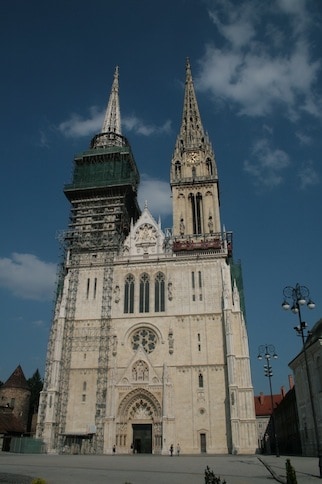
Near the cathedral is Zagreb’s main market – the colourful Dolac. It is definitely worth a visit to see all the stalls and sellers in action. You will find many food items (particularly fruit and veg) on sale, although there will also be some craft items and other little bits and pieces on offer. You can also have an inexpensive meal in one of the fast-food kiosks close by.
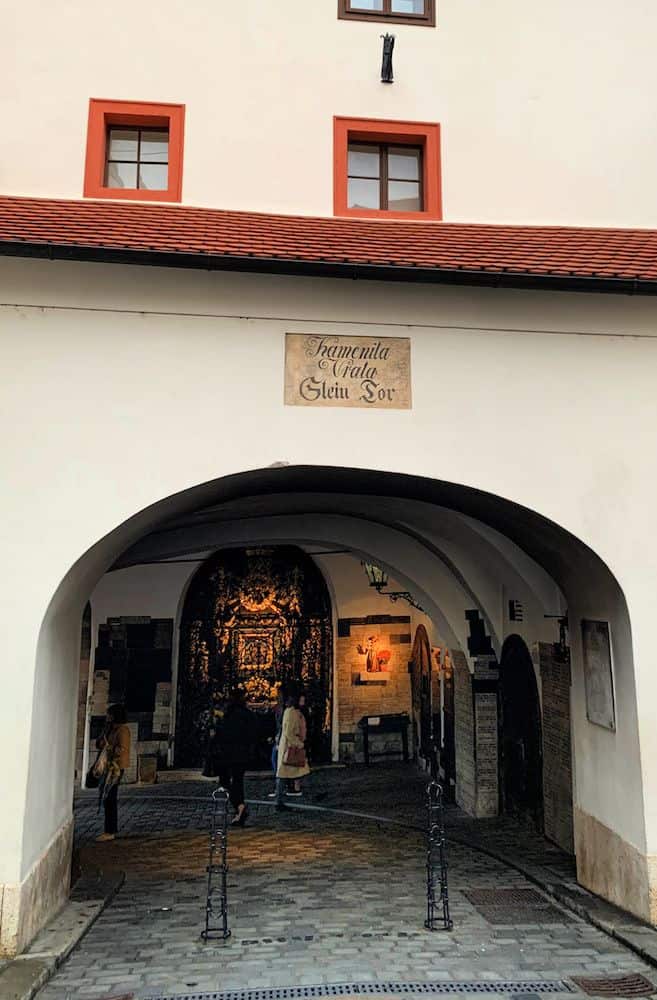
Kamenita vrata/Stone Gate
Walk along Tkalciceva Ulica towards the upper town and you will come to the one of the only surviving origial town gates from the 13th century. This gate, and its painting of the Virgin Mary inside, miraculously escaped the great fire of 1731 and for this reason is a place of pilgrimage, as you will see by the number of lit candles left here.
Crkva Svetog Marka/St Mark’s Church
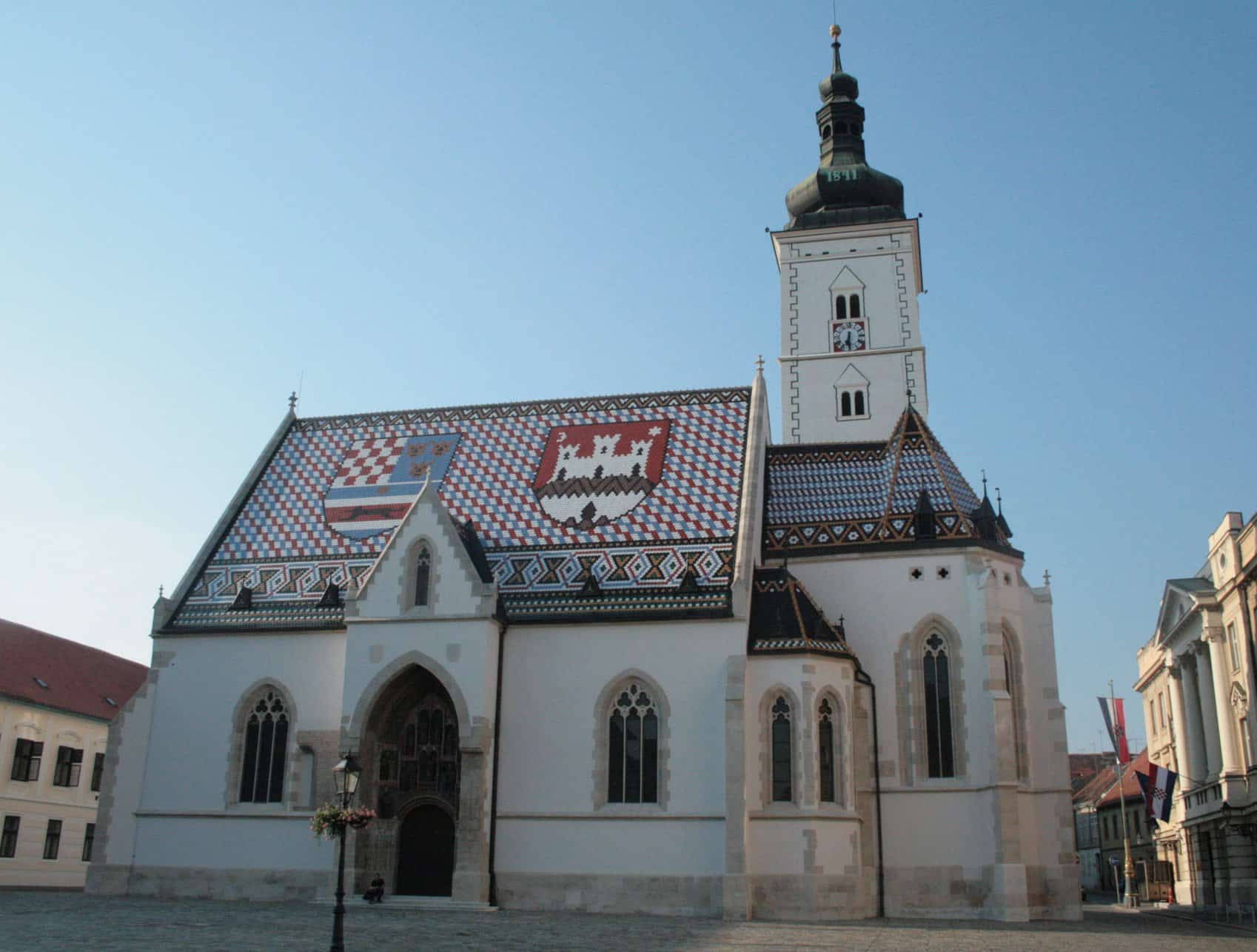
One of the most famous sights in Zagreb, if not in the whole of Croatia, is St Mark’s Church. With its beautiful tiled roof featuring the coat of arms of Croatia, Dalmatia and Slavonia, this is one of the highlights when sightseeing in Zagreb. The church was constructed in the 13th century; inside, there are works by Ivan Mestrovic.
On the same square as St Mark’s Church (which is Markov trg/Mark’s Square) you will also find the Sabor, a building that was built in the early 20th century and which is home to the Croatian parliament today. (Sabor means parliament.)
On the west side of the same square you will also find the Banski Dvori (which means Ban or Viceory’s Palace) and is today the Presidential Palace.
Kula Lotrscak/Lotrscak Tower
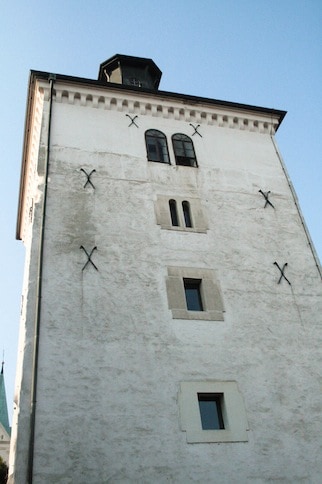
Built in the 13th century, the good people of Zagreb are reminded of the time each day at midday when a cannon – called the Gric cannon – is fired. If you’d like to keep up to date with Gric cannon and the Lotrscak tower, it has its own Twitter feed: @gricki_top. Guess what? It tweets once a day, at midday, saying “boom!”. (Or, in fact, the Croatian for it…which is “bum!”.) You can climb the tower for a great view of Zagreb.
(Many moons ago, a lady emailed Visit Croatia to ask us to mention that there is a similar ceremony in Edinburgh that occurs at 1 o’clock – this was for a trivia question for her class. We’ve decided to keep this little bit of info here!)
Uspinjaca/Funicular railway
Just below the Lotrscak Tower is the uspinjaca, a funicular railway that was constructed in 1888. It is, in fact, the oldest public transport system in Zagreb – a year older than the horse-drawn tram. On a track of just 66 metres in length, it is also the shortest funicular railway in the world. Hop on for the ride from the Upper Town to the Lower Town – or vice versa.
Zagreb Eye
Zagreb Eye isn’t quite the same thing as the London Eye, but it still has glorious city-wide views nevertheless! Located in a skyscraper in the corner of the main square, this 16th-floor observation deck will provide you with wonderful views over Zagreb’s terracotta-coloured rooftops and over the nearby sights of Trg ban Jelacic, the Cathedral, Dolac market and more besides.
Zagreb Eye is also open 365 days of the year so you can also check it out on days when other things might be closed (e.g. holidays)! As it’s also open late into the night (until 10.45pm), you can visit at sunset or when it’s dark to see the twinkly lights of the city.
There is a bar on the same floor so you can seek refreshment whilst enjoying the views.
Sljeme 360
And if you really like to see your sights from above, this new attraction (opened in 2023) is definitely for you. Sljeme 360 offers you a chance to reach the highest point of Zagreb – at the top of the TV tower which stands on Sljeme, the highest point of Mount Medvednica above Zagreb. With a viewing platform 1,118m above sea level, you will really see all over the city and even further beyond.
This is a great way of combining a visit to Mount Medvednica (which you will likely reach using the newish cable car) and the surrounding nature park.
Tickets cost €10 for adults, €7.50 for students/persons aged 7-12 and 65+ and €5 for children aged 5 to 12 years old. Kids under 5 go free.
Changing of the Guard
Every weekend from around mid-April to the end of October (and on special other days such as New Year’s Day), a two-hour Changing of the Guard ceremony takes place in and around the Upper Town. The ceremony commemorates the Croatian regiment of The Royal Cravats (which was founded in 1664) within the French Army. Head down to St Mark’s Church at midday to see the guards re-enacting their weapon inspection ceremony; guards then walk to be posted at other key points in the city (such as Ban Jelacic Square).
More details on the Changing of the Guard ceremony can be found at www.kravatpukovnija.com.
Sightseeing in Zagreb – Tours and Classes
As Zagreb is a very walkable city, there are some excellent guided walking tours of the city.
- The 1.5-hour Zagreb Walking Tour takes in many of the most famous sights including those in both the Gornji (Upper) and Donji (Lower) Towns.
- The 2-hour Communism and Croatian Homeland Tour better explains what Croatia was like during and after WWII and after independence in the 1990s
- The 3-4 hour Zagreb Restaurants Food Walking Tour takes in some of the city’s most famous sights as well as stopping off at some dining establishments to sample Croatian delicacies
- The 8-hour Zagreb Classic Mountaineer Walking Tour on Medvednica is a private tour for those wanting to explore Mount Medvednica above Zagreb to its fullest
- The 3-hour Zagreb Street Art Private Walking Tour with a Local Artist takes in some of the hidden spots of Zagreb, with a particular focus on the city’s sometimes rather impressive street art!
- The 3-4 hour Zagreb BIG Tour is done by foot and car, taking in locations such as Miragoj Cemetary and the Cathedral
- The 3-hour Classic Zagreb Bike Tour offers a guided tour on two wheels!
- Learn how to make a Croatian delicacy in the Strukli Cooking Class which also includes a tour of the bustling Dolac Market
- Feel the Pulse of the City on a 2.5-hour walking tour of some of the top sights, including a ride on the funicular
- If you’re after something creative, enjoy almost 3 hours at the Art Bottega Painting Party where you will be able to create your own masterpiece whilst sipping wine and enjoying good company. (All skill levels welcome!)