
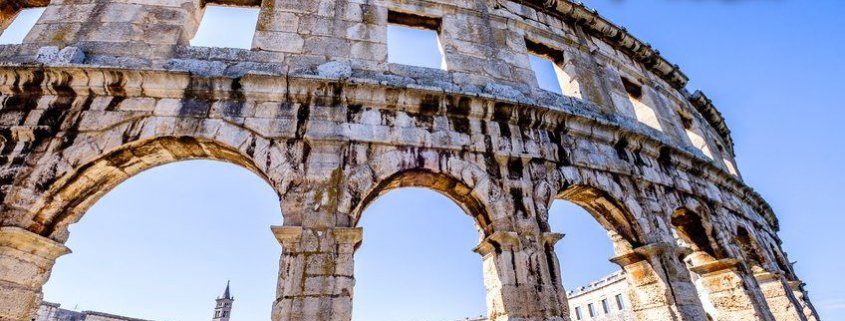
Situated near the base of the Istrian peninsula, the population of Pula stands at just over 62,000 making it the largest city in Istria. Its most famous attraction, the well-preserved Roman amphitheatre, is one of the most famous sights in the whole of Croatia.
If you’re here for a city break, take a look at our Two Days in Pula itinerary for how to make the most of your time.
Getting to Pula
Pula has an international airport, with a number of flights from the UK and Ireland and other cities in Europe to there – see our Getting to Istria page for details. You can use the Brioni / FILS shuttle buses to travel from the airport to the main bus station in Pula, or other destinations in Istria. Take a look at our Getting to and from Pula Airport page for details on how to transfer from the airport.
You could also fly to Trieste and then get a bus to Pula, or fly to Venice and either get a bus or a catamaran to Pula.
History
Although the amphitheatre in the town announces Pula’s Roman origins, its history in fact stretches far, far beyond this period. Archaeological findings in the area suggest that Pula’s history stretches back to 40,000 or even 1 million years BC!
It was however in the 11th century BC that Pula rose to prominence when it became a major settlement for the Illyrian tribe the Histri. After expansion by the Roman Empire into Istria in 177 BC, in 40 BC Pula became a Roman colony and grew rapidly during the years 27 BC to AD 14 under Emperor Caesar Augustus. During this time several important buildings were constructed (including the amphitheatre) and the town rose in strategic and economic significance for the Romans, with local trade becoming rather important.
After the fall of the Roman Empire, Pula fell under the control of various groups, including the Eastern Goths for 45 years to 538 when it became part of the Byzantine Empire, until the Slavs began their colonisation in the early part of the 7th century.
As with the rest of Istria, Pula fell under the control of the Venetians in 1331 and at the time the town had both strong Slavic and Roman influences. In was under Venetian control that Pula unfortunately suffered from numerous plagues and attacks from other groups (the Habsburgs, for one) and its population dwindled – by the 16th century, there were only 1,000 citizens (down from 5,000 in the previous century) and by 1631, only 300 people lived there.
Pula finally recovered in part during the 19th century when, now in the Austro-Hungarian Empire, it was proclaimed the chief port of the Empire in 1853 and the population rose once more as industry grew and workers flocked to the town. Around this time, Pula had a large German and Italian population.
After World War I, Pula (and Istria) became part of Italy and the majority of Croatians suffered oppression during this time as their rights were not respected.
After World War II ended in 1945, Pula was administered by the United Nations and British and American units. It finally became part of Yugoslavia in 1947, and was then part of Croatia when it declared its independence in 1991.
Sightseeing in Pula
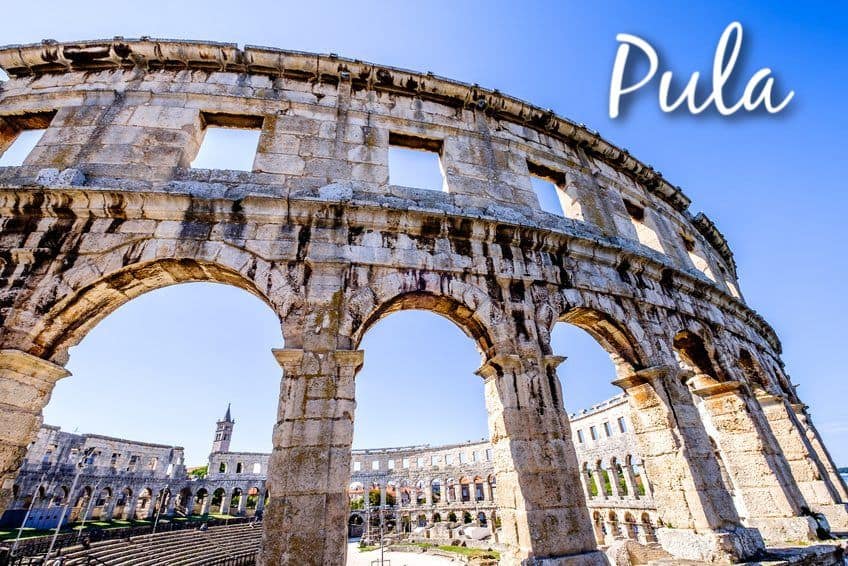
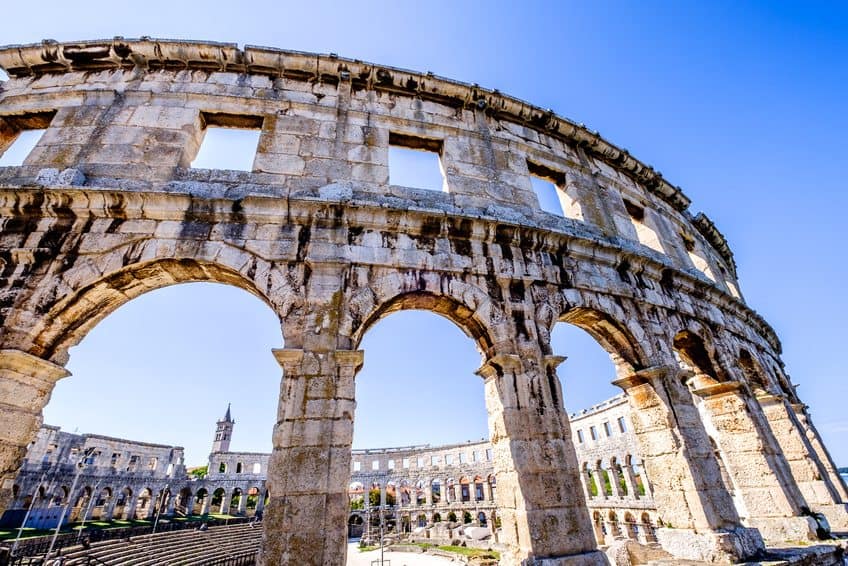
The most famous sight in Pula is – of course – the Roman amphitheatre, which is called The Arena. Built during the 1st century AD and completed under the reign of Emperor Flavius, this amphitheatre is the sixth-largest in the world (of those that still exist). The three-storey structure held 23,000 spectators in Roman times and today hosts numerous concerts and events throughout the year, including Pula Film Festival screenings.
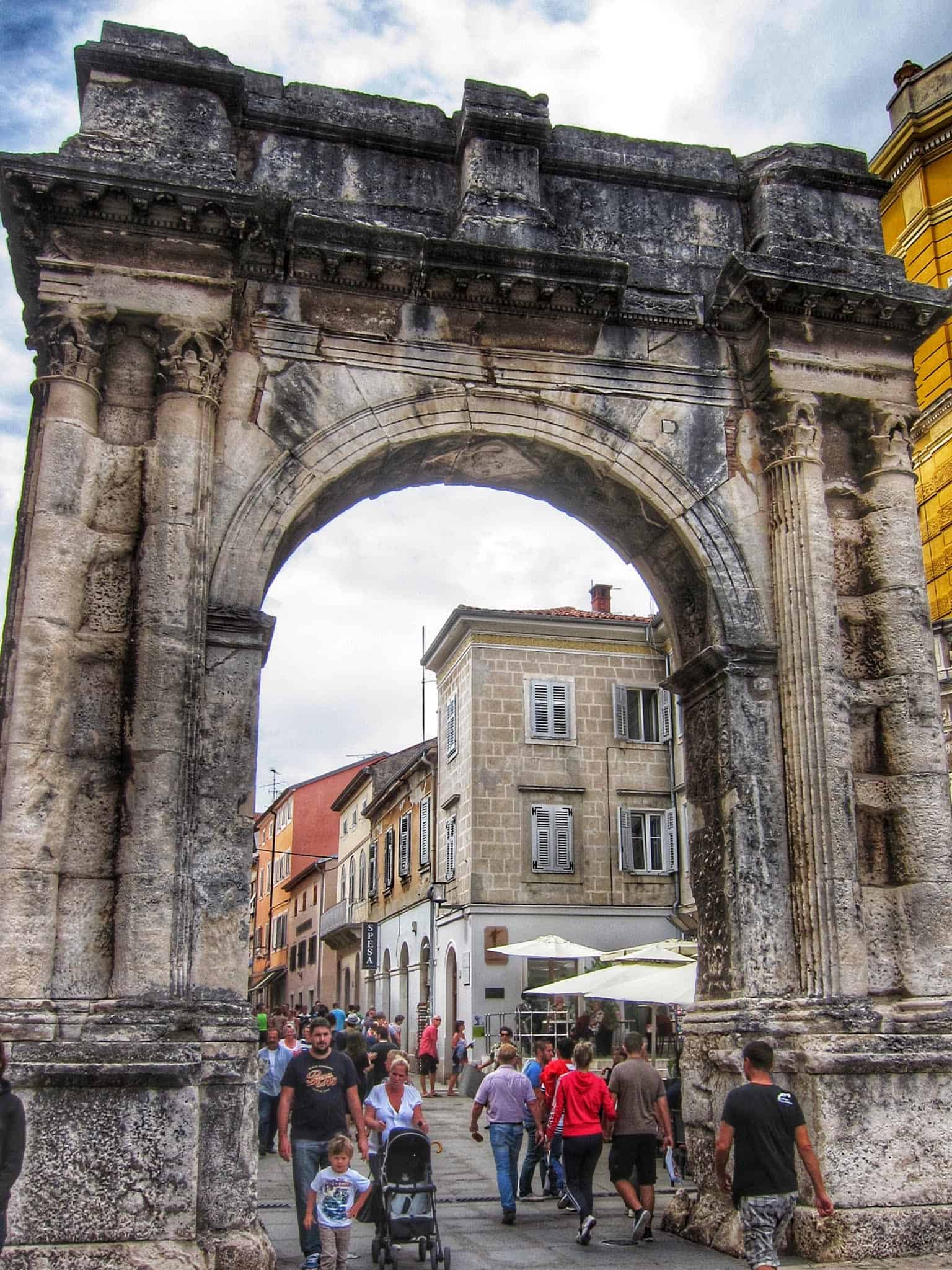
The Triumphal Arch of the Sergii was built between 29 and 27 BC in honour of the Sergi family who fought on the side of Octavian, who later became Emperor Augustus, in the Battle of Actium in present-day Greece.
The Temple of Augustus (Augustov Hram in Croatian), was built during AD 2-14 in honour of Emperor Augustus. It stands at a site next to which there was also an accompanying Temple of Diana (of which only a very small part remains). The Temple now contains Roman sculpture.
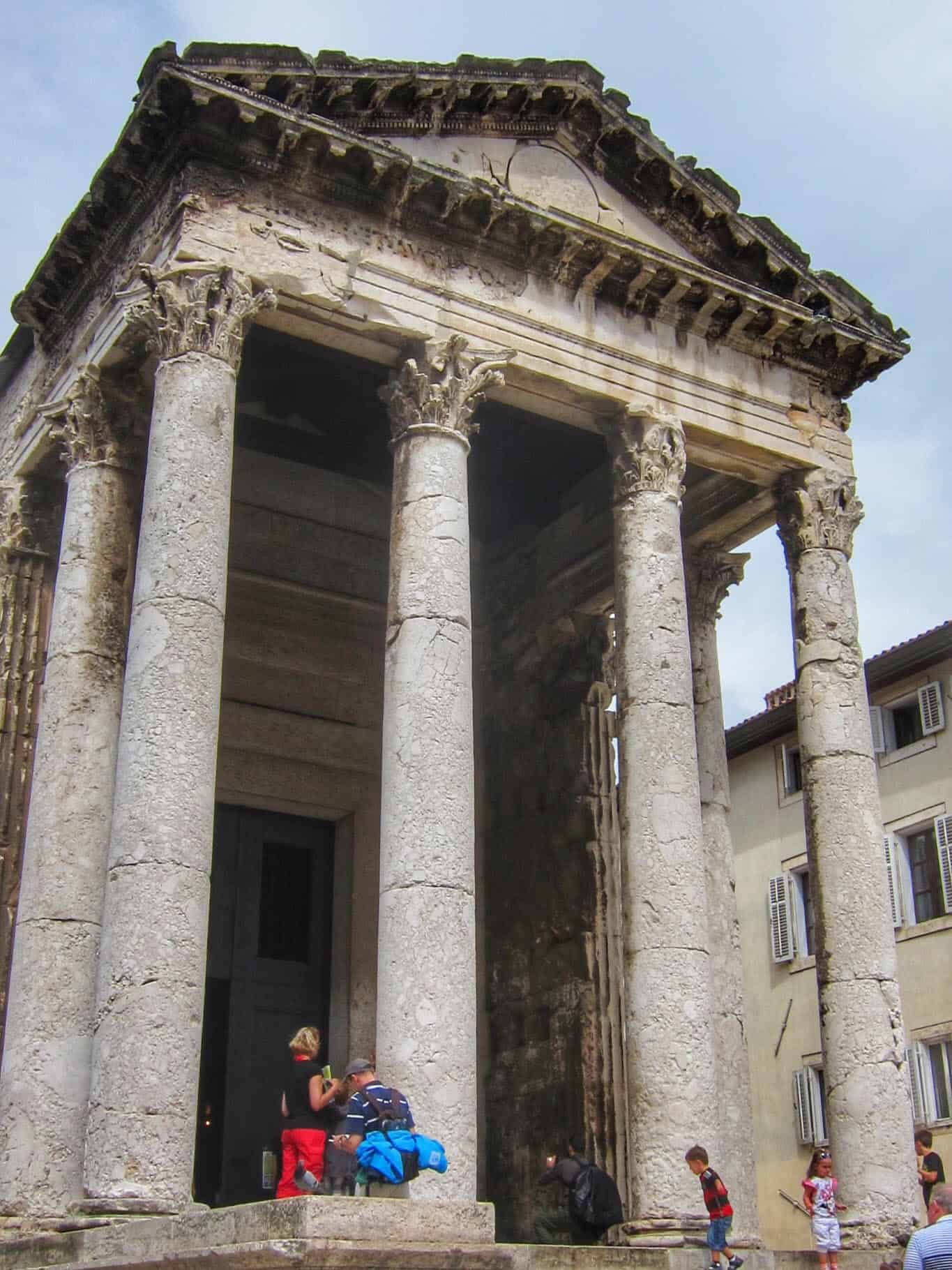
The Forum, where the Temple of Augustus stands, was once the main square in Roman times and is still a bustling piazza today with its many cafes.
The cathedral contains parts from various centuries, with its rear wall from the 4th century; its sanctuary from the following century; the internal part from the 15th century; and the bell tower from the 17th century.
Hercules Gate (Herkulova vrata in Croatian; also known as Porta Ercole) is the oldest standing Roman monument, dating from the 1st century BC.
The Aquarium Pula is located in the impressive 130-year-old Fort Verudela, and largely features displays of Adriatic sea life as well as fish and aquatic animals from Croatia’s rivers and lakes.
The Pula Olive Oil Museum showcases a product that Istria is famous for, explaining the history of its production (as far back as Roman times) and exhibiting modern-day production methods. You can also enjoy olive oil tastings here!
There is also a hop-on/hop-off sightseeing bus that runs during the summer months. The bus operates an audio tour in numerous different languages and stops at the main sights in town. For more details, and to see a map of the route, please see the official website: Pula City Tour.
Eating and Drinking in Pula
Epulon Food & Wine (Epulonova 4) offers a wonderful range of Istrian dishes – and wine – in a smart setting in the centre of the city.
KonobaBoccaporta (Dolinka 18) used to be located in Pomer (close to Medulin) but moved to Pula in 2014. A wide variety of meat and fish dishes, which are all recommended – try one of the platters to sample several tasty items at once.
Tivoli (Veli vrh 1) is one of the top choices if you’re hankering after some good quality pizza. Plenty of choice on their menu with some pasta options as well.
Day Trips from Pula
Take a look below at some of the top tours you can take in and around the Pula region:
Pula Trivia
Author James Joyce stayed in Pula for five months from October 1904. He arrived to teach English to Austrian officers at the Berlitz language school. Despite calling Pula a “naval Siberia”, he is thought to have written part of his first novel Stephen Hero there, was well as working on his classic A Portrait of the Artist as a Young Man. A bronze James Joyce now sits at Uliks (Ulysses) cafe in the town.
Italian poet Dante Alighieri mentioned Pula in his Divina Commedia.
The Pula Film Festival is one of the oldest film festivals in Europe, and over the years has attracted glamorous acting greats such as Elizabeth Taylor, Richard Burton and Orson Welles.
Accommodation in Pula
Use the search map below to look up places to stay – both hotels and rentals – in the city:
For more options, please see our special Accommodation in Pula page.
General Info
The area code is 052.
The Tourist Office is situated at Forum 3, tel: 052 219 197, fax 052 211 855, email: info@istria-pula.com.
For more info, point your browser to the Tourist Office website, or the Istria Tourist Board’s section on Pula.